Best Marine Holding Tank Level Indicator Solutions for Boats, RVs, and Campers
Find the right marine holding tank level indicator to monitor water and waste tanks on boats, RVs, or caravans. This guide highlights five reliable options, explaining who each is best for, how they operate, and any limitations to consider. Whether you need simple analog gauges or smart Bluetooth monitoring, these picks help prevent tank overflows and outages, ensuring steady water supply and proper waste management for sea, shore, and road adventures.
| Product | Best For | Key Feature |
|---|---|---|
| Briidea RV Tank Sensor Monitor Panel | RV Motorhomes and Campers | Complete kit with no extra electrodes |
| KUS CPGR-BB 240-33 Ohm Gauge | Backlit readability in dim spaces | IP67 protection, 2″ gauge |
| Briidea Bluetooth RV Water Tank Monitor | Smart, app-driven tracking | Bluetooth with auto-illuminating sensor |
| 100TECH Multi-Ohm Water Gauges | DIY installation and versatile sensors | Multiple input ranges |
| RecPro Tank Sensor Monitor Panel M21 | Integrated RV tanks and battery monitoring | 12V system integration |
Buyer considerations include compatibility with tank materials, ease of installation, readability in daylight or darkness, and whether you prefer standalone gauges or app-enabled monitoring. The following sections cover each product in detail, helping you choose based on your vessel type, voltage system, and maintenance style.
Briidea RV Tank Sensor Monitor Panel

The Briidea monitor is designed to track fresh water tank levels in RVs, enabling timely topping up. It ships as a complete kit with all necessary materials included, so buyers won’t need extra sensing electrodes. Best for RV owners who want a straightforward, plug-and-play solution that reduces setup time and extra purchases.
Best for: RVs and motorhomes that prioritize a simple install and reliable water-level alerts. The system emphasizes a direct readout to prevent tank depletion during trips. Limitation: metal water tanks may impact detection accuracy, especially if not properly calibrated; ensure calibration steps are followed and verify tank type before purchase.
KUS CPGR-BB 240-33 Ohm Gauge
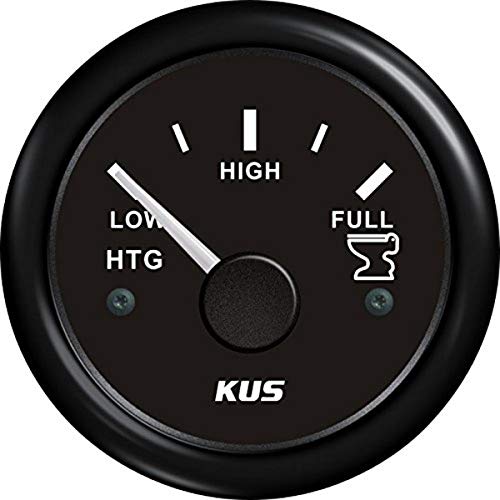
This gauge combines a white face plate with a Suess 316 back bezel and red or yellow LED backlight for visibility in dim environments. It is IP67 protected and supports a 240-33Ω signal indicating empty to full. Best for: users needing robust waterproofing and clear LED indicators in RV compartments or boat interiors with limited lighting.
Why selected: It provides a durable, non-smart option with straightforward signal ranges and a front-lit display for quick reads. Caution: ensure compatibility with your tank sensor’s electrical range, as mismatches can affect accuracy.
Briidea Bluetooth RV Water Tank Monitor
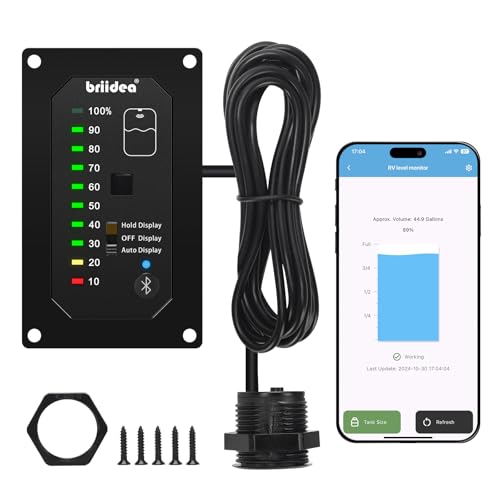
This Briidea model features Bluetooth connectivity for real-time tank monitoring via an app. It supports smart activation, lighting the indicator as you approach (within about 1.3 feet) and offers always-on or always-off modes. Best for: tech-focused campers and boaters who want remote visibility and automatic lighting to save power at night.
Why selected: The app-based, precise sensing reduces nocturnal disruption and helps manage water usage more efficiently. Limitation: Bluetooth range and app dependency mean it may be less useful in areas with poor connectivity or for those who prefer non-digital gauges.
100TECH Water Level Gauge – White

100TECH offers a versatile water gauge with multiple input ranges (0-190Ω, 240-33Ω, 240-30Ω, 0-180Ω, 10-180Ω) and a simple dial display. Best for: DIY installers who need a flexible sensor compatible with various tank configurations and voltage ranges (9-32V DC).
Why selected: Clear, easy-to-read illuminated dial and quick installation. Limitation: Some users may require additional adapters or calibration to match their specific tank sensor type; verify compatibility before fitting.
RecPro Tank Sensor Monitor Panel M21

RecPro’s M21 panel is designed to monitor multiple RV tanks and battery voltage once integrated into a 12V system. It uses a lights-based readout and is available in black or white to match interiors. Best for: RV owners seeking a consolidated panel that can display tank levels and battery status in one place.
Why selected: The panel’s basic readability and 12V integration simplify upgrading an existing RV electrical setup. Limitation: It may require compatibility checks with your current tank sensors and wiring harnesses.
RecPro RV Tank Sensor Monitor Panel M21 (Black)

This is the black variant of the same RecPro M21 model, providing flexibility to fit a darker interior aesthetic while maintaining the same functionality as the white version. Best for: buyers who want a cohesive look with dark interiors in their RV. Limitation: Availability may vary by color, so check stock before planning an install.
TANFEI Marine Holding Tank Gauge Sensor

The TANFEI gauge is a 2″ (52mm) sensor designed for marine holding tanks with a LOW-FULL range and 12V/24V operation. Best for: boaters needing a compact, standard-size sensor compatible with common holding tank setups. Limitation: It’s a sensor gauge only; pairing with a compatible gauge or display is required for full readouts.
Buying Guide: Key Considerations for Marine Holding Tank Indicators
What tank type will you monitor? Fresh water, gray water, or black water tanks each have unique considerations. Choose a gauge or monitor that supports your tank type and wiring setup. For boats, consider space constraints, waterproofing, and dashboard readability to ensure quick checks while underway.
What reading method do you prefer? Simple LED indicators and dial gauges offer fast, glanceable readings. Smart, app-enabled monitors provide real-time data, alerts, and historical trends, but depend on Bluetooth or Wi-Fi connectivity and mobile devices for access.
How easy is installation? Some kits come as complete systems with all required electrodes and mounting hardware, while others require selecting compatible sensors and wiring separately. If you’re replacing an old panel, ensure the mounting diameter and connector types match your existing setup.
Voltage compatibility and durability matter. Verify operating voltage (typically 9-32V DC) and ensure IP ratings meet your exposure level, particularly for marine environments where splashes and humidity are common.
Calibration and tank sizing are crucial. Some units require calibration in the middle of the tank and depend on tank dimensions (e.g., height-to-length ratios). Accurate calibration improves reading accuracy and reduces false alerts.
FAQ
- Q: Do these indicators work with all tank materials? A: Most systems are designed to work with common plastic and composite tanks; metal tanks may affect detection accuracy in some models, so check manufacturer notes before purchase.
- Q: Is Bluetooth monitoring reliable on a boat? A: Bluetooth works well within a short range but may be limited by hull interference or water spray. For distant monitoring, consider a non-Bluetooth option or a system with cellular or Wi-Fi support.
- Q: Can I install these myself? A: Many kits are designed for DIY installation with included mounting hardware and clear wiring instructions. Complex setups or custom tanks may require professional help.
- Q: Do I need an app to read the tank levels? A: If you choose a Bluetooth-enabled model, an app is typically required. Non-smart gauges provide direct visual indicators without an app.
- Q: How do I know which gauge range to choose? A: Look for sensors with compatible ohm ranges (for example 240-33Ω or 0-190Ω) and ensure the gauge/monitor matches your tank’s sensor type and your voltage system.
- Q: Are there maintenance considerations? A: Regular calibration checks and ensuring sensors remain dry during calibration help maintain accuracy. Avoid placing sensors where they frequently touch the water surface during calibration.