Best Outboard Motor Steering System for Smooth, Precise Handling
Looking for an outboard motor steering system that delivers precise, consistent steering for your boat? This guide highlights top options for single-engine setups, explaining who each product is best for and why. Whether you’re yacht cruising, pontoon fishing, or piloting a small runabout, these kits cover a range of hp ratings, hose lengths, and helm configurations to fit most single-engine boats.
Summary table of selected products:
| Product | HP Range | Key Benefit | Best For |
|---|---|---|---|
| VEVOR Hydraulic Steering Kit (150 HP) | Up to 150 HP | High-pressure hydraulic pump, compact cylinder | High-horsepower single engines; durable, precise control |
| attwood Outboard Kicker Motor Steering Kit | Single outboard with kicker integration | Simple, adjustable rod system | Small to mid-size boats needing kicker alignment |
| Bonbo 150HP Hydraulic Steering Kit | Up to 150 HP | Includes helm, wheel, and long hoses | Pontoon, deck boats requiring comfortable wheel steering |
| Camoo 200HP Hydraulic Steering Kit | Up to 200 HP | Complete accessories, high-pressure capability | Most single outboard boats needing robust setup |
| QYMOPAY Marine Steering Control Cable | General steering cable system | Solid cable with stainless components | Installers needing a reliable cable-based option |
VEVOR Hydraulic Steering Kit, 150 HP

This hydraulic kit supports engines up to 150 HP and offers a 5.5 turns lock-to-lock for precise handling. It features a 6.9 MPa/1000 psi helm pump, a two-way lock cylinder, and long-term durability with an aluminum housing. Best for boaters who demand steady, responsive steering with robust components for single-station use.
Who it’s best for: boaters with higher-horsepower singles seeking reliable hydraulics and easy maintenance. Why selected: high-pressure capability and durable construction suit demanding single-engine configurations.
Caution: installation must ensure hose routing and mounting are compatible with your helm and cylinder configuration to prevent leaks or binding.
attwood Outboard Kicker Motor Steering Kit

This kit is designed to connect a kicker motor to your main outboard’s steering wheel, using a 24″ zinc-plated rod for durability. It allows you to cut the connector rod to fit your setup. Best for boats that need kicker steering integration with existing wheel control.
Who it’s best for: anglers and boaters with a kicker motor that require synchronized steering. Why selected: straightforward, adjustable fit for simple twin-motor steering needs.
Caution: may require precise measurement and cutting; verify compatibility with your steering wheel and primary outboard alignment.
Bonbo 150HP Hydraulic Steering Kit With Wheel

This kit provides a complete marine steering system for single-station setups, including a steering wheel, hydraulic cylinder, helm pump, and 26-foot hoses. It’s tailored for boats with up to 150 HP, offering comfortable wheel control and corrosion-resistant components. Best for pontoon and deck boats needing a full package.
Who it’s best for: boat owners seeking an all-in-one hydraulic package with a steering wheel. Why selected: included wheel and long hoses simplify installation on mid-sized single-engine boats.
Caution: ensure your boat’s dash layout can accommodate the wheel size and mounting depth specified by the kit.
Camoo 200HP Hydraulic Steering Kit

This kit targets boats up to 200 HP and includes a wheel, pump, hydraulic cylinder, and 26-foot hoses. It features a high-pressure system (6.9 MPa/1000 psi) and a replaceable shaft seal for maintenance. Best for larger singles where comfort and control from a steering wheel matter, and for boats needing a full accessory package.
Who it’s best for: owners upgrading to a more powerful hydraulic system with a steering wheel. Why selected: robust components and comprehensive kit for straightforward installation.
Caution: verify hose length and clearance around the helm area to avoid interference with cockpit fixtures.
QYMOPAY Marine Steering Control Cable
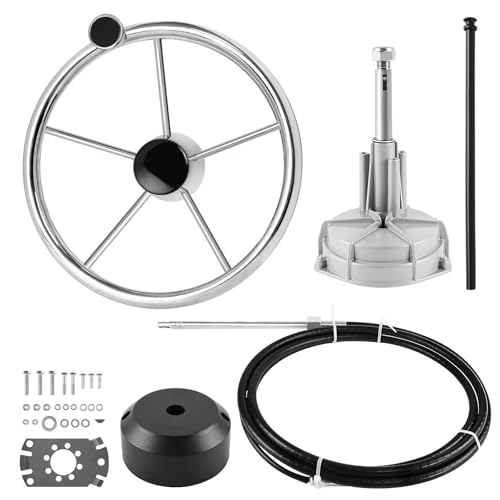
This cable-based system uses a 13-foot stainless steel steering cable and a standard 3/4″ tapered shaft. It includes a steering wheel, rudder hardware, and necessary components for straightforward mechanical steering. Best for installations where a mechanical, cable-driven approach is preferred.
Who it’s best for: DIY installers seeking a reliable mechanical steering solution. Why selected: solid construction with corrosion-resistant materials and a complete hardware set.
Caution: ensure cable length matches the rudder and cylinder setup; mismatch can require extra parts or alternative lengths.
Buying Guide: Key Considerations For Outboard Steering Systems
- Power compatibility: Match system HP rating to your motor. Hydraulic kits often support 150–200 HP, while some kits cover medium HP ranges. Choose within your engine’s requirements to ensure responsive steering.
- Steering method: Hydraulic systems provide smooth, heavy-duty control, while cable-based systems are simpler and easier to install. Consider your boat size, usage type, and maintenance preference.
- Hose and cable lengths: Verify hose lengths (commonly 20–26 ft) and whether you can cut hoses to fit. For cable kits, confirm cable length fits your rudder geometry.
- Wheel size and helm: If selecting a kit with a steering wheel, ensure wheel diameter and mounting depth fit your dash and operator reach for comfort and control.
- Installation scope: Some kits are complete with wheel, pump, cylinder, and hoses; others require assembling multiple components. Assess whether you want a full package or modular parts.
- Durability in marine environments: Look for corrosion-resistant materials, especially in hydraulic cylinders, helm pumps, and fittings. Aluminum housings and stainless steel hardware are common indicators of longevity.
- Maintenance and seals: Replaceable shaft seals and low-friction helm mechanisms can reduce maintenance needs and prevent leaks over time.
Frequently Asked Questions
- What is the main difference between hydraulic and cable steering systems?
Hydraulic systems use pressurized fluid for steering, offering smoother and more powerful control ideal for larger singles. Cable systems rely on mechanical linkage, are typically simpler and easier to install for smaller boats.
- Can I install a steering kit myself, or do I need a professional?
Many kits are designed for DIY installation with basic tools. However, complex hydraulic systems or custom boat configurations may benefit from professional installation to ensure proper alignment and leak-free operation.
- What should I check before buying an outboard steering kit?
Check HP compatibility, steering method (hydraulic vs. cable), hose or cable length, wheel options, mounting space, and whether the kit includes all necessary components for your boat model.
- Are longer hoses always better?
Longer hoses provide installation flexibility but may add cost and potential pressure loss. Choose hose length that matches your boat layout without excessive slack or tension.
- Is a steering wheel necessary in a hydraulic kit?
No, but many buyers prefer a wheel for comfortable, precise control. If you choose a wheel-inclusive kit, confirm wheel size and dash compatibility.
- What maintenance is needed for hydraulic steering systems?
Regularly inspect for leaks, check hydraulic fluid levels, and replace worn seals as recommended by the manufacturer to maintain smooth operation.