Best Outboard Motor Mounting Brackets for Small Boats
Answering common buyer questions: these are brackets designed to mount small outboard motors on boats, typically suitable for 7.5–20 HP two-stroke or four-stroke engines. They offer adjustable height, solid mounting boards, and corrosion-resistant frames for reliability on small to mid-size craft. The top picks below are best for anglers, seasonal boaters, or boat owners seeking easy motor handling and space-saving mounting options. Each option suits different setup needs and installation spaces.
| Product | Best For | Key Advantage |
|---|---|---|
| Marinebaby Boat Outboard Motor Bracket | Heavy-duty use on boats with 2-stroke engines | Five-position height adjustment; stainless springs for balance |
| Haida 2 Stroke Outboard Motor Bracket | Accessible, mid-range 20 HP setups | 304 stainless steel frame; compact mounting base |
| Marinetech Panther 55-0410 | 4-stroke or mixed loads with longer shafts | Five vertical positions; heavy-duty aluminum with torsion springs |
| FUTURUP Boat Outboard Bracket | Sturdy, maintenance-friendly mounts | Retractable bracket; reinforced stainless parts |
| Mojiate Outboard Motor Bracket (2-Stroke) | Solid option for 7.5–20 HP motors | Stainless steel with 4-position height adjust; robust frame |
Marinebaby Boat Outboard Motor Bracket
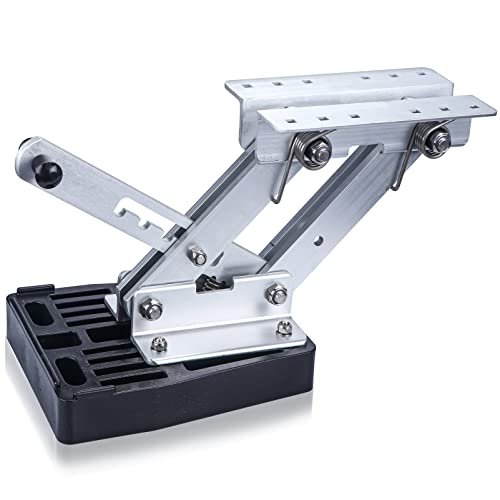
The Marinebaby bracket uses heavy-duty aluminum suitable for 2-stroke motors from 7-1/2 HP to 20 HP. It features stainless steel springs that counterbalance motor weight and a solid polypropylene mounting board. Height is adjustable across five locked positions from 195 mm to 320 mm. Best for small boats needing reliable, corrosion-resistant mounting with straightforward adjustments. Caution: ensure the mounting board size matches your engine footprint to avoid clearance issues with the transom.
Haida 2 Stroke Outboard Motor Bracket Kicker

The Haida bracket is 304 stainless steel with a plastic base, designed to support up to 20 HP motors. It uses a manual lifting mechanism to raise and lower the motor and provides mounting options around 4-7/16″ by 5-11/16″. Best for budget-conscious boaters who want a stainless frame with a simpler base. Limitation: manual lifting may require more effort on larger motors or rough water conditions.
Marinetech Panther 55-0410 Auxiliary Bracket

The Panther 55-0410 provides five vertical running positions and is designed to accommodate heavier four-stroke motors. Its anodized aluminum bracket supports long or short shafts, with a 2″-thick mounting board and aircraft-grade hardware. Best for boaters needing durable, adjustable positioning with strong torque handling. Choose this if you frequently adjust for water conditions; avoid if you need a lighter, budget-focused option.
FUTURUP Boat Outboard Motor Bracket

The FUTURUP bracket uses aluminum construction with a plastic base and supports 7-1/2 to 20 HP motors. Its 8-1/4″ × 10-3/8″ broad size and 5-1/4″ × 9″ mounting size provide a stable footprint. It features a retractable bracket for sailing and reinforced welded frame with stainless steel parts. Best for users who prioritize a retractable feature and robust stainless components. Limitation: base material is plastic, which may be less durable under extreme impact compared to all-metal bases.
Mojiate Outboard Bracket, Stainless Steel

This stainless steel bracket supports 7- to 20- HP 2-stroke motors with a maximum weight around 50 kg (110 lbs). It features a heavy-duty welded frame, stamped stainless components, and a four-position height adjustment. Best for a rugged, corrosion-resistant setup that requires robust construction. Limitation: mounting plate dimensions are slightly smaller; verify engine mounting footprint matches your motor.
Buying Guide: Choosing the Right Outboard Motor Bracket
What engine type and power level are you mounting? Most brackets reviewed here support 7.5–20 HP 2-stroke or similar ranges, with varying weight capacities. If you frequently swap between long and short shaft motors, prioritize brackets with adjustable height and a strong counterbalance system.
- Material matters: Aluminum brackets are lightweight and corrosion-resistant; stainless steel frames offer higher durability in saltwater but can be heavier and pricier.
- Height adjustability: Look for multi-position locking systems to achieve optimal trim and balance, reducing strain on transom hardware.
- Mounting footprint: Check base dimensions and mounting hole patterns to ensure compatibility with your boat transom or rails.
- Weight and balance: A solid mounting board and counterbalancing springs improve handling, especially in rough water.
- Rail vs transom mounting: Rail-mounted brackets save deck space but require matching rails; transom mounts are often simpler for traditional setups.
How to install and maintain
- Follow the manufacturer’s installation guidelines for bolt patterns and torque specs.
- Inspect hardware for corrosion and wear after saltwater use; rinse with fresh water after boat trips.
- Lubricate moving parts periodically to maintain smooth operation of height adjustments.
- Regularly test the bracket with the engine off to verify balance before heading out.
Frequently Asked Questions
- What is the typical HP range supported by these brackets? Most are designed for 7.5–20 HP motors, with some options handling heavier 4-stroke units.
- Do these brackets require special mounting hardware? Yes, ensure your boat’s transom or rail system matches the mounting pattern and rail size specified by the bracket.
- Are stainless steel brackets better than aluminum? Stainless offers higher corrosion resistance and strength, but aluminum is lighter and sufficient for many small boats.
- Can I use a 4-stroke motor on these brackets? Some models are built to accommodate 4-stroke motors; verify each product’s listed weight and shaft compatibility.
- Is height adjustment important? Yes, adjustable height helps optimize tilt, trim, and motor balance, improving control and efficiency.
- What maintenance is recommended? Rinse after use, inspect for wear, tighten fasteners, and replace any worn springs or rivets as needed.