Best Bass Boat Floor Drains for Deck Drainage and Ventilation
Answer: For bass boat decks, choose floor drains that resist saltwater, fit your surface (fiberglass or carpet), and provide reliable drainage and ventilation. The top picks below are chosen for marine-grade construction, compatibility with deck materials, and clear, practical benefits for boaters. This guide helps anglers and vessel owners select drains that keep decks dry without compromising style or function.
The following table highlights five compatible options and their strongest use cases. Use this as a quick reference to compare key points at a glance.
| Product | Best For | Material | Notes |
|---|---|---|---|
| T-H Marine FD-4-DP Floor Drain and Vent Cover | Deck drainage on fiberglass or carpeted surfaces | Plastic/Composite | Offers venting and drainage in one unit |
| JSP Manufacturing Floor Drain and Vent Cover | Decks, compartments, pontoon furniture | Plastic | Provides both drainage and ventilation |
| VTurboWay Nylon 53 x 30mm Drain (2 Pack) | Low-cost, lightweight option | Nylon (marine grade) | Resists corrosion; compatible with many surfaces |
| 316 Stainless Steel 1″ Boat Floor Deck Drain (Pack of 2) | High-durability, easy to clean | 316 Stainless Steel | Premium corrosion resistance |
| VTurboWay Nylon 45 x 26mm Drain (2 Pack) | Smaller deck areas or cost-conscious builds | Nylon (marine grade) | Lightweight and affordable; strong for typical use |
T-H Marine FD-4-DP Floor Drain and Vent Cover

Best for boats with fiberglass or carpeted decks, the FD-4-DP combines drainage and a vent function. It is well suited for deck applications, including compartments and pontoon furniture mounting. The unit is designed to mount as a vent for storage areas while enabling water to escape efficiently. This makes it a versatile choice for anglers who need a simple, integrated solution. Caution: ensure proper sealing to prevent leaks at joints and avoid oversizing for very tight spaces.
JSP Floor Drain and Vent Cover – Black, 4″

Best for decks, compartments, and pontoon furniture requiring both drainage and ventilation. The JSP model fits fiberglass or carpeted surfaces and provides a balanced solution for water removal and air flow. It is a practical option for boaters who want a single unit handling both tasks. Limitation: as a plastic unit, it may require periodic inspection for wear in extreme exposure conditions.
VTurboWay Nylon 53 x 30mm Boat Floor Deck Drain

Best for a lightweight, corrosion-resistant option with marine-grade nylon. The drain claims seawater resistance and a long service life, matching stainless steel in strength at a lower cost. Choose this if weight is a concern or if the deck uses easily damaged materials where metal hardware could be problematic. Caution: nylon may not be as rigid as metal in high-load locations, so verify fit for heavy foot traffic or heavy cargo periods.
316 Stainless Steel 1″ Boat Floor Deck Drain (Pack of 2)
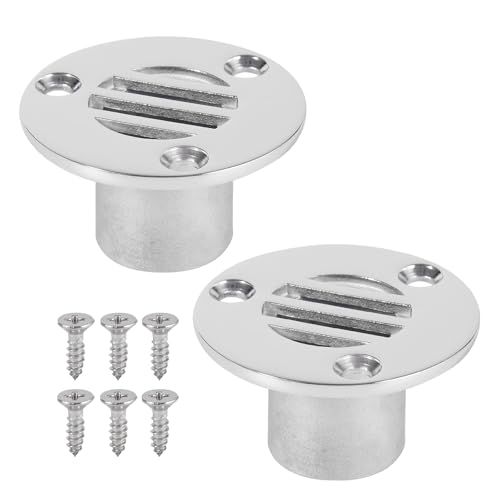
Best for durability and easy maintenance, the 316 stainless steel model resists corrosion and is easy to clean. It is suited for highly exposed environments where prolonged saltwater contact occurs. Best for owners prioritizing longevity and a premium finish. Limitation: higher upfront cost and potential mounting rigidity compared with plastic or nylon options.
VTurboWay Nylon 45 x 26mm Drain (2 Pack)

Best for smaller deck spaces or budget-conscious builds requiring two drains. Made of marine-grade nylon, it provides corrosion resistance and a lighter footprint. Choose this if you want a cost-effective, straightforward install with decent durability. Caution: verify exact dimensions to ensure a proper fit on compact deck layouts.
Buying Guide
What material is best for your bass boat deck? Fiberglass decks often handle durable, corrosion-resistant drains well, while carpeted decks may benefit from low-profile or vent-cap designs that sit flush. Nylon drains offer light weight and cost savings; stainless steel provides maximum durability and a premium look but at a higher price. Consider the deck surface, exposure to salt spray, and how often water is expected to drain in your typical season.
What about drain size and mounting? For tighter spaces, smaller dimensions (such as 1″ to 1-1/2″ drains) may fit better, while larger openings improve drainage speed. Always confirm mounting hole patterns and seal compatibility with your boat’s surface to prevent leaks. Vent features help air out compartments and reduce moisture buildup, which can protect stored gear.
Which combination offers the best value? If you want a balance of cost, corrosion resistance, and ease of maintenance, nylon drains from VTurboWay provide a solid mix for many bass boats. For maximum longevity and a premium look, stainless steel 1″ drains excel in open-water salt exposure areas. If you need a simpler, combined drain-and-vent unit, the T-H Marine and JSP options offer practical all-in-one designs.
Maintenance tips: clean debris regularly, inspect seals, and replace worn gaskets to maintain drainage efficiency. When installing, ensure proper sealing around mounting edges to prevent water intrusion into compartments. If you frequently dock in brackish water, periodic checks for corrosion or wear are recommended for plastic and nylon parts.
FAQ
- Q: Which material is most corrosion-resistant for a saltwater bass boat? A: 316 stainless steel offers superior corrosion resistance in saltwater environments, though it can be pricier.
- Q: Should I prioritize a drain with a vent? A: If you store gear in compartments or pontoon furniture, a combined drain/vent can reduce moisture buildup and improve airflow.
- Q: Are nylon drains as durable as stainless steel? A: Marine-grade nylon drains are durable and lightweight but may not handle extremely heavy loads as well as stainless steel in some installations.
- Q: Can I use any drain on any deck surface? A: Do not assume universal compatibility. Verify surface type (fiberglass, carpet, or other) and note mounting requirements to avoid leaks or damage.
- Q: How many drains do I need for a bass boat deck? A: It depends on deck size and drainage demands. Larger decks or high-water-prone areas may benefit from multiple drains spaced evenly.
- Q: What maintenance should I perform annually? A: Inspect seals and gaskets, clean debris, and ensure no cracks or corrosion is present. Replace worn components as needed.