Best Fire Extinguishers for Boats and Marine Safety
Answer: When choosing a marine fire extinguisher, prioritize units designed for boat fires (Class B and C), corrosion resistance, and quick, easy operation. The top picks below are best for boaters, sailors, and anyone responsible for onboard safety. This guide highlights five marine-focused extinguishers, what makes them suitable, and practical buying considerations for different boat sizes and environments.
Summary table of selected products:
| Product | Best For | Key Benefit | Limitations |
|---|---|---|---|
| Kidde Fire Extinguisher for Boats, 5BC | Small to mid-size boats | All-metal construction; corrosion resistance | Single-use; disposal after use |
| First Alert Marine Fire Extinguisher FE1A10GR | Packs for vessels needing UL-rated protection | UL rated 1-A:10-B:C; durable metal construction | Recharge needed after use |
| Kidde Fire Extinguisher for Boats, 10BC | Medium to larger boats | Fast discharge; strong corrosion resistance | Single-use; similar replacement cycle |
| AmzBoom Fire Extinguisher 3-Pack | Home, car, kitchen, boat multi-spot safety | Three-pack with mounting brackets; broad A/B/C/K coverage | Aerosol style may have different handling from traditional dry chemical |
| Kidde Mariner 5, Boats | Boats needing compact, reliable unit | Aluminum/stainless construction; quick 8–12s discharge | Single-use |
Kidde Fire Extinguisher for Boats, Single-Use 5BC
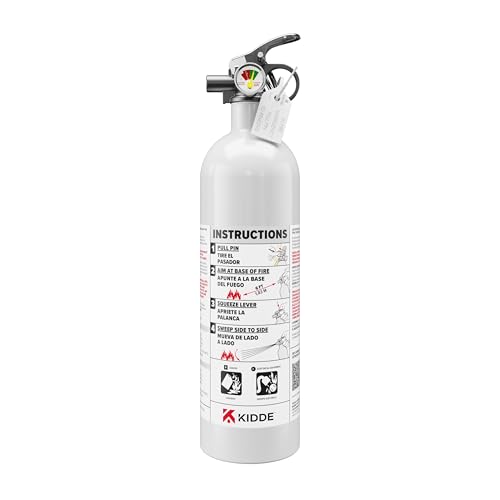
Best For small to mid-size boats that commonly face Class B (flammable liquids) and Class C (electrical) fires. This unit uses durable aluminum and stainless-steel components with an all-metal valve assembly and a rust-resistant lever, offering enhanced corrosion resistance in salty marine environments. Best for boaters seeking a compact, boat-specific extinguisher with a simple, single-use design.
Who it’s for: Sailors and small-crew boats needing a compact, marine-rated extinguisher for quick responses in the galley, engine room, or cockpit. Why selected: It targets typical marine fire scenarios and uses corrosion-resistant materials to withstand exposure to saltwater. Caution: Since it’s single-use, replacement after deployment is required; ensure you have a spare ready.
First Alert Marine Fire Extinguisher FE1A10GR
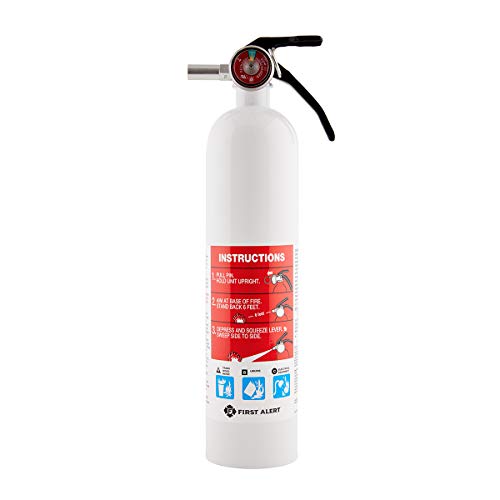
Best For boats that require a UL-rated option with a durable, all-metal construction. This extinguisher is rated UL 1-A:10-B:C and uses a commercial-grade metal valve and trigger, making it a solid choice for owners who want a proven, professional-grade option. It covers wood, plastics, liquids, and electrical fires, and can be recharged by certified professionals after use.
Who it’s for: Boaters prioritizing UL certification and a rugged, all-metal design. Why selected: The Marine1 classification aligns with standard marine safety practices, and the extinguisher’s broad fire-type coverage reduces the number of units needed onboard. Caution: Recharge after use requires professional service; plan for service intervals.
Kidde Fire Ext extinguisher for Boats, Single-Use 10BC
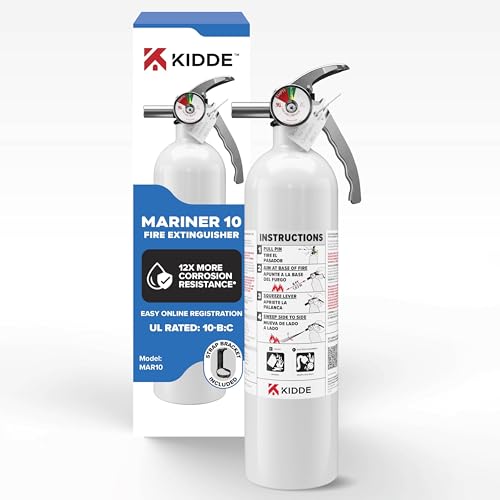
Best For mid-to-large boats requiring a higher-class extinguisher with broader reach. The 10BC model delivers a discharge time of 8–12 seconds and a discharge range of 6–8 feet, with corrosion-resistant aluminum and stainless-steel components. This makes it a strong candidate for boats with more equipment and higher fire-risk exposure.
Who it’s for: Vessel owners needing greater reach and rapid response in open-water scenarios. Why selected: The 10BC rating expands coverage for typical boat fires, and solid construction supports marine conditions. Caution: It remains a single-use device; keep track of expiry and replacement needs.
AmzBoom Fire Extinguisher for Home, Car, Boat 3-Pack

Best For owners wanting multiple, ready-to-grab extinguishers around the boat and other vehicles. This three-pack includes mounting brackets for easy access in kitchens, cars, and boats. It covers A (solids), B (liquids), C (electrical), and K (cooking oils) fires with a non-toxic, residue-free extinguishing formula designed to minimize cleanup.
Who it’s for: Households and boaters needing multiple, affordable units in different locations. Why selected: The multi-pack supports strategic placement on board, improving response times. Caution: The product relies on a water-based/alternative formula; verify compatibility with onboard maintenance and storage conditions.
Kidde Mariner 5 Fire Extinguisher For Boats

Best For compact, reliable marine protection on boats with limited space. The Mariner 5 is designed for quick action on common marine fires and features a corrosion-resistant aluminum/stainless steel construction. Its discharge time is 8–12 seconds with a 4–6 foot range and 100 PSI operating pressure, making it suitable for small engine rooms or cramped cabins.
Who it’s for: Small-to-mid-sized boats needing a compact, dependable option. Why selected: Its size and performance balance suit tight spaces while maintaining marine-grade durability. Caution: Single-use design requires prompt replacement after deployment; have backups available.
First Alert Fire Extinguisher | Personal Watercraft Fire Extinguisher

Best For personal watercraft or small craft that need Coast Guard alignment. This unit meets U.S. Coast Guard Size I requirements and carries ANSI/UL711 and CAN/ULC-S508 certification. It uses a dry chemical agent rated 5-B:C, suitable for fires involving flammable liquids and electrical equipment commonly found on small PWCs.
Who it’s for: PWC owners and small boat operators seeking Coast Guard-approved equipment. Why selected: Certification alignment ensures compliance with marine safety standards. Caution: It is a compact unit; in larger vessels, consider supplementing with a larger-capacity extinguisher for broader coverage.
Buying Guide: Key Considerations for Marine Fire Extinguishers
- Fire class coverage: Boats face A, B, C and sometimes K class fires. Look for extinguishers rated for B and C on watercraft, plus K if you cook aboard or store oils.
- Material and corrosion resistance: Saltwater and humidity demand aluminum/stainless-steel construction and rust-resistant components.
- Discharge time and range: Short, fast discharges help in confined spaces. A range around 4–8 feet is typical for marine extinguishers; longer ranges provide more reach on deck or engine rooms.
- Single-use vs rechargeable: Marine extinguishers are often single-use. If rechargeable, ensure access to certified service centers after deployment.
- Mounting and accessibility: Easy-to-reach placements with brackets improve response times. The AmzBoom set demonstrates the value of multiple mounting points.
- Certification and standards: UL, Coast Guard, and CAN/ULC certifications indicate compliance with safety norms for marine environments.
- Maintenance plan: Regular inspection, pressure checks, and replacement on schedule are essential for readiness.
Frequently Asked Questions
- What extinguisher size should I carry on a small boat?
– A compact, marine-rated extinguishers with Class B and C coverage is usually sufficient for small boats, but having two or more units placed in strategic locations improves safety. - Can I recharge a marine extinguisher after use?
– Some models are rechargeable by certified professionals; others are single-use. Check the manufacturer’s guidance for service options. - Do I need a different extinguisher for a boat kitchen (galley)?
– Yes, consider extinguishers with K class capability for cooking oil fires in addition to B and C for general marine fires. - How often should I inspect marine extinguishers?
– Regular checks are advised; inspect for corrosion, pressure, and legibility of labels, and replace if in doubt about readiness. - Is a multi-pack extinguisher setup beneficial?
– Yes, multiple units placed around the boat can reduce response time in different zones such as cockpit, cabin, and engine room. - Are Coast Guard certifications mandatory?
– Depending on your vessel type and usage, Coast Guard or regional requirements may apply. Always align with local regulations and safety guidelines.