Best Boat Alarm Motion Detectors for Real-Time Security Onboard
Instant motion alerts are essential for protecting boats against theft and unwanted intrusions. This guide highlights five reliable, ready-to-use motion detector options that fit marine environments and integrate with common security setups. The top choices are best for yacht owners seeking real-time notifications, anglers needing perimeter alerts, and RV or shore-side boat storage users who want simple installation and broad coverage. The following quick-reference table summarizes key points to compare at a glance.
| Product | Best For | Coverage | Notes |
|---|---|---|---|
| Vanemar Wireless Boat Motion Sensor | Real-time alerts on mobile devices | Boat surfaces, easy mounting | Requires Vanemar Gateway |
| CPVAN 125dB Indoor Motion Alarm (CP2 Pro) | High-sound deterrence in interiors | Up to 40 ft PIR range | Not waterproof |
| Luckydeer 125dB Alarm (CPIR style) | Standalone indoor security | 16-26 ft sensor range | Remote control included |
| HTZSAFE Driveway Alarm Kit | Outdoor perimeter monitoring | Up to 1/2 mile wireless | Weather resistant |
| TECKNET 125dB Indoor Alarm (CP2 Pro) | Flexible indoor use with remote | 40 ft PIR | Not waterproof |
Vanemar Wireless Boat Motion Sensor

Best for boat owners who want real-time alerts on their devices. This motion sensor offers immediate intrusion notifications to connected devices, enabling quick responses to potential security breaches. It installs easily with a simple mounting system and does not require complex wiring. The sensor is designed to work with the Vanemar Gateway, expanding coverage and adding an extra layer of protection. A key limitation is the need for the Vanemar Gateway to enable full functionality on some setups, so plan compatibility accordingly.
Who it’s best for: boaters who need real-time alerts on their phones or tablets and who already use or plan to use the Vanemar Gateway. Why selected: it emphasizes quick alerts and straightforward setup, improving onboard reaction times. Caution: some users may need the gateway for full integration, which could affect standalone use.
CPVAN 125dB Loud Motion Sensor Alarm (CP2 Pro, Black)

This option is best for interior spaces such as cabins, kitchens, garages, boats, or vans where a loud alarm is desired to deter intruders. It features a 125dB alert and a 40 ft PIR detection range, with a 328 ft remote control giving flexible arming and disarming options. Best for users who want a strong audible deterrent and the ability to control remotely. Limitation: not waterproof, so avoid exposure to rain or splashes in marine environments without protection.
Who it’s best for: boat interiors or adjacent storage areas needing a loud, controllable alert. Why selected: the high-volume siren and long remote range make this a standout deterrent in indoor or sheltered outdoor spots. Caution: not suitable for wet or marine-exposed zones without protection.
CPVAN 125dB Loud Motion Sensor Alarm (CP2 Pro, White)

This white variant mirrors the black CP2 Pro in features but offers a different aesthetic for interior installations. It provides the same 125dB siren and 40 ft detection range, with a 328 ft remote enabling behavior similar to the black model. Best for interiors or locations where color matching matters. Limitation: not waterproof; place away from moisture-prone areas.
Who it’s best for: interior spaces with color constraints and secure remote operation. Why selected: identical performance with a visually distinct option. Caution: ensure placement away from moisture-prone zones on boats.
Luckydeer 125dB Alarm with Remote Control

Best for stand-alone, portable security around boats, sheds, and cabins. The Luckydeer system offers a 16-26 ft PIR range with a 328 ft remote control, and a 125 dB siren to deter intruders. It emphasizes a complete home-security feel in a compact package. A limitation is its indoor-focused design, so plan outdoor use carefully in marine environments. Who it’s best for: boaters seeking a stand-alone, remote-controlled alarm for perimeter protection. Why selected: strong alert power with flexible remote operation for quick responses.
HTZSAFE Driveway Alarm Kit

Best for outdoor perimeter monitoring around docks, marinas, or boat storage areas. This kit offers a 1/2 mile wireless range and a 50-foot detection radius, with weather resistance for variable marine conditions. It’s ideal for wide spaces and longer perimeters. Limitation: outdoor performance can vary with terrain and weather; the system may require careful sensor placement to minimize false alarms.
Portable Outdoor Perimeter Alarm System (HTZSAFE)
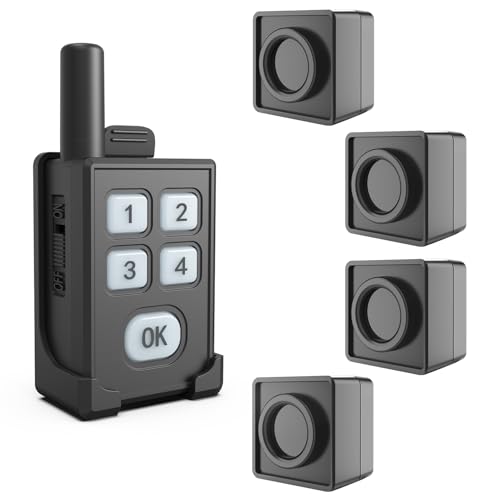
Best for mobile setups in camping, boating, or hunting environments where lightweight, portable security is needed. The kit includes 1 receiver and 4 sensors with IP65 weather resistance and a 1/4 mile range. It detects movement up to 35 feet and minimizes false alarms with optimized PIR sensing. Limitation: portability means fewer integration options for larger, fixed setups. Who it’s best for: outdoor enthusiasts and temporary campsites needing reliable perimeter alerts. Why selected: portability and rugged design for outdoor use.
Driveway Alarm Wireless Outside System (1 BY ONE)

Best for long-range motion sensing around property perimeters, driveways, and entry points. It offers up to 1000 ft/300 m wireless range between sensors and the receiver, with three alert options (sound, LED flash, or both). Two work modes give you a doorbell or alarm experience, making it versatile for boats and docked areas. Limitation: some users report sensitivity to environmental conditions; ensure proper sensor alignment. Who it’s best for: users needing a long-range, flexible alert system for outdoor property protection. Why selected: very long range and multiple alert modes improve situational awareness.
Buying Guide
Key purchase considerations for boat alarm motion detectors include:
- Environment and water exposure: Choose waterproof or weather-resistant sensors for open decks and exposed surfaces.
- Power and installation: Decide between battery-powered, USB-rechargeable, or hard-wired options based on setup complexity and maintenance.
- Detection range and coverage: Match sensor range to the boat size and perimeter; consider multi-sensor setups for larger vessels.
- Alert type and reach: Consider siren loudness (dB), remote control range, and whether mobile app alerts are desired for real-time monitoring.
- Integration and compatibility: Check if the system requires a gateway or hub for full use and whether it integrates with existing marine security ecosystems.
- False alarms: Look for PIR-based detectors with signal discrimination and tested placement to minimize false triggers from wind, sunlight, or wildlife.
FAQ
- What is the typical detection range for marine motion sensors?
Detection ranges vary by model; ranges often fall in the 16-50 ft PIR zone for interior units and up to 50 ft for some outdoor kits. For wide coastal docks, consider multiple sensors with overlapping coverage.
- Are these devices weatherproof?
Many outdoor-focused units are IP65-rated or better; interior-oriented models are not weatherproof. Always verify the product’s environmental rating before deployment near salt spray or rain.
- Do I need a gateway or hub for real-time alerts?
Some sensors require a gateway for full functionality and mobile alerting; others function as standalone alarms with remote controls or local sirens. Confirm compatibility with your security setup.
- Can these systems deter thieves effectively on boats?
High-decibel sirens, fast alerts, and remote control capabilities can deter intruders when used as part of a layered security approach. Real-time notifications improve response times.
- Are PIR sensors reliable on moving watercraft?
PIR sensors work best with stable surfaces and minimal wind-induced motion. Plan sensor placement to avoid reflections and repetitive motion that could cause false alerts.
- What maintenance is required?
Regularly check batteries, ensure wireless connections are stable, and inspect mounting hardware to maintain reliable operation in marine conditions.