Best Wind Turbine for Yacht: Top Marine-Ready Generators for Onboard Power
Answering the demand for reliable, shipboard power, this guide highlights wind turbines that suit yachts, sailboats, and other marine vessels. These picks balance quiet operation, durability, and marine suitability. Best for compact yachts: 500W and 1000W units with MPPT controllers. For larger vessels or extended trips: 3000W–5000W options can supplement battery banks and shore power. Each entry identifies the ideal buyer type, plus practical limits to watch for in marine environments.
Summary at a glance (selected products):
- VEVOR 500W Wind Turbine Generator Kit (RV/Boat use) — Best for small yachts and sailboats seeking quiet, efficient charging with MPPT.
- Usoraszkt Wind Turbine Generator Kit Vertical Axis 500W — Best for compact decks, low-noise operation, and simple orientation on boats.
- Solenvara 1000W Vertical Axis Wind Turbine — Best for space-constrained installations on boats needing modest higher output.
- AISINILALAO 3000W Wind Turbine — Best for boats with larger electrical loads or extended cruising where power demand is higher.
- HUIZHITENGDA 5000W Vertical Wind Turbine — Best for larger yachts or stationary marine setups needing significant wind-to-battery conversion.
VEVOR 500W Wind Turbine Kit With MPPT Controller

Key features include a 500W high-efficiency output and a 12V three-phase AC permanent magnet generator. It operates quietly at 55dB and uses an MPPT microprocessor to optimize current and voltage for varied electrical circuits. Start wind speed is 2.5 m/s with 3-25 m/s operating range, making it suitable for light-air days on small yachts. This kit is designed for boats, RVs, and off-grid homes, providing flexible installation options.
Best for: small to mid-sized boats needing reliable onboard charging with quiet operation. This model is a solid choice when a compact, MPPT-enabled turbine is preferred. Caution: ensure your mounting position avoids splash zones and blunt‑force exposures; water ingress can affect electronics.
Generic 3000W Wind Turbine Generator Kit (Vertical Axis)
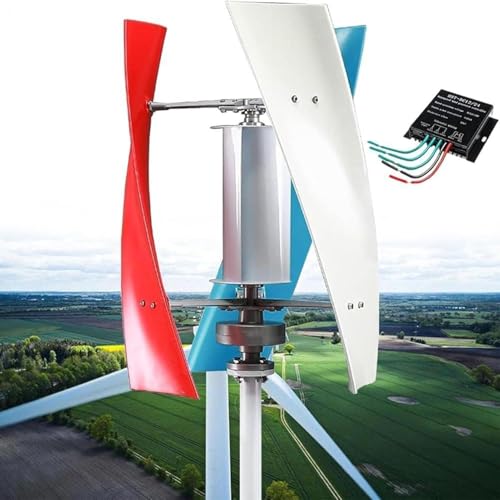
This kit features three-phase AC PMG, lightweight FRP blades, and a low-cut-in wind speed around 2 m/s. Its vertical axis design provides stable power generation with reduced noise and vibration, supported by a microprocessor controller that helps regulate output. The unit is described as durable with a design life aimed at long-term marine or coastal use. It’s best for boats where deck space and weight allow a larger turbine footprint.
Best for: boats needing substantial output without a yaw system due to vertical-axis orientation. Choose this if you require higher capacity on a mid-sized vessel. Limitation: the 0.6 m rotor diameter requires adequate space and mounting clearance on deck or below deck mounting points.
Usoraszkt Wind Turbine Kit Vertical Axis 500W

This 500W vertical-axis unit pairs a permanent magnet generator with two aluminum blades and a weather-resistant housing. It claims efficient operation at wind speeds up to about 42.65 ft/s and a starting wind speed lower than some competitors. Noise is kept under 62dB with a double-bearing rotor design to minimize vibration. It’s oriented toward yachts and small marine setups where quiet operation and simple maintenance matter.
Best for: compact yachts needing a low-noise, space-efficient option. Caution: check that blade span and mounting hardware fit your deck layout and that corrosion protection suits your marina environment.
VEVOR 500W Wind Turbine Kit With MPPT (3-Blade)

This variant emphasizes a 3-blade layout and an MPPT controller for efficient charging on boats and RVs. Start wind speed is 2.5 m/s with 12 m/s rated speed and an operating range of 3-25 m/s. The unit is marketed for RVs, boats, homes, and farms, indicating broad applicability on vessels with adequate deck space. A practical choice for mariners prioritizing a steady MPPT-driven output.
Best for: yachts with a preference for a three-blade design and MPPT-controlled power. Choose this if you want consistent performance in moderate winds. Limitation: ensure your hull and rail clearances will accommodate the rotor’s sweep area to avoid contact with antennae or rigging.
Solenvara 1000W Vertical Axis Wind Turbine

This 1000W lantern-style vertical-axis turbine emphasizes vertical-axis efficiency and compact design. It features five blades, a rotor designed for lower start-up wind speeds, and an electromagnetic braking system for safe operation. Materials like nylon fiber blades and a robust plastic body aim to tolerate marine weather. The lantern aesthetic suits marinas and dockside installations where space is limited yet higher output is desired.
Best for: larger yachts or coastal vessels needing higher output in restricted deck spaces. Caution: heavier weight and installation complexity may require professional mounting and electrical integration on boats with limited engine room access.
VEVOR 12V-500W Wind Turbine Kit With Anemometer

This 500W kit includes an anemometer and an MPPT controller, applying a 12V system design with 3-blade configuration. Start wind at 2.5 m/s, rated at 12 m/s, and 3-25 m/s operating range, mirroring other VEVOR models. The included anemometer aids in optimizing placement, especially important on yachts facing shifting wind conditions and limited deck space.
Best for: mariners who want wind measurement built into the kit for smarter deployment. Choose this if you want to pair wind data with MPPT-driven charging on a compact vessel. Limitation: ensure the mounting area can accommodate the anemometer tripod and wiring without interfering with deck operations.
Buying Guide
What size turbine do I need for a yacht?
Size depends on your boat’s electrical demands and available deck space. Smaller vessels often benefit from 500W–1000W systems with MPPT controllers for efficient charging. Larger vessels may require 3000W–5000W units to supplement battery banks during extended blue-water passages. Always align turbine capacity with the energy storage and consumption profile.
How important is the MPPT controller on a marine wind turbine?
MPPT controllers optimize the voltage to maximize power extraction across a range of wind speeds. For boats, where wind varies quickly, an MPPT-equipped turbine helps maintain charging efficiency and protects battery health. It is a practical feature to prioritize in marine environments.
What about noise and vibrations at sea?
Quiet operation is preferable on decks and close quarters. Many marine wind turbines advertise 55–62dB at typical wind, aided by dual bearings and robust rotor designs. Look for damped mounts and yaw-free vertical-axis options if space is constrained or if neighbor vessels are nearby in marinas.
What installation considerations matter on a yacht?
Consider wind exposure, spray zones, deck clearance, and mounting structure strength. Ensure the turbine’s rotor sweep fits around rails, antennas, and masts. Electrical integration with the yacht’s battery bank and shore-power system should include proper weatherproof enclosures and corrosion-resistant connections.
Which turbine type is best for boats: horizontal or vertical axis?
Vertical-axis turbines often fit tight spaces and require less yaw alignment, making them appealing on boats with limited deck room. Horizontal-axis units may offer higher efficiency in steady winds but require space for yaw alignment. Your choice should reflect deck layout, expected wind patterns, and maintenance preferences.
FAQ
- What wind speed is needed to start generating power on these turbines?
Answer: Start wind speeds vary by model, commonly around 2–2.5 m/s, with higher-rated performance in winds above 10 m/s for greater output. - Are these turbines safe for marine use in saltwater environments?
Answer: Most marine-focused turbines use corrosion-resistant materials and housings; ensure proper sealing, anti-corrosion coatings, and regular maintenance. - Do these kits include all necessary components for installation?
Answer: Many kits include the turbine, controller, mounting hardware, and sometimes anemometers. Verify each listing for included accessories and any required connection gear. - Can wind turbines replace a ship’s engine or generator?
Answer: They are designed to supplement energy storage and shore power, not replace an engine or primary generator for propulsion or essential systems. - What maintenance is needed for marine wind turbines?
Answer: Regular inspection of blades, bearings, seals, and electrical connections is advised. Clean salt spray from moving parts and ensure wiring remains protected from moisture.