Best Underwater Sealants for Boats: Top Marine Adhesive Picks
Choosing the right underwater sealant is essential for keeping a boat watertight, whether you’re repairing a hull, deck, or through-hull fitting. This guide reviews five top-rated products that perform well above and below the waterline, offering quick cures, strong bonds, UV resistance, and durability in marine environments. Each option is suitable for fiberglass, wood, metal, and other common boat materials, helping you find a reliable sealant for persistent leaks or routine maintenance.
Summary of chosen products
- Fortivo 5200 Marine Sealant – White, 10 oz
- Star Brite Marine Silicone Sealant – 2.8 oz (Black, White, Clear)
- Fortivo [Black] 5200 Marine Sealant – Black, 10 oz
- 3M Marine Adhesive Sealant Fast Cure 5200 (06535) – White, 1 fl oz
- Tylove 5200 Marine Sealant Alternative – White, 30 ml
5200 Marine Sealant Fortivo White 10 oz

Fortivo’s 5200 marine sealant is designed for heavy-duty marine applications, delivering a permanent and secure bond on a variety of surfaces. It is UV-protected and formulated for all-weather use, helping to resist sun damage and discoloration in harsh marine environments. The product cures rapidly, reaching full strength within about 24 hours, and becomes tack-free in roughly 2 hours, enabling faster project completion on boats, hulls, decks, and even RVs. This makes it a practical option for below-waterline sealing needs as well as above-waterline joints that require robust adhesion.
Features highlighted include high load-bearing capacity, UV protection, and a quick cure time, which together support reliable sealing with minimal downtime. This variant is ideal for fast repairs where a strong, durable seal is required in a marine setting.
Star Brite Marine Silicone Sealant
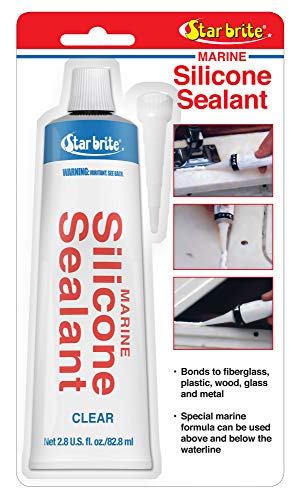
Star Brite’s Marine Silicone Sealant is a versatile, waterproof adhesive suitable for fiberglass, metal, wood, glass, ceramic, and more. Available in black, white, and clear, it provides a durable, weather-ready seal above and below the waterline. The silicone formula resists sunlight, weathering, and chemicals, reducing the risk of cracking or yellowing over time. It dries tack-free in under an hour and cures fully within 24 hours, which makes it a practical choice for quick sealing tasks like securing deck hardware, weatherproofing through-hulls, portholes, and joints, as well as common marine fixtures.
This product is particularly valued for its flexibility and broad material compatibility, making it useful for a variety of repair and maintenance scenarios on boats and other watercraft.
Fortivo Black 5200 Marine Sealant 10 oz

This variant mirrors the Fortivo 5200 line with a black formulation, offering the same heavy-duty bonding and UV resistance as its white counterpart. It is designed for subsurface sealing and exterior joints where color-matched caulking is desirable. The sealant’s rapid cure profile helps minimize downtime and supports quick repairs to hulls, decks, and around fittings in challenging marine conditions. The product emphasizes high load-bearing capacity and all-weather performance, making it suitable for a range of below-waterline applications and above-waterline joints that require long-lasting seals.
3M Marine Adhesive Sealant Fast Cure 4200

3M Marine Adhesive Sealant Fast Cure 4200 is a semi-permanent, flexible adhesive designed for boats and RVs, suitable for above and below the waterline applications where a resilient, weather-resistant seal is required. The one-part formula cures quickly, typically within 24 hours, enabling faster re-entry to service. It bonds well to a range of substrates including wood, fiberglass, and metal, making it a popular choice for sealing joints, rub-rails, and various exterior components as well as interior bonding tasks. It balances flexibility with strong adhesion to withstand marine movement and exposure.
Tylove 5200 Marine Sealant Alternative
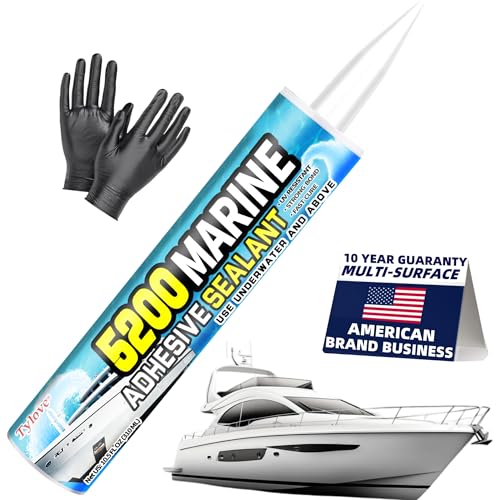
Tylove presents a water-based adhesive option positioned as a 5200 alternative with faster curing characteristics for marine projects. It aims to provide a hard, watertight seal on fiberglass, gelcoat, and wood, making it suitable for both above and below-waterline applications. The product emphasizes marine-grade performance without the long cure times commonly associated with traditional 5200 formulations, offering a practical option for time-sensitive repairs. It’s presented as a low-odor, eco-friendly alternative appropriate for multiple substrates frequently encountered on boats.
Buying Guide: Key Considerations For Selecting a Marine Sealant
- Environment and exposure: Below-waterline seals demand strong water resistance, saltwater durability, and UV protection for long-term performance. Above-waterline joints benefit from flexibility to accommodate movement and temperature fluctuations.
- Surface compatibility: Check compatibility with fiberglass, wood, metal, gelcoat, and plastics. Some formulas bond better to certain substrates, reducing the risk of debonding over time.
- Cure time: Faster cures reduce downtime but may affect initial handling and tackiness. Consider whether you need a tack-free surface in hours or a full cure within a day.
- Color options: For aesthetic reasons, color-matching to hulls or fittings can be important. Some brands offer multiple colors (white, black, clear).
- Bond strength and elasticity: Marine environments demand a sealant that holds under vibration, flexing, and immersion. Assess whether high load-bearing capacity or flexible bonding is more suitable for your project.
- Odor and environmental impact: Water-based and low-odor formulas are preferable for enclosed spaces or frequent boat maintenance areas. Consider eco-friendly options if preferred.
- Application tools and accessories: Some products include gloves, nozzles, or other accessories, which can affect convenience and cleanup.
For general maintenance, a silicone-based marine sealant provides excellent waterproof bonding with flexible performance, while polyurethane-based products (like the 5200 family) offer stronger, longer-lasting bonds for permanent installations. When choosing, balance speed of cure, bond strength, substrate compatibility, and exposure to sunlight and saltwater to select the best option for your boat.