Best Underwater Boat Paints for Protection and Performance
Answer: For boats that spend time with hulls submerged or just below the waterline, choose durable antifouling or barrier coats that resist corrosion, prevent fouling, and maintain a smooth, efficient hull. This guide highlights five top options for American boaters, covering epoxy barrier coats, antifouling paints, and protective sprays. It’s ideal for fiberglass, wood, aluminum, and general marine metal surfaces. The right pick depends on whether you need long-term underwater protection, easier touchups, or compatibility with specific hull materials.
| Product | Best For | Key Benefit |
|---|---|---|
| TotalBoat TotalProtect Epoxy Barrier Coat System | Fiberglass boats, below the waterline prep | High-build epoxy barrier for blister prevention |
| Rust-Oleum Marine Flat Boat Bottom Antifouling Paint | Fiberglass, wood or steel hulls | Copper-based foul-release protection |
| TotalBoat Outdrive AF Aerosol Spray | Propellers and underwater metals | Corrosion inhibition with zinc pyrithione booster |
| SENVEN Boat Paint | Topside, bottom and waterline in one coat | High-gloss, durable marine enamel for multiple substrates |
| Rust-Oleum Marine Coatings Topside Paint | Above-waterline surfaces on fiberglass, wood or metal | Flexible oil-based formula with easy leveling |
TotalBoat TotalProtect Epoxy Barrier Coat System
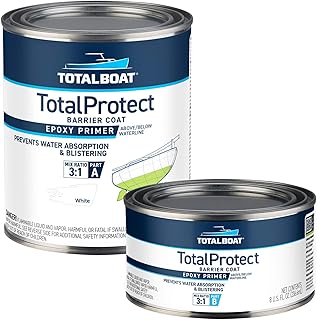
The TotalProtect system is a two-part epoxy primer and barrier coat designed for use both above and below the waterline. It is especially effective for gelcoat blister prevention and repairing fiberglass hulls, while also offering strong protection for underwater metals. Best for boat owners who need a robust, long-lasting barrier that minimizes blister risk and provides a solid base for topcoats. Caution: Proper mixing and surface prep are required to achieve optimal adhesion and curing.
Who it’s best for: boatowners seeking durable blister resistance on fiberglass hulls and corrosion protection for submerged metals. Why selected: strong epoxy barrier system that forms a high-build coat, reducing maintenance over time. Limitation: more involved application process than simple enamel coatings.
Rust-Oleum Marine Flat Boat Bottom Antifouling Paint

This antifouling paint is formulated to prevent fouling on fiberglass, wood, and steel surfaces. It slowly releases copper to deter barnacles and algae, helping maintain hull speed and reduce drag. Best for boaters who want a relatively simple, effective underwater protection solution that covers large areas. Caution: Not suitable for continuous submersion or very high-speed applications where wear is accelerated.
Who it’s best for: owners of mixed-material hulls seeking antifouling protection with practical recoat times. Why selected: proven copper-release chemistry and broad substrate compatibility. Limitation: reapplication timing and surface prep influence performance.
TotalBoat Outdrive AF Aerosol Spray Paint

This aerosol spray provides corrosion inhibition for underwater metals such as propellers, outdrives, shafts, and trim tabs. It contains zinc pyrithione to maintain smooth metal surfaces during service and dries quickly with a two-coat minimum recommended for single-season protection. Best for spot protection and easy touch-ups on exposed underwater hardware. Caution: Aerosol primers may require careful surface prep to prevent orange peel or fisheye.
Who it’s best for: boaters needing fast, protective coating on exposed marine hardware. Why selected: targeted corrosion protection with quick-drying, single-season suitability. Limitation: aerosol format may require ventilation and multiple light coats for even coverage.
SENVEN Boat Paint (All-In-One)
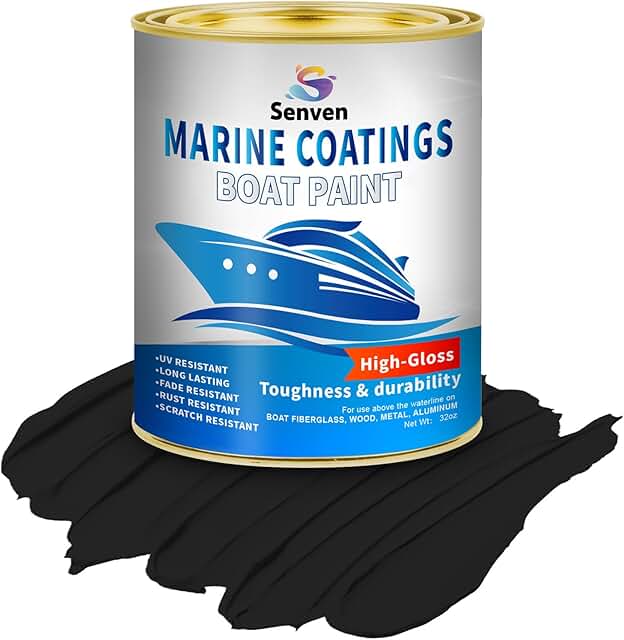
SENVEN offers an all-in-one marine enamel suitable for topside, bottom, and waterline applications on boats, docks, and marine equipment. The finish is a high-gloss polyurethane enamel designed to adhere to fiberglass, wood, metal, and previously painted surfaces. Best for boat owners wanting a durable, high-gloss finish in a single coat system for versatile marine surfaces. Caution: Not for continuous submersion on hulls that stay underwater for more than 72 hours.
Who it’s best for: owners looking for a single paint that covers multiple substrates with a gloss finish. Why selected: versatility and strong durability for non-submerged applications. Limitation: not ideal for long-term underwater immersion.
Rust-Oleum Marine Coatings Topside Paint

This topside paint is ideal for fiberglass, wood, or metal surfaces above the waterline. The oil-based formula offers flexibility and easy leveling, with a quick touch-dry window and coverage up to 100 sq ft. Best for boat exteriors that require a durable, flexible finish above water. Caution: Not designed for continuous submersion; choose antifouling options for submerged sections.
Who it’s best for: hull areas above the waterline needing a reliable, flexible topcoat. Why selected: straightforward application and durable finish. Limitation: not suitable for submerged portions of the hull.
Buying Guide: Key Considerations for Underwater Boat Paints
- Submersion Duration: Are you coating areas that stay underwater long-term or occasionally submerge?
- Hull Material: Do you have fiberglass, wood, aluminum, or steel? Some coatings adhere better to certain substrates.
- Fouling Goals: Is the goal to prevent barnacles and algae (antifouling) or to seal and protect against blistering (barrier coats)?
- Recoat Time and Curing: How soon do you want to recoat or launch after application?
- Surface Prep: Are you able to perform thorough sanding, cleaning, and priming as required?
- Environmental and Safety: Do you need low-odor options or spray formulations with proper ventilation?
- Maintenance and Touch-Ups: Will you perform spot coatings on propellers, outdrives, or underwater metals?
FAQ
- What is the best paint for boats that stay submerged for long periods?
Antifouling or barrier-coat systems designed for underwater use are recommended, such as epoxy barrier coats for blisters and antifouling paints for fouling control.
- Can I apply topside paint below the waterline?
No. Topsides are intended for above-water surfaces; use antifouling or barrier coatings on submerged areas.
- How often should underwater coatings be re-applied?
Reapplication timing depends on product type, substrate, and water conditions. Follow manufacturer guidelines and inspect for wear annually.
- Is spray-on protection better than brush-on for underwater metals?
Spray formulations offer even coverage and quick drying, but require proper ventilation and technique; brush-on can be easier for spot work.
- Can these paints be used on aluminum hulls?
Yes, several products are compatible with aluminum; verify substrate compatibility in the product data sheet before use.
- Do I need to remove old coatings before applying new ones?
In most cases, proper surface preparation is essential. Some products require sanding or chemical prep to ensure adhesion.