Best Two-Way Boat Alarm System Solutions for Safer Waters
Choosing the right two-way boat alarm system boosts security, deters theft, and provides real-time alerts when you’re away from the helm. This guide highlights five strong options that balance range, reliability, and ease of installation for American boaters. It covers systems with two-way or responsive remote capabilities, water resistance, and practical features for common boating environments. The buyer profiles below help you match the best pick to your boat size, location, and security needs.
Summary of selected products
| Product | Best For | Key Benefit | Notes |
|---|---|---|---|
| T-H Marine 2-Way Boat Alarm System | Large boats, remote monitoring | Up to 3000-yard alert range with 128 dB horn | Adjustable shock sensor; DIY install |
| VANEMAR Boat & Yacht Alarm System | GPS-based security | 24/7 GPS tracking and geofence | Battery and water level monitoring |
| WSDCAM 113dB Alarm System (2pack) | Versatile, multi-application | Remote control with long range and multiple sounds | IP65 waterproof; suitable for outdoor use |
| EASYGUARD EM212 2 Way Motorcycle Alarm | Compact boats or trailers needing two-way alerts | LCD pager, built-in sensors | Remote start option; requires additional wiring |
| SEAFLO High Water Level Alarm System | Bilge and water management | Audible/visual alerts for water levels | Solid-state switch; 4-year warranty |
T-H Marine 2-Way Boat Alarm System
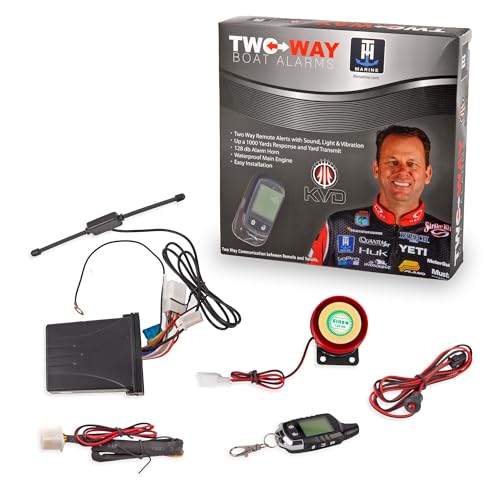
The T-H Marine 2-Way Boat Alarm System is designed for serious boat security with real-time two-way alerts. Best for boaters who want long-range awareness and quick responses from a handheld remote. The system supports up to 3000 yards of alert range, making it well-suited for boats docked in marinas or long piers where you can’t monitor from the cockpit constantly.
Who it’s best for: Owners of mid-to-large boats who need dependable, far-range notification and a robust audible alarm. It’s also ideal for DIY installers who want a straightforward setup with adjustable shock sensitivity to match the vessel’s environment.
Why selected: The combination of long-range two-way alerts, a powerful 128 dB horn, and an adjustable shock sensor delivers strong deterrence and fast status updates. Its DIY install helps keep costs reasonable for weekend boaters.
Limitation: The setup relies on the two-way remote working reliably at the full advertised range, which can be affected by environmental factors near docks or highly metallic hulls.
VANEMAR Boat & Yacht Security Alarm System

The VANEMAR system focuses on continuous security with GPS location tracking and geofence capabilities. This solution is best for boat owners who want to know the vessel’s position in real time and receive alerts if it crosses defined boundaries, even when they aren’t within radio range.
Who it’s best for: Those who store or sail their boat in remote spots or marinas where physical security alone isn’t enough. The GPS tracking and low-battery alerts add a layer of assurance for longer trips and multi-day hops.
Why selected: The GPS location tracking and geofence features provide proactive security beyond a traditional alarm. Battery monitoring helps prevent unnoticed power loss, which is a common failure point in marine security systems.
Caution: The system’s effectiveness depends on satellite signal availability and a reliable power source; performance can be limited in areas with weak GPS or cellular reception.
WSDCAM 113dB Alarm System (2pack)

The WSDCAM alarm system family offers versatile, multi-purpose security with remote control and a loud 113 dB alarm. The 2-pack option is useful for securing multiple entry points or vehicles such as a tender boat and trailer or other waterfront assets.
Who it’s best for: Boat owners who want flexible placement and the ability to alert across open spaces like a marina, parking lot, or boatyard. The remote function supports quick alarms when moving around the vessel while docked.
Why selected: Its remote control capability and IP65 waterproof rating make it adaptable for outdoor marine environments. The system’s multiple bell sounds and adjustable loudness support different security needs.
Caution: While versatile, it isn’t explicitly a two-way alarm with extensive feedback to a handheld console; consider this if you specifically need confirmation from a dedicated receiver.
EASYGUARD EM212 2 Way Motorcycle Alarm

The EASYGUARD EM212 provides a two-way motorcycle alarm setup with an LCD pager display. While marketed for motorcycles, its sensor suite—built-in shock sensor and microwave or proximity sensing—offers a template that can be adapted for small boats or tenders sharing a similar security challenge: protect gear and trailers when you’re away from the dock.
Who it’s best for: Boat owners with small vessels or trailers who want a compact two-way alert system that can be monitored via a handheld pager. It’s especially useful for those who frequently park boats in shared or negligent-risk areas.
Why selected: The two-way communication and LCD pager enable quick status checks without needing to be near the boat. It’s also adaptable to different mounting locations on smaller craft.
Caution: Some newer motorbikes may require additional relays or bypass modules to enable features like remote engine start; verify compatibility with your boat’s electrical system and any added accessories.
EASYGUARD EC201-M9 2 Way Car Alarm System
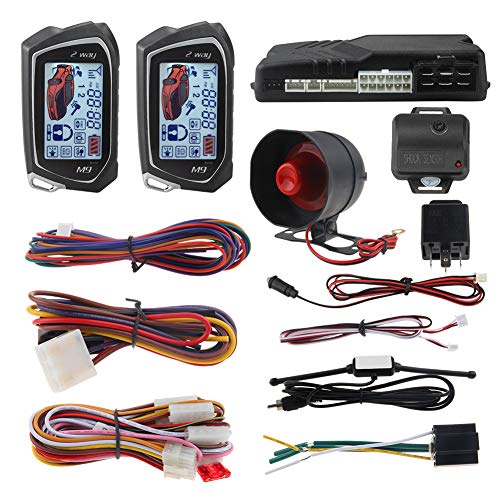
The EASYGUARD EC201-M9 offers a larger LCD pager display with a long remote working distance up to 800 meters in open space, making it a strong option for larger boats with docking layouts where the chipping or theft risk is higher away from the vessel. A remote start feature helps with engine readiness before departure.
Who it’s best for: Boat owners seeking long-range, clear vehicle status updates and a built-in starter option for convenient pre-ride checks or pre-dawn departures.
Why selected: The 1.73″ LCD pager provides easy-to-read vehicle status, while the remote engine start and turbo timer mode help preserve engine health and convenience on frequent boating days.
Caution: Some vehicles may require additional wiring or bypass components to support remote start, so verify installation requirements for your specific boat model and electrical system.
Blue Sea Systems 1070 Turbo Series Alarm Floyd Bell

The Blue Sea Systems 1070 Turbo Series Alarm Floyd Bell is a compact option with adjustable volume and a rotating bezel for quick, on-deck audible alerts. It’s designed for integrated marine electrical systems and is suitable for smaller boats where a simple alarm suffices for deterrence and notification.
Who it’s best for: Smaller vessels that need a straightforward audible alert without requiring extensive remote telemetry or GPS features.
Why selected: The adjustable volume and simple installation make it a low-friction upgrade for boats that don’t require complex monitoring systems.
Caution: This option focuses on audible alerts; it does not provide comprehensive remote or GPS-based security features seen in higher-end systems.
SEAFLO High Water Level Alarm System

The SEAFLO high water level alarm is a solid-state, 12V warning system designed for bilge and water level monitoring. It offers a reliable audible and visual alert when water thresholds are exceeded, helping protect pumps, bilges, and hull integrity. This is a practical choice for boats seeking early warnings in heavy rain, flooding, or bilge risk scenarios.
Who it’s best for: Boats prioritizing water management and bilge safety where an audible indicator is essential, especially on vessels with sensitive bilge pumps or slow response systems.
Why selected: The combination of a solid-state switch and a strong audible/visual alert delivers dependable scoping for water intrusion or high bilge levels.
Caution: It’s primarily a water-level detector rather than a full security alarm; pair with other security devices if you need broader theft deterrence and remote notifications.
Buying Guide: Practical considerations for two-way boat alarm systems
- Two-way functionality: Do you need remote acknowledgement of alerts? If yes, prioritize systems with two-way remotes or pager dashboards and test their range in your typical docking scenario.
- Coverage range: Longer ranges improve security when you’re away from the boat in marinas or on shore. Compare advertised ranges and real-world performance in outdoor environments.
- Power and wiring: Many marine alarms rely on 12V systems. Check power consumption, battery options, and whether installation requires professional wiring or basic DIY skills.
- Durability: Look for waterproof ratings (IP65 or better) and corrosion-resistant components to withstand salt spray and humidity.
- Sensor types: Shock, vibration, proximity, and motion sensors offer different levels of deterrence. Choose a system with sensors that match your boat’s layout and risk points (hatches, doors, engine compartments).
- Alarm alerts: Audible levels and visual indicators matter in noisy marinas. Ensure the system allows adjustable volume and multiple alert tones if needed.
- GPS and geofencing: For long-term security away from marinas, GPS tracking with geofence can provide location data and boundary alerts beyond traditional alarms.
- Installation scope: DIY-friendly units save money but may require basic electrical work. Consider professional installation for complex boats or if integrating with existing security panels.
Frequently asked questions
- What is a two-way boat alarm system? A two-way system provides real-time alerts to a remote, such as a handheld controller or pager, and may confirm status back to the vessel’s security panel.
- Do two-way systems require ongoing maintenance? Yes. Regular battery checks, sensor calibration, and software or firmware updates (if applicable) help maintain reliability.
- Is GPS tracking essential for boat security? GPS adds location-based alerts and geofence capabilities, which are useful for boats kept in large marinas or during long trips.
- Can I install these systems myself? Many are designed for DIY installation, but complex boats or integrated systems may require professional help.
- Will alarms deter theft on the water? Alarms act as a deterrent and provide quick alerts, but combining alarms with physical locks, cameras, and dock lighting enhances overall security.
- Should I pair a bilge alarm with a theft alarm? Yes. Bilge-level alarms protect against water intrusion while theft alarms deter unauthorized access; together they improve overall vessel safety.