Best Trolling Motor Power Centers for Boats
The best trolling motor power centers combine protection, portability, and easy access to charging options. This guide helps buyers choose the right unit for a small watercraft, kayak, or cabin boat. It highlights five practical options and explains who each one is best for, with clear trade-offs. Whether you need USB charging, DC outlets, or rugged outdoor use, these power hubs streamline battery wiring and onboard electronics without clutter.
Buyer overview table (at a glance):
- Newport Trolling Motor Smart Battery Box Power Center — Best for clean, simple setups on kayaks and small boats.
- GEARMEISTER Trolling Motor Power Center Station — Best for versatility with multiple inputs/outputs and rugged outdoor use.
- SUNAPEX Smart Battery Box — Best for built-in safety features and lighting for low-light use.
- Voltset Smart Marine Battery Box — Best for a compact, portable solution with a digital meter and safety features.
- DR.PREPARE Smart Battery Box — Best for all-in-one capability with multiple ports and real-time monitoring.
Newport Trolling Motor Smart Battery Box Power Center
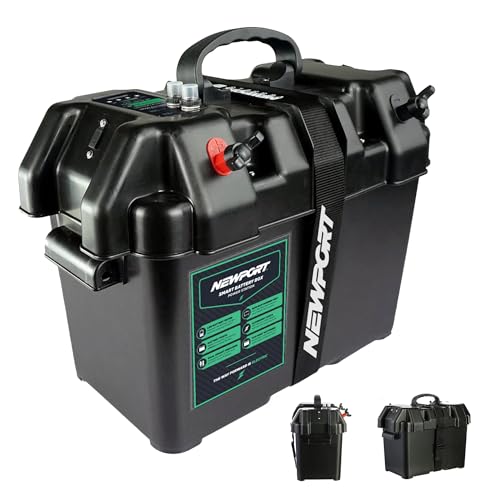
Best for: Small watercraft owners who want a clean, plug-and-play power hub with external terminals. This option provides an all-in-one marine power center with USB and 12V DC ports in a compact enclosure, minimizing exposed wiring.
Why selected: It emphasizes a simple, organized power setup, keeping motor leads and accessories in an accessible, tidy box. External battery terminals reduce the need to open compartments when on the water.
Limitations: Battery not included; unit relies on your existing 12V battery. May be less feature-rich for users needing multiple high-current outputs beyond USB and 12V.
GEARMEISTER Trolling Motor Power Center

Best for: Boat and RV users who want a flexible platform that supports 12V/24V systems with multiple inputs and durable, outdoor-ready housing.
Why selected: This box is pre-wired for convenience and includes a robust set of connections, including USB, 12V, Anderson plugs, and an LCD voltmeter with a resettable breaker. The design emphasizes durability and versatility for varied devices.
Limitations: Battery not included; larger footprint than some ultra-compact models, which may affect storage on smaller craft.
SUNAPEX Smart Battery Box 12V/24V

Best for: Mariners who want integrated safety features and easy nighttime use, thanks to built-in lighting and a strong protection system.
Why selected: The 16A overload switch and built-in lighting enhance safety and usability in dim conditions, while dual USB ports and sturdy construction support reliable charging for essentials on the go.
Limitations: May be more feature-rich than needed for basic setups, and the unit’s footprint might be larger than ultra-compact options.
SUNAPEX Smart Battery Box 12V/24V (Pro)

Best for: Users seeking a complete, all-in-one monitoring and protection system with real-time status updates for 12V/24V applications.
Why selected: It adds real-time voltmeter feedback, PD and QC charging, and 30A fuse protections across ports, supporting more complex on-board electronics and fast-changing power needs.
Limitations: Higher complexity means more components to manage; ensure you understand fuse replacements and monitor requirements in remote locations.
VOLTSET Smart Marine Battery Box

Best for: Kayak, small boat, and RV users who want a compact, portable power center with reliable safety features and a digital voltmeter.
Why selected: A 16A overload switch, dual USB ports, and a dedicated LED light provide a practical mix of safety and visibility. The ergonomic handles support easy transport between locations.
Limitations: May be less suitable for heavy-duty, high-current uses where larger Anderson connectors are advantageous.
Minn Kota Marine Battery Box Power Center

Best for: Small-boat operators who need external battery terminals for trolling motor leads without opening the box, plus a built-in state-of-charge meter.
Why selected: The external terminals simplify wiring, while the included meter helps monitor charge status on the water. This setup protects the battery and reduces clutter in small transom applications.
Limitations: Battery not included; some users may prefer more modern modular ports over a single-meter design.
Buying Guide
What size battery compatibility matters
Most trolling motor power centers are designed for 12V to 24V systems and work with common group sizes such as 24, 27, and 31. Confirm battery compatibility and ensure the box can physically accommodate your battery’s dimensions.
Which ports and protections do you need
Look for built-in USB ports for accessories, cigarette lighter sockets, and Anderson or high-current leads for trolling motors. A resettable circuit breaker and an overcurrent protection fuse protect devices and batteries from overloads.
Portability vs. durability
Compact models are ideal for kayaks and small boats, while rugged, dustproof housings suit open-water or RV use. Consider the weight, carry handles, and weather resistance when choosing a unit for outdoor environments.
Monitoring and safety features
Digital voltmeters and LED indicators help manage battery health. Optional features like built-in lighting aid navigation in low-light conditions. Real-time monitoring is valuable for proactive power management on longer trips.
Do you need mixed charging options?
For multiple devices, select a center with USB-C PD, USB-A QC 3.0, 12V, and additional power ports. More connectors offer versatility for GPS units, fish finders, and smartphones, but may add cost and complexity.
What about batteries not included?
Most product pages list “battery not included.” Ensure you purchase an appropriate group size battery separately and that the box’s weight rating, if any, accommodates the battery’s weight.
FAQ
- What is a trolling motor power center? A power center combines a battery box with integrated ports and protection to power trolling motors and onboard electronics.
- Is it safe to use these on saltwater boats? Most boxes are designed for outdoor and marine use, but verify IP ratings and corrosion resistance for saltwater environments.
- Can I run multiple devices from one unit? Yes, many models offer USB ports and 12V outlets, but high-current devices may require careful power budgeting.
- Do these units require professional installation? Basic setups can be DIY, but follow manufacturer instructions for wiring and safety, especially on larger 24V systems.
- Will these work with AGM, LiFePO4, or lead-acid batteries? Most support common 12V/24V marine battery chemistries; check the product specifications for compatibility and fuse ratings.
- Are these weatherproof? Many are built for outdoor use, but confirm IP ratings and enclosure sealing for your specific boating conditions.