Best Trolling Motor Pontoon Boat Options for Steady Cruising
Answer: For pontoon boat owners seeking reliable, quiet, and controllable propulsion, a bow-mount trolling motor with adequate thrust is essential. The best choices below are tailored for freshwater or saltwater use, deck mounting, and easy steering with a foot pedal or remote. These models suit anglers who want precise control, hands-free trolling, and simple installation. They are best for: compact to mid-size pontoons, lakes and slow-moving rivers, and boaters who value quiet operation and dependable deployment.
| Product | Thrust | Shaft | Mount Type | Best For |
|---|---|---|---|---|
| Minn Kota Pontoon Bow-Mount PowerDrive | 55 lb | 48 in | Bow-mount | Freshwater pontoons needing quick deployment |
| AQUOS Haswing CaymanB Bow Mount | 55 lb | 54 in | Bow-mount | Quiet operation with long remote range |
| Newport Pontoon-Series | 55 lb | 55 in | Bow-mount | Deck-mounted convenience on saltwater or freshwater |
| Newport NV-Series | 55 lb | 30 in | Transom-mount | Compact boats needing shallow shaft |
| Minn Kota Endura C2 Transom-Mount | 40 lb | 36 in | Transom-mount | Budget-friendly, reliable transom trolling |
Minn Kota Pontoon Bow-Mount PowerDrive – 55 Lb, 48″ Shaft

Best for freshwater pontoons needing quick, secure deployment. Features Deploy-Assist Lever for easy water entry and secure stowage, Aluminum Quick Release Bracket for easy removal, and a responsive PowerDrive foot pedal with an 18-foot cord. This setup suits anglers who want precise control from the bow, with a simple deployment workflow. Caution: Foot pedal not included on GPS-enabled PowerDrive Pontoon models.
AQUOS Haswing CaymanB Bow Mount – 55 Lb, 54″ Shaft

Best for anglers seeking quiet operation and long-range remote control. The CaymanB features a 12V 55LBS motor with 54″ shaft, designed for smoother, quieter trolling and more precise speed control via a wireless 2.4G remote up to 164 feet away. It supports boats up to about 2750 lbs and includes cruise control (not Spot Lock). Choose this if you value extended remote reach and silence; caution: remote-based control requires attention to wind or current for directional accuracy.
Newport Pontoon-Series 55lb Trolling Motor

Best for deck-mounted setup on saltwater or freshwater pontoons. This model delivers 55 lb thrust with a 55″ fiberglass shaft and robust battery cable leads. It’s designed for easy mounting and reliable performance on mid-sized pontoons where deck space is a consideration. Limitation: longer shaft may require taller mounting hardware on higher pontoons.
Newport NV-Series 55lb Transom-Mount

Best for smaller boats needing a compact transom mount with solid power. The NV-Series offers 55 lb thrust, a 30″ shaft, LED battery indicator, and a telescoping tiller handle. It provides good low-end torque and a compact footprint. Best for smaller pontoons or bass boats that require a shorter shaft; caution: shorter shaft can impact performance in rough water or with higher bow heights.
Minn Kota Endura C2 Transom-Mount – 40 Lb, 36″ Shaft
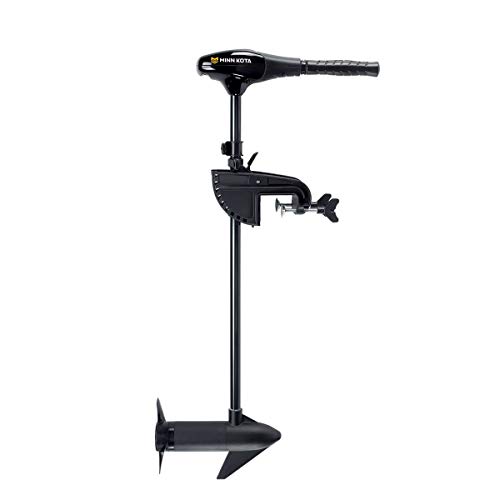
Best for budget-conscious buyers who want reliable transom propulsion. The Endura C2 features a 40 lb thrust with a 36″ shaft and includes a telescoping tiller and a 10-position lever lock bracket. It’s designed for sturdy marine use and thick vegetation with the Power Prop. Choose this if you need a straightforward, durable transom-mount option; limitation: lower thrust may be less ideal in strong winds or heavy currents.
Buying Guide: Key Considerations for Trolling Motors on Pontoon Boats
What size thrust do I need for a pontoon boat?
- For small to mid-size pontoons, 40–55 lb thrust is common and adequate for trolling and slow cruising. Larger pontoons or boats with heavier loads may benefit from higher thrust or longer shafts to maintain performance in wind and current.
Bow-mount vs. transom-mount—what’s the difference?
- Bow-mounts offer fingertip control at the bow with easy deployment and stowage, ideal for precise steering while fishing. Transom-mounts are often simpler to install and are a good fit for smaller boats or budget-first setups but may limit control leverage in rough water.
What shaft length should I choose?
- For pontoon boats with higher decks, longer shafts (50–60 inches) keep the propeller submerged and protected. Shorter shafts (30–36 inches) work well for shallow or low-profile configurations. Consider deck height and keel design when choosing shaft length.
Remote control and GPS features—are they worth it?
- Remote controls extend trolling versatility, especially when fishing away from the bow. GPS features like Spot-Lock offer hands-free dwelling in a spot, but may require additional setup and power. Evaluate your fishing style and power budget before selecting GPS-enabled models.
Installation and maintenance considerations
- Look for quick-release brackets for easy removal in saltwater or freshwater environments. Check for corrosion-resistant components, reliable battery indicators, and compatibility with your boat’s power system. Regularly inspect water exposure areas and prop assemblies for debris and fatigue.
Best picks by scenario
- Freshwater casual fishing or lakes with calm water: bow-mount PowerDrive or CaymanB for precise control.
- Deck-mounted pontoons needing quiet operation and long-range remote use: choose the CaymanB or Pontoon-Series options.
- Smaller or budget boats: Endura C2 transom-mount provides reliable value with straightforward setup.
Frequently Asked Questions
- What is the typical lifespan of a trolling motor on a pontoon boat?
Life expectancy depends on usage and maintenance but most motors are designed for years of regular use with proper care.
- Is a bow-mount or transom-mount better for fishing accuracy?
Bow-mounts generally offer more precise control and stability for fishing, while transom-mounts can be simpler and lighter for basic trolling.
- Can I use the same trolling motor on freshwater and saltwater?
Many models are designed for both freshwater and saltwater, but confirm corrosion resistance and mounting hardware suitability for saltwater environments.
- Do trolling motors come with remotes or GPS features?
Some models include wireless remotes and GPS features. Availability varies by model; consider your need for hands-free control and power usage.
- How do I choose the right shaft length for my pontoon?
Measure from the waterline to the mounting point to ensure the propeller remains submerged in typical operating conditions across waves and load variations.
- What maintenance is required for a trolling motor?
Regularly inspect propeller and shaft for damage, lubricate moving parts per manufacturer guidance, and check battery connections and wiring for corrosion.