Best Tow Bridle for Boat: Top Tow Harnesses for 1-4 Riders
Answering the need for safe, centered towing behind a boat, these top tow bridles and harnesses are designed to keep lines aligned, reduce propeller risk, and simplify setup. They’re ideal for boaters who pull 1-4 rider tubes, wakeboards, wakeskis, or jet skis. This guide highlights five strong options, noting who each is best for and how they differ in design, buoyancy, and reliability. Use the quick comparison table to scaffold your choice before reading detailed product insights.
| Product | Best For | Key Benefit | Limitations |
|---|---|---|---|
| Airhead Heavy Duty Tow Harness | Casual to intermediate tubing and water sports | Heavy-duty 12-foot rope with Kwik-Connect for easy setup | 8.5+ ft beam recommendations vary by boat |
| ASVAEVAS Self Centering Tow Harness | High-demand towing with complex turns | 360° rotation pulley for centered pulls | Heavier setup; storage requires space |
| SELEWARE Self-Centering Tow Harness | Longer sessions and frequent turns | Floating design and stainless hardware for visibility | May be bulkier for compact sterns |
| FEIJAZUM 3 Point Dinghy Towing Bridle | Inflatable or dinghy boats needing even pull | Adjustable middle leg for balanced force | 3-point design adds setup steps |
| BeneLabel Tow Harness with Pulley | Versatile water sports setups | Stainless steel pulley and floating design for safety | Requires correct alignment to avoid snagging |
Airhead Heavy Duty Tow Harness for 1-4 Riders

Features: This heavy-duty tow harness is designed for pulling 1-4 person towable tubes, water skis, wakesurfs, and wakeboards. It uses a Kwik-Connect system for quick attaching to the boat. The included 12-foot, 16-strand rope provides length to span wider beams. Each hook opening is 3/4 inch to secure lines firmly.
Best for: Casual families and recreational boaters who frequently tow multiple riders or various water sports behind a mid-size to large boat. The long rope helps accommodate wider sterns.
Why selected: It offers a straightforward setup with a durable, long rope and a simple attachment system, making it a reliable all-around choice for common towable activities.
Caution/Limitations: The 12-foot rope may be lengthy for narrow beams; ensure the hooks clear side rails during sharp turns to prevent snagging.
ASVAEVAS Self Centering Boat Tow Harness

Features: A robust 32-strand rope with a 5000-lbs break strength. It includes a 360° rotation self-centering pulley that keeps the harness aligned during turns and a yellow float plus foam flotation sections to stay buoyant and visible, reducing tangling and keeping away from propellers.
Best for: Serious water-sport setups where centered towing and stable turns are essential, especially on boats with wider sterns or frequent aggressive maneuvers.
Why selected: The high tensile strength and self-centering pulley design offer improved stability for high-speed or high-wind conditions.
Caution/Limitations: Heavier and more complex than basic harnesses; ensure proper storage and inspection for wear on the 32-strand rope.
SELEWARE Self-Centering Boat Tow Harness

Features: This heavy-duty tow harness distributes pull force evenly with a self-centering stainless steel pulley. It includes a floating 4″ buoyant ball to keep the system above water and avoid propeller contact, while it uses ultra-strong 16‑strand polyethylene rope and stainless hardware.
Best for: Boat owners who prioritize even pull distribution and clear visibility when turning sharply, especially on larger vessels.
Why selected: Floating design and centralizing pulley reduce the risk of hull damage and line tangling during complex paths.
Caution/Limitations: The system can be bulkier; ensure the stern area has space for the pulley and rope to move without interference.
FEIJAZUM 3 Point Dinghy Towing Bridle
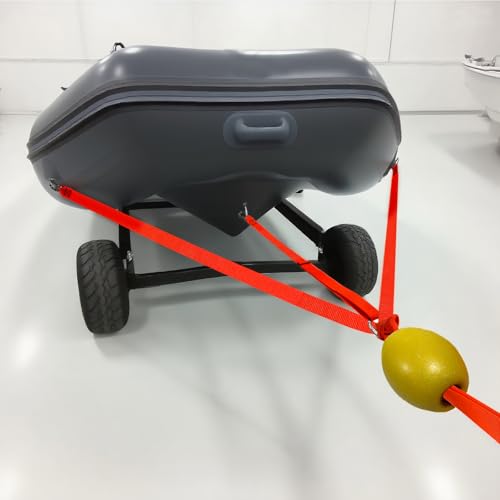
Features: A three-point towing bridle with an adjustable middle leg, using 1-inch high-strength polyester webbing for uniform force distribution. It includes a high-density yellow buoyancy module to keep the line afloat and above water, especially useful for offshore operations.
Best for: Inflatable boats, dinghies, or small craft that require balanced pulling and protection against side-to-side drift.
Why selected: The adjustable middle leg helps balance forces, reducing the chance of yaw during pulls on narrow sterns.
Caution/Limitations: Setup complexity is higher than single-line harnesses; ensure correct attachment points to maintain balance.
BeneLabel Tow Harness with Pulley

Features: This harness uses a stainless steel pulley to keep the rope centered, and a 4″ float ball to ensure buoyancy and safety around the propeller area. It supports up to 5000 pounds of tensile force and is designed to handle 1-4 rider setups, including tubes and boards.
Best for: Versatile water-sports towing behind boats that require centered pulls with a reliable float design and durable hardware.
Why selected: The combination of a centered pulley and floating design provides predictable towing behavior and improved safety in busy waters.
Caution/Limitations: Correct alignment is important to avoid rope snagging in tight turns near the stern.
Buying Guide
- Tow load and rider count: Choose a harness rated for the maximum number of riders (1-4) and the expected stress, typically 3000-5000 lbs pull capacity.
- Centering and pulley design: Self-centering pulleys and floating designs improve stability, reduce steering feedback, and protect hulls from hard pulls.
- Rope type and length: Longer, multi-strand polyethylene ropes offer durability and flexibility; ensure rope length matches your boat’s beam and stern geometry.
- Buoyancy and visibility: Floating components and bright colors improve retrieval visibility and reduce entanglement risk with propellers.
- Ease of use and maintenance: Look for quick-connect systems, simple clipping hooks, and materials that resist corrosion in saltwater environments.
- Storage and portability: Some models are heavier or bulkier; consider boat space and ease of stowage when selecting.
- Safety considerations: Always inspect for wear, replace damaged components, and ensure proper attachment points on the stern to prevent line fouling.
Frequently Asked Questions
- What is a tow harness with a pulley best for? It helps keep the tow rope centered behind the boat, improving stability during turns and reducing propeller risk.
- How long should a tow rope be? Rope length varies; common options range from 8 to 12 feet or more to accommodate wider beam boats.
- Is a floating tow harness safer? Floating designs improve visibility and reduce entanglement with propellers, especially in choppy water.
- Can these harnesses handle 4 riders? Many models are designed for 1-4 rider configurations, with load limits typically around 3000-5000 lbs working tension.
- What maintenance is required? Regularly inspect hooks, pulleys, rope integrity, and hardware; clean saltwater gear after use and store dry.
- Are these suitable for inflatable boats? Some bridles are well-suited for dinghies and inflatable craft, but always confirm compatibility with the manufacturer’s guidelines.