Best Thru Hull Vent Fittings for Boats and Yachts: Durable, Easy Install Guides
Answer: The top picks are durable, corrosion-resistant thru hull vent fittings that fit common hose sizes and offer secure mounting for marine ventilation. This guide highlights five products that balance durability, compatibility, and value for boaters, sailors, and RV/mobile marine setups. Each option targets a specific use case — from fuel-tank venting to standard through-hull venting and hose connections — so you can choose the best fit for your vessel and environment.
| Product | Best For | Fit | Notes |
|---|---|---|---|
| Seachoice Thru Hull Fuel Tank Vent, Chrome-Plated Brass, 5/8 In. | Durable fuel venting | 5/8 in hose | Corrosion-resistant chrome brass |
| Seachoice Thru Hall Fuel Tank Vent, Chrome-Plated Brass, 5/8 In., 90 Degree | 90-degree routing | 5/8 in hose | Same material, different angle |
| SEAFLO 1″ 90° Angled Thru Hull Through-Hull Fitting | Tight spaces, built-in check valve | 1 in | 4-year warranty |
| VTurboWay Stainless Steel 316 Thru Hull Exhaust Skin | Heated exhaust or venting near saltwater | 24 mm hose inner | Corrosion-resistant stainless |
| CROSSBODY 2 Pcs Thru Hull Fitting – Plastic Through Hull Connector | Budget-friendly, easy install | 1 in / 3/4 in variants | Lightweight plastic |
Seachoice Thru Hull Fuel Tank Vent, Chrome-Plated Brass, 5/8 In.

Reference: Allows for thru-hull fuel tank venting via a hose from the tank. Best for: boaters needing reliable corrosion-resistant venting for fuel tanks. Why selected: polished chrome-plated brass offers durability in marine environments with two vent holes for adequate venting. Caution: hose not included, so ensure you have the correct hose for your setup.
Seachoice Thru Hull Fuel Tank Vent, 5/8 In., 90 Degree

Reference: Similar chrome-plated brass vent with a 90-degree configuration. Best for: installations requiring a right-angle run to clear obstructions. Why selected: two vent holes and durable construction help ensure reliable venting. Caution: still requires a compatible hose and proper sealing.
SEAFLO 1″ 90° Angled Thru Hull Fitting With Built-In Check Valve

Reference: Angled through-hull with built-in check valve for enhanced functionality. Best for: tight spaces where hoses must change direction while maintaining a secure seal. Why selected: high-strength PP+GF and nylon construction resists marine wear; warranty provides long-term assurance. Caution: size is 1 inch, verify hose compatibility and available space before install.
CROSSBODY 2 Pcs Thru Hull Fitting – Plastic Through Hull Connector

Reference: Plastic through-hull connectors with a broad flange for secure fittings. Best for: budget-conscious projects or where lightweight fittings are sufficient. Why selected: two-pack provides extra value and flexibility for multiple openings. Caution: plastic fittings may be less durable in very harsh conditions compared with brass or stainless options.
YOQVQOY 2Pcs Thru Hull Fitting (1″), Marine Through Hull Connector
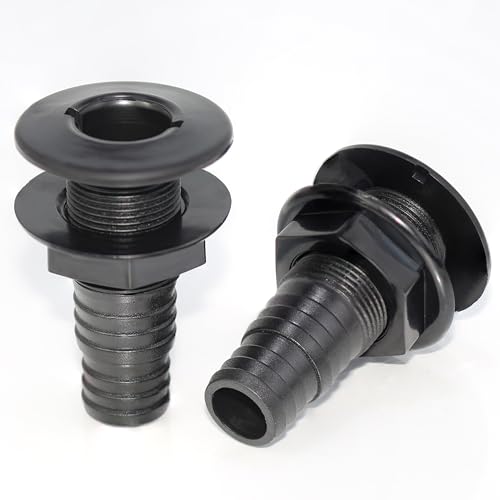
Reference: Durable 1-inch hose connections with corrosion resistance for marine environments. Best for: standard 1″ hose runs on boats, yachts, or RV setups. Why selected: universal fit and two-pack redundancy. Caution: ensure actual hose diameter matches the 1″ specification to prevent leaks.
Buying Guide: How To Choose The Right Thru Hull Vent Fittings
- Material matters: Choose brass or stainless for durability in saltwater; plastic is budget-friendly but may wear faster.
- Hose compatibility: Confirm hose inner diameter fits the fitting’s stated size (5/8″, 3/4″, 1″, or 24 mm).
- Angle and routing: 90-degree fittings help route hoses around obstructions; straight fittings simplify straight runs.
- Built-in valves: Check for check valves to prevent backflow in vents or bilge systems.
- Environmental exposure: Consider corrosion resistance if the fitting is near high-salinity spray or direct exposure to seawater.
- Installation considerations: Ensure flange design and mounting depth work with your hull material and thickness.
FAQ
- What size thru hull fittings are most common for venting?
Most common sizes include 5/8 inch and 3/4 inch hose connections, with 1 inch for larger runs. - Do thru hull vents require a check valve?
A check valve is not always required, but it improves protection against backflow in some configurations. - Can plastic thru hull fittings be used on saltwater boats?
They can be used for lightweight or temporary installations, but brass or stainless options perform better in harsh marine environments. - How do I know if a 90-degree fitting is right for my install?
Use a 90-degree fitting when hose routing would otherwise require an abrupt bend that risks kinking; measure clearance and ensure the hose can bend smoothly. - Is it necessary to seal fittings?
Yes, use marine-grade sealant or gaskets as appropriate to prevent leaks around the flange and threads. - What’s the advantage of a stainless steel thru hull vent?
Stainless offers excellent corrosion resistance in saltwater environments and longer service life in exposed locations.