Best Strobe Light for Boat: Top Marine SOS Signals for Safer Voyages
When choosing a strobe light for a boat, you want a device that is Coast Guard compliant, highly visible, and durable enough for marine conditions. This guide highlights five top options that are well-suited for different boating needs—from coastal distress signaling to personal safety on small craft. The best fits vary: some are compact personal beacons, others are kit-based distress signals with whistles and flags. The following products are selected for visibility, reliability, and practical use on the water.
| Product | Best For | Why Selected |
|---|---|---|
| Sirius Signal C-1003 SOS LED Distress Signal | Family boats needing ready-to-use kits | USCG approved, long-lasting, bright up to 10 nautical miles |
| ACR C-Strobe LED Life Jacket Emergency Signal | Personal safety on small craft | USCG & SOLAS approved, wearable, easy to deploy |
| ACR C-Strobe™ H20 | Compact signaling on deck | Lightweight, IPX rating, simple to carry |
| ust See-Me 1.0 Waterproof Strobe | Emergency signaling with compact form | Durable IPX7, long run times, AAA powered |
| ustSee-Me 2.0 Water Activated Strobe | Emergency signaling during outdoor adventures | Long battery life, water-activated option |
Sirius Signal C-1003 SOS LED Distress Signal
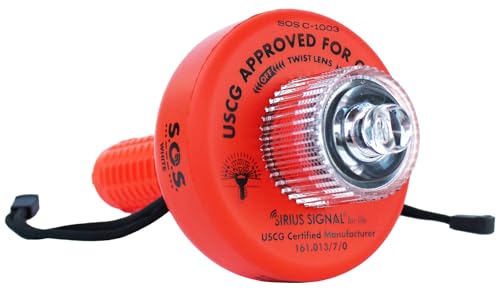
The C-1003 is a comprehensive distress kit designed to meet USCG requirements for night, day, and audible signals. It is ideal for boaters who want a ready-to-deploy system with clear visibility. Best for family or crew safety on mid-sized vessels where a durable, certified signal is preferred. It includes batteries and a daytime flag plus whistle for audible signaling. A caution: while long-lasting, the device requires proper maintenance to ensure the LED signal remains functional per USCG standards.
Key reasons to choose this model:
- USCG approved distress solution
- Up to 60 hours of SOS flashes, exceeding some standards
- Bright visibility up to 10 nautical miles
ACR C-Strobe LED Life Jacket Emergency Signal
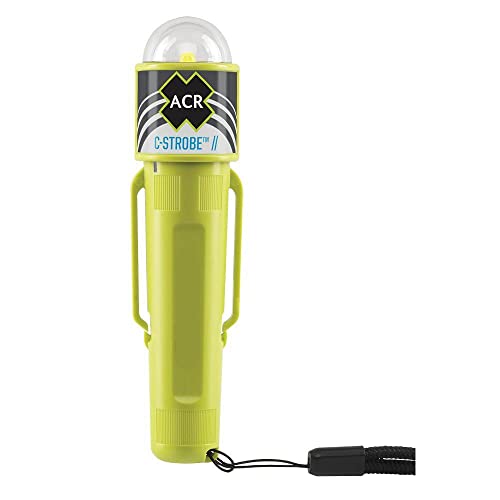
This wearable emergency signal is designed for personal safety on small boats or shore excursions. It’s USCG and SOLAS approved and works with AA batteries. Best for single-handed crews or passengers who want quick access to a signaling beacon without handling larger gear. A limitation: battery type must be maintained, and replacements should be on hand to ensure continuous signaling capability.
Highlights include:
- USCG & SOLAS approval for peace of mind
- Compact, wearable form factor
- Requires AA batteries
ACR C-Strobe™ H20

The C-Strobe H20 is a compact signaling option with a straightforward design. It’s better for boaters who need a lightweight, deck-ready beacon with reliable performance. Best for quick checks or as a secondary signal on larger vessels. Caution: data indicates a small footprint and light weight, which may not be ideal for heavy-weather signaling in high seas.
Key points:
- Lightweight and compact
- Simple signaling device for deck use
- IPX rating suggests water resistance
ust See-Me 1.0 Waterproof 28 Lumen

This compact strobe is designed for emergency signaling and survival use. It runs on AAA batteries and offers a long run time with a bright, steady output. Best for hikers or small craft where a lightweight, dependable beacon is needed. Limitation: lower lumen output compared with larger strobe devices means it may be less effective in extreme visibility conditions.
Why it stands out:
- IPX7 waterproof rating
- Long runtime with replaceable batteries
- Very compact for easy storage
ustSee-Me 2.0 Water Activated Strobe

The See-Me 2.0 adds a water-activated signaling option, expanding signaling versatility for sea rescue or survival scenarios. Best for outdoor adventures where water exposure is likely. It provides a longer signaling window—up to 120 hours with 60 flashes per minute. Limitation: requires water exposure to activate, so manual readiness is still important.
Summary of features:
- Water-activated signaling option
- IPX7 waterproof protection
- Long-lasting LED with replaceable batteries even when not activated
Buying Guide: How To Choose The Right Boat Strobe Light
What level of approval matters? USCG and SOLAS approvals provide a verified standard for distress signaling. For mandatory signaling on most American boats, choose devices with USCG approval or equivalent certifications to ensure reliability in emergencies.
How important are battery options? Battery type affects availability and endurance. Devices using AA or AAA batteries offer broad accessibility, while rechargeable packs reduce waste and maintenance. Consider availability of spare batteries and expected run times.
What about visibility and range? Look for higher lumen ratings, long-duration flashing, and coverage that reaches far distances at sea. In bright daylight, higher lumen output can improve detection by other vessels.
Is the device compatible with your boat’s setup? Wearable signals are convenient for crew mobility, while kit-based signals installed aboard provide a centralized distress signaling solution. Assess whether you need a mount, flag, whistle, or display features for day signaling.
Durability matters on the water. IPX7 or better ratings indicate water resistance. A rugged housing and impact resistance help ensure functionality after shipboard bumps or drops.
Quick comparison table of top options
| Product | Best For | Key Benefit | Limitation |
|---|---|---|---|
| Sirius Signal C-1003 | Family or crew safety kit | USCG approved, up to 10 NM visibility | Batteries included, needs maintenance |
| ACR C-Strobe Life Jacket | Wearable personal signaling | USCG & SOLAS approved, wearable | Battery type management required |
| ACR C-Strobe H20 | Deck signaling | Lightweight, deck-ready | Limited data on run-time specifics |
| ust See-Me 1.0 | Compact emergency beacon | IPX7, long runtime | Lower lumen than large beacons |
| ust See-Me 2.0 | Water-activated signaling | 120-hour signaling option | Requires water exposure to activate |
Frequently Asked Questions
- What is the best strobe light for a small boat? The best option depends on use: wearable signals for crew safety or kit-based beacons for a centralized distress signal. Select USCG-approved models for formal compliance.
- Do these devices require batteries? Yes. Most options use AA or AAA batteries; some kits include batteries, others require you to purchase replacements.
- Are strobe lights legal for nighttime signaling? Yes, when they are Coast Guard approved and used according to regulations. Always follow local maritime signaling rules.
- Can strobe lights be used in daylight? Yes, but higher lumen output helps visibility in bright daylight conditions. Consider placement to maximize line-of-sight.
- What about water exposure? Look for IPX7 or better ratings for protection against water immersion, and ensure seals and housings are intact prior to use.
- Should I buy multiple signaling devices? For coastal safety, having both a wearable signal and a deck-mounted kit increases signaling reliability in varied scenarios.