Best Stainless Steel Anchors for Boats: Durable Delta and Fluke Options
Finding the right stainless steel anchor means matching holding power with corrosion resistance and easy handling. This guide focuses on five dependable options designed for boats from small runabouts to mid-sized ships. Each product targets different bottom types and vessel sizes, so you can choose what best fits your typical waters. Whether you need quick setting, self-launching action, or maximum bite in mud, sand, or rock, these anchors deliver reliable performance in saltwater and freshwater alike. The buyer-friendly comparisons below help you pick the best match for your boat and anchoring needs.
| Product | Style | Weight | Best For |
|---|---|---|---|
| CORDUN Delta Anchor 316 | Delta | 16 lb / 7 kg | Ponton/Yacht up to 35 ft; mixed bottoms |
| SEAPROOF 11 lb Fluke Standing | Fluke | 11 lb | Boat up to ~30 ft; quick setting |
| FUCNEN Delta Anchor 11 lb | Delta | 11 lb / 5 kg | 20–26 ft boats; easy stowage |
| ISURE MARINE Delta/Wing 11 lb | Delta/Wing | 11 lb | Versatile bottoms; one-piece design |
| Lewmar DTX Anchor 10 kg / 22 lb | Delta | 10 kg / 22 lb | 18–27 ft boats; Lloyd’s-certified |
CORDUN Delta Anchor 316 Stainless Steel Mirror Polished Boat Anchor
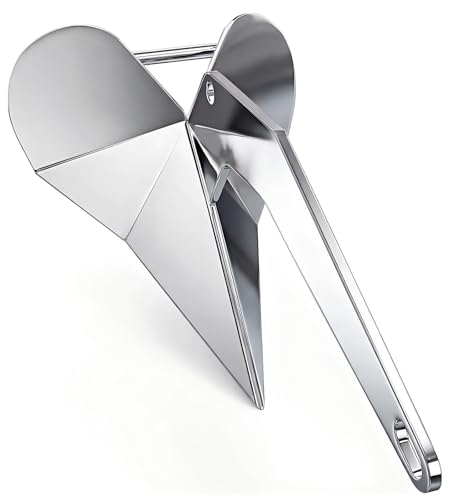
Best for: Pontoon, deck boats, and yachts needing strong hold with easy handling. The CORDUN delta anchor is forged from 316 stainless steel for excellent corrosion resistance in both salt and freshwater. Its mirror-polished finish guards against rust and pitting, while a delta-style plow design provides robust holding across mud, sand, rock, and mixed bottoms. The one-piece construction and self-aligning geometry enable fast setting and reliable self-launching, even without a bow roller. This makes it a strong choice for boats up to around 35 feet, where quick anchoring in changing tides matters.
Why chosen: The combination of 316 stainless steel durability and a proven holding delta shape suits a wide range of seabed conditions. The self-launching feature reduces anchoring hassle on smaller crews or when docking alone. A potential limitation is that heavier models require space for stowing and may be less practical for ultra-lightweight dinghies.
Caution: Mirror finish looks premium but requires routine care to maintain shine and corrosion resistance in harsh marine environments. Ensure proper anchoring technique to maximize bite on rocky bottoms.
SEAPROOF Marine Grade 316 Stainless Steel 11 lb Fluke Style Anchor
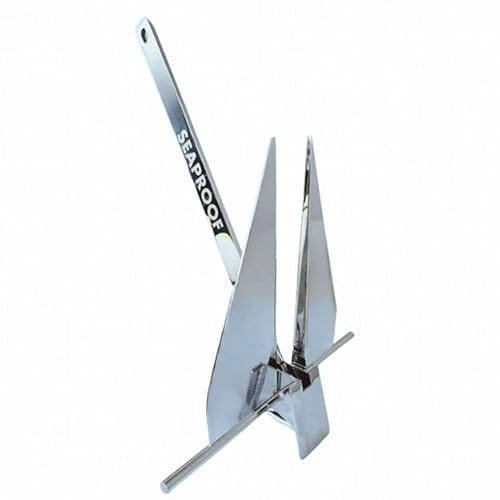
Best for: Boats up to 30 feet that encounter varied bottom types. The SEAPROOF fluke-style anchor uses 316 stainless steel with reinforced welds for long service life. Its balanced weight and long-tip flukes offer rapid setting and exceptional holding power in mud, sand, rock, or coral. The circle rod design aids retrieval, while the robust 3/8″ shank supports heavier loads and winds. This anchor trades a bit of mass for precision, making it a solid pick when quick setting and versatile bottoms are priorities.
Why chosen: The fluke architecture delivers strong initial bite and easy recovery, which helps in frequent anchorage. It’s best for mid-sized boats and mixed bottoms. A caution is that, under very strong currents or extreme bottom hardness, you might opt for a heavier delta option for maximum bite.
Caution: Although highly polished, regular care is recommended to maintain corrosion resistance in marine environments with high salinity or pollution exposure.
FUCNEN Delta Anchor 316 Stainless Steel 11 lb

Best for: 16–23 ft boats needing a compact, high-holding delta anchor. This model uses marine-grade 316 stainless steel to resist corrosion and wear, ensuring long-term durability. The one-piece delta design yields strong holding power across mud, sand, rock, or mixed bottoms, with fast setting and self-launching features that ease handling on smaller craft. It is ideal for boats that require a lightweight, space-efficient anchor without sacrificing strength.
Why chosen: The small-footprint delta shape is well-suited for compact storage on small to mid-sized boats. It balances weight and bite effectively for coastal and lake environments. A limitation is that it may be less effective in very heavy seabeds compared to larger anchors, so consider boat size and typical anchorage when selecting.
Caution: Ensure proper stowage and line management to prevent fouling on the bow roller during retrieval in rough conditions.
ISURE MARINE Stainless Steel Delta/Wing 11 lbs Anchor

Best for: Boats that require a versatile holding solution across different bottoms. The ISURE MARINE anchor uses 316 stainless steel for corrosion resistance and durability. Its delta/wing hybrid design provides strong bite and broad stability, with a one-piece construction that offers reliable performance across mud, sand, rock, and coral. It’s a good all-around pick for mid-sized boats and frequent coastal use.
Why chosen: The one-piece construction generally means fewer moving parts to fail and straightforward handling. It’s well-suited where versatility matters more than maximizing an individual bottom type. A caution: the design may be less optimized for extreme currents compared with purpose-built, heavier anchors.
Caution: Some users may prefer a dedicated delta or fluke style depending on local seabed conditions; assess your typical anchorage before committing.
Lewmar Stainless Steel DTX Anchor 10 kg / 22 lbs

Best for: Boaters seeking high holding power per pound and Lloyd’s certification for assurance. The Lewmar DTX anchor is built from 316 stainless steel and features a narrow shank for deep penetration and quick set from the bow roller. The lead ballast at the tip helps locate the correct center of gravity, enabling reliable digging into the seabed. This is a top choice for stronger winds or challenging tides on larger boats within the 18–27 ft range.
Why chosen: The DTX combines robust stainless construction with a proven design that reinforces quick, reliable setting and strong hold. It’s particularly effective where maximum performance per pound matters. A caution is that the 22 lb model may be heavier to handle on smaller vessels or when stowing in tight spaces.
Note: While highly capable, ensure compatibility with your bow roller and rode setup to maintain smooth operation during anchoring and retrieval.
Buying Guide: Key Considerations For Stainless Steel Boat Anchors
- Bottom type compatibility: If you frequently anchor in mud and sand, choose deltas or anchors with strong bite and self-launching capability. For rocky bottoms, a fluke-style with robust shanks may perform better.
- Boat size and weight: Match anchor weight to your vessel. Heavier boats benefit from larger, well-constructed anchors with higher holding power, while smaller boats benefit from compact, easy-to-stow options.
- Material and corrosion resistance: 316 stainless steel offers excellent corrosion resistance in saltwater. Verify weld quality and finish to extend life in harsh marine environments.
- Ease of use: Self-launching designs and ease of stowage reduce handling effort, especially when docking alone or with a small crew.
- One-piece vs multi-piece designs: One-piece anchors tend to have fewer failure points and easier maintenance, but some boats may prefer modular options for storage flexibility.
- Storage and fit: Check bow roller compatibility and available locker space. Weigh anchors to ensure they fit within your storage constraints without impacting weight distribution.
Frequently Asked Questions
- What is the main advantage of a stainless steel delta anchor?
It provides strong holding power across a variety of bottom types and resists corrosion, delivering reliable performance in saltwater and freshwater alike. - Is a fluke-style anchor better for sandy bottoms?
Yes, fluke-style anchors typically dig quickly in soft bottoms and can set rapidly, though 316 stainless steel versions offer strong corrosion resistance across surfaces. - Should I choose a heavier anchor for larger boats?
Generally yes, but you should balance weight with handling, storage space, and rode length. Heavier anchors offer increased holding power but require more effort to deploy and retrieve. - What does “one-piece design” imply for reliability?
It means fewer joints to fail and simpler maintenance, which can improve durability and long-term performance in challenging conditions. - How important is the finish on a stainless anchor?
While the finish adds corrosion protection, regular rinsing and occasional maintenance help preserve shine and structural integrity in corrosive waters.