Best Speed Propeller for Boat: Top Picks for RC Boats and Fast Watercraft
Answering your search for the best speed propeller for boats, this guide highlights five top options that balance speed, durability, and ease of use. Ideal for RC boat racers, hobbyists upgrading performance, and DIY builders, these selections cover metal, nylon, and high-strength plastic designs. Each propeller is chosen for a specific use case—whether you need CW/CCW rotation, upgrade compatibility, or a lightweight prop for speed trials. A quick buyer’s table follows to compare core details at a glance.
| Product | Best For | Key Advantage |
|---|---|---|
| uxcell CW/CCW 3.17mm Shaft, 2 Vanes | RC speed boats needing reliable, balanced performance | Lightweight plastic with 2 vanes for stable thrust |
| ZDingTech Upgrade Metal Propeller, 4mm | Powerful upgrades for high-power setups | Durable metal construction |
| ZDingTech H102 Propeller Kit | New or replacement parts for common hulls | Includes nuts and wrench for quick installation |
| RC Speed Boat CNC Aluminum Prop, 4.76mm | Racing boats and hydroplanes | CNC precision, high balance, red anodized |
| MECCANIXITY 3pcs Nylon 4mm Propeller | DIY projects needing flexible, impact-resistant propellers | Nylon durability, 2 blades, good for beginners |
The list below presents five top choices with clear usage notes, so you can pick the best match for your boat type and propulsion setup. Each entry includes who it’s best for, why it was selected, and a practical caution to consider before purchase.
uxcell RC Boat CW CCW Propeller 3.17mm Shaft
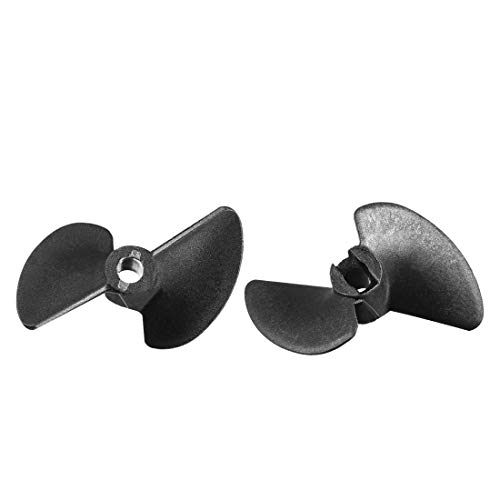
Best for: Hobbyists needing a simple, reliable replacement propeller for younger builds or light-duty racing. This pair offers CW/CCW capability with a 3.17 mm shaft and 30 mm diameter, making it easy to swap across compatible motors.
Why selected: The 1.6 pitch and two-vanes design provide steady thrust and predictable handling, suitable for beginners and intermediate RC racers aiming for smoother acceleration.
Caution: Made from plastic; impacts and debris can cause cracking under hard landings or deep-water tests. Check for shaft alignment to avoid binding.
ZDingTech Upgrade Metal Propeller, 4mm

Best for: High-power RC boats where durability and peak thrust matter. The 4 mm inner hole is designed for secure locking with a nut, aiding stability at higher speeds.
Why selected: Metal construction increases wear resistance and power delivery, making it a solid upgrade for Arrow 5 or similar performance-focused models.
Caution: Metal props can transfer more vibration to the hull; ensure proper balancing and secure mounting to prevent loosening at speed.
ZDingTech H102 Propeller Kit

Best for: Tuning and replacement on popular mid-range hulls that require a ready-to-install option with accompanying hardware.
Why selected: The kit includes two propellers, screws, nuts, and a wrench, enabling quick swaps and consistent installation across compatible models.
Caution: Only certain sizes fit specific shafts; verify compatibility with your motor and hull to avoid misfits.
RC Speed Boat CNC Aluminum Prop, 4.76mm

Best for: Racing boats and hydroplanes requiring high balance and stiffness for top-end speed and precise steering.
Why selected: The CNC-machined 7075 aluminum alloy and red anodized finish deliver strong performance with controlled balance, suited for competitive setups.
Caution: Aluminum mods can be harsher on drive shafts; ensure shaft tolerances and prop nut torque are correct to avoid galling or loosening during runs.
MECCANIXITY 3pcs RC Boat Propeller, 4mm

Best for: DIY projects and replacements needing a durable nylon propeller with good impact resistance.
Why selected: Nylon construction resists impact from debris and grounding, providing a forgiving prop for beginners or field repairs.
Caution: Nylon props may wear faster under high-stress racing; monitor play and replace if blades show deformation or thinning.
Buying Guide: Key Considerations for Speed Propellers
What shaft size and hole diameter do you need? Verify your motor shaft measurement (e.g., 3.17 mm, 4 mm) and mounting hole size before buying a propeller.
Metal vs. nylon vs. plastic: Choose based on use. Metal propellers deliver higher thrust and durability but may transmit more vibration; nylon and plastic offer flexibility and impact resistance for beginners and casual runners.
Number of vanes and pitch: More vanes can improve thrust stability, while higher pitch increases top speed but requires more power. Match the propeller’s pitch to your motor power and prop shaft design.
Rotation direction: Ensure CW or CCW compatibility with your motor and the hull’s propulsion layout. Some setups require paired CW/CCW options for balanced thrust.
Mounting hardware: Some kits include nuts, screws, and wrenches; others require additional hardware. Consider kits that simplify installation for faster swaps.
Frequently Asked Questions
- What makes a speed propeller better for RC boats? A speed propeller typically balances thrust, weight, and durability, with compatible shaft size and a design that minimizes vibration while maximizing power transfer.
- Should I choose aluminum or nylon for racing? Aluminum offers higher strength and thrust, while nylon provides impact resistance and flexibility. For beginners or rough water, nylon can be more forgiving.
- How do I know the right pitch for my propeller? Higher pitch can increase top speed but demands more motor power. Start with the manufacturer’s recommended pitch for your hull and progressively test upgrades.
- Can I use CW and CCW propellers interchangeably? Only if your motor and boat setup require both directions and the propellers are labeled CW/CCW to match rotation needs.
- Is a kit with mounting hardware important? Yes, kits with nuts, screws, and wrenches save time and ensure proper installation, reducing the risk of loosenedPropellers during runs.