Best Solar Trickle Charger for Boat: Easy Marine Battery Maintenance
Answering your search for a reliable solar trickle charger for boats, this guide highlights top options that keep 12V marine batteries healthy with minimal effort. These chargers suit boaters who want maintenance charging during storage or long trips, without manual babysitting. The picks emphasize MPPT efficiency, safety features, and weather readiness for marine use. The top products shown are best for boat owners who want high reliability, simple operation, and automatic recharging as needed.
Summary table of chosen products:
| Product | Brand | Key Benefit for Boats | Best For |
|---|---|---|---|
| SUNER POWER Waterproof 12W Pro | SUNER POWER | Ultra-Smart MPPT with high efficiency | Small boats, tight spaces |
| SUNER POWER Waterproof 20W Pro | SUNER POWER | Higher power for larger batteries | Larger boats, RVs, frequent usage |
| Voltset 12V 20W | Voltset | Smart protection and universal battery compatibility | Mixed battery chemistries |
| SOLPERK 20W | SOLPERK | Durable build for harsh weather; adjustable mounting | Saltwater environments |
| ECO-WORTHY 10W | ECO-WORTHY | Budget-friendly, practical charging for idle boats | Budget-minded boaters |
SUNER POWER Waterproof 12W Pro: Ultra-Smart MPPT Charger
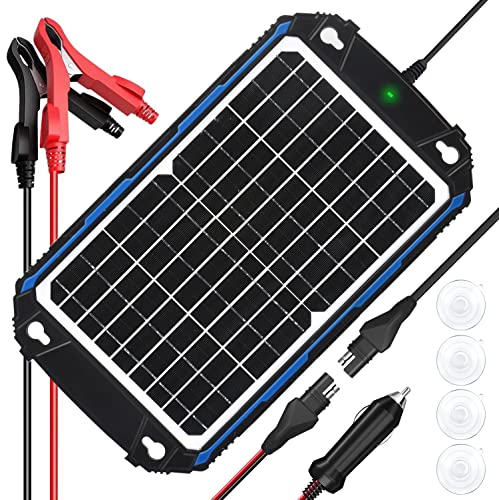
The SUNER POWER 12W Pro uses Ultra-Smart MPPT technology to maximize charging efficiency for marine batteries. It reports peak conversion efficiency up to 98% and tracking efficiency up to 99%, which translates to more usable energy for small boats with modest battery banks. The three-stage charging algorithm (Bulk, Absorption, Float) aims to extend battery life while delivering safer recharges. A key advantage for boaters is automatic maintenance charging that stops when full and resumes when discharge occurs, reducing maintenance tasks.
Who this is best for: small- to mid-sized boats with standard 12V lead-acid or AGM batteries seeking a compact, low-maintenance charger. Why selected: compact footprint, high MPPT efficiency, and built-in auto-resume keep a battery ready for weekend trips or long-term moorage. Caution: ensure the panel size and sun exposure match your battery bank for timely recharging in overcast conditions.
SUNER POWER 20W Pro: Higher-Power Marine Charger

Designed for boats with bigger electrical needs, this 20W unit offers similar Ultra-Smart MPPT performance with three-stage charging. It’s suitable for larger battery banks or more frequent charging, such as after longer days at sea or when the boat sits idle in a marina. The product emphasizes maintenance charging that’s automatic and hands-off, allowing you to forget about charging until you actually need the batteries.
Who this is best for: boat owners with larger 12V systems or those who rely on solar charging to top off batteries during extended berths. Why selected: higher wattage expands charging capacity while preserving the same intelligent MPPT and maintenance logic. Caution: heavier and bulkier than the 12W option, which may matter for compact installations on smaller vessels.
Voltset 12V Solar Battery Charger 20W

Voltset offers a 20W solar charger with an MPPT controller designed to deliver 20-30% faster charging by tracking the most efficient power point. The unit supports multiple 12V battery chemistries and includes built-in protections to prevent overcharge, short circuits, and reverse polarity damage. It also stops draining the battery at night, a useful feature for vessels tied to shore power or stored in sunny boathouses.
Who this is best for: boaters who want broad battery compatibility, including LiFePO4 and lead-acid types, with strong protection features. Why selected: universal compatibility and robust safety systems help prevent accidental damage during off-season storage. Caution: may be overkill for very small boats with small battery banks needing only occasional trickle charging.
SOLPERK 20W: Durable Marine-Grade Panel
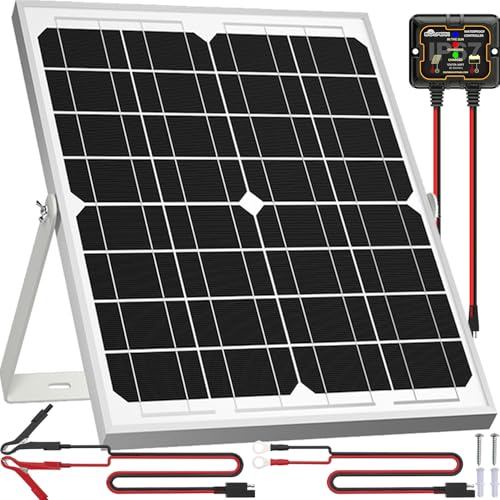
SOLPERK’s kit combines a 20W monocrystalline panel with a smart MPPT controller and an adjustable mounting bracket. The panel uses high-efficiency cells in a weatherproof frame designed to withstand boating environments. The controller’s three-stage charging helps prevent overcharging and optimizes battery life. It includes two indicator lights to show charging status, aiding quick checks during marina stops.
Who this is best for: boaters who want flexible mounting and a robust setup for open-water and marina use, especially in variable sun. Why selected: strong durability and weather resistance, plus a practical mounting option. Caution: installation requires proper sealant and weatherproofing to prevent leaks on boats with limited space.
ECO-WORTHY 10W: Budget-Friendly Trickle Charger
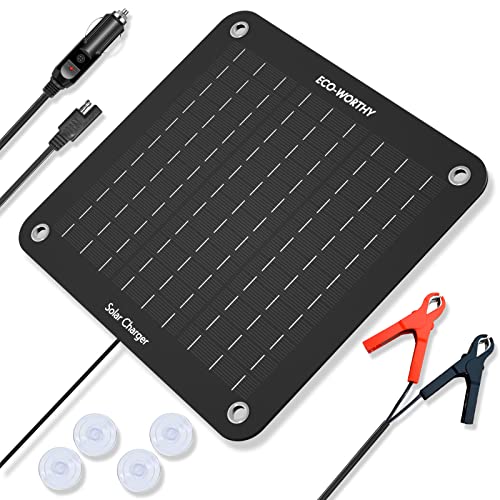
ECO-WORTHY offers a straightforward 10W solar panel with trickle charging for 12V batteries. The built-in blocking diode prevents reverse charging, and the product notes its suitability for outdoor use with a frost-resistant panel surface. This option focuses on simplicity and affordability, making it appealing for boaters who want to maintain a small battery bank without extra features.
Who this is best for: budget-minded boat owners needing a reliable, no-fruss charger for idle periods. Why selected: low cost and proven maintenance capability. Caution: lower wattage means slower charging in cloudy conditions and may not fully recover large battery banks quickly.
Buying Guide: Key Considerations For Boat Battery Charging On The Water
- Battery type compatibility: Confirm whether the charger supports your battery chemistry (Lead-Acid, AGM, Gel, LiFePO4, or Lithium Ion). Some chargers advertise universal compatibility, but check how the controller handles different chemistries.
- Wattage and boat size: Smaller boats benefit from 12W–20W systems, while larger boats or multiple batteries may require 20W–30W or higher and possibly more than one panel.
- MPPT versus PWM: MPPT controllers optimize power from the panel under varying sunlight, improving efficiency, especially in partial sun. PWM is cheaper but less efficient in real-world conditions.
- Weatherproof and marine-grade build: Look for corrosion resistance, splash/waterproof sealing, and durable housings to withstand salt air and vibration.
- Automatic maintenance features: A true trickle charger should automatically stop charging at full battery and resume when discharge occurs, reducing maintenance tasks.
- Installation and mounting: Ensure the kit includes mounting hardware and that the panel can be securely installed on your boat’s deck, railing, or cabin roof without leaks.
- Safety protections: Overcharge, short-circuit, reverse polarity, and thermal protections help protect both the charger and the battery.
- Portability and space: For small boats, compact panels with simple wiring are easier to fit. Larger boats may tolerate heavier, higher-wattage setups.
Practical Installation Tips
- Place the panel where it receives direct sunlight for most of the day, ideally with minimal shading from masts or sails.
- Route wires away from moving parts and flammable materials; use marine-grade connectors.
- Seal mounting points to prevent water intrusion; test for leaks after installation.
- Set up regular checks during trips to confirm the controller is functioning and the battery remains within healthy voltage ranges.
Frequently Asked Questions
- What is the main benefit of MPPT solar chargers for boats? They maximize energy harvest by tracking the optimum power point, improving charging efficiency in varying sunlight conditions.
- Can I use a 12V charger with LiFePO4 batteries? Yes, but ensure the controller supports LiFePO4 charging and the recommended voltage settings for that chemistry.
- Is a higher wattage panel always better for boats? Not always. It depends on your battery capacity, available sun, and mounting space. More watts provide faster charging but require more space and wiring.
- Do these chargers require maintenance? Good models automatically stop charging when full and resume when discharge occurs, reducing manual upkeep.
- What happens in cloudy weather? MPPT controllers still harvest available energy, though charging will be slower; for long periods of cloud cover, a larger panel or additional panels may help.
- Are these chargers waterproof? Most marine-grade kits are designed to withstand outdoor exposure; verify IP ratings and sealing for saltwater use.