Best Solar-Powered Outboard Motor Alternatives for Small Boats
Today’s buyers often seek efficient, quiet propulsion for kayaks, canoes, inflatables, and small boats. While true solar-powered outboard motors are still growing in availability, the right electric trolling motors can offer solar-friendly operation when paired with a suitable battery setup. This article highlights five versatile trolling motors from Newport Vessels that suit light-to-midweight craft and discusses how to optimize them for solar use. It also helps you decide which model fits your boat, climate, and typical trips.
Summary table of chosen products (key specs at a glance):
| Product | Thrust | Voltage | Shaft | |
|---|---|---|---|---|
| Newport NV-Series 36lb | 36 lb | 12V / 24V | 30″ | Light craft, portability, saltwater capable |
| Newport NV-Series 55lb | 55 lb | 12V | 30″ | All-around lake or coastal use, longer runs |
| Newport Kayak Series 55lb | 55 lb | 12V | 24″ | Kayaks and inflatables needing shallow mounting |
| Newport NT300 | 110 lb (equiv) | 36V | 24.6″ | Extended trips, quiet operation |
| Newport NV-Series 46lb | 46 lb | 12V / 24V | 30″ | Stronger push for small boats, splash-friendly |
Newport NV-Series 36lb Thrust Trolling Motor

Best for small, lightweight craft where battery efficiency matters most. This 36 lb thrust motor is designed for kayaks, canoes, inflatables, and other small boats, offering quiet propulsion and portability. It supports 12V or 24V operation and includes a battery indicator kept simple with a LED readout. Best for boaters who need a compact option for calm to moderate seas and who may pair it with a solar-charged battery setup for longer trips.
Who it’s best for: boaters with compact vessels, tight storage, and a focus on low-weight, energy-efficient propulsion.
Limitation: smaller thrust may require careful weight management and weather awareness in wind or current; expect reduced performance in stronger wind or rough water.
Newport NV-Series 55lb Thrust Saltwater Transom Motor
Best for boaters who need more power without moving to a larger craft. The 55 lb thrust motor provides stronger push and reliable performance across saltwater and freshwater environments. It features eight speeds (five forward, three reverse) and a 30-inch shaft with a battery meter for easy monitoring. This model balances power, efficiency, and a modest footprint suitable for small to mid-sized boats.
Who it’s best for: anglers and recreational skippers who fish or cruise in variable conditions and want dependable, mid-range thrust.
Limitation: speed is optimized for trolling; top-end speed can vary by boat type and conditions.
Newport Kayak Series 55lb Thrust
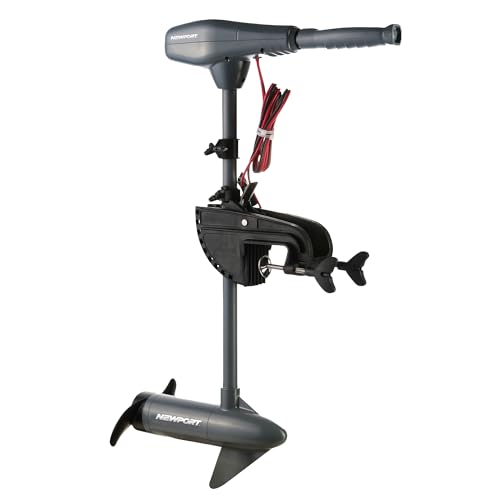
Best for kayaks needing deeper shaft placement and a robust, saltwater-ready frame. The 24-inch fiberglass kayak shaft provides variable depth placement, while eight speeds and a six-inch telescoping handle put you in control. All-aluminum motor head and corrosion-resistant hardware make it suitable for saltwater use. This model suits longer treks where steady power and maneuverability are key.
Who it’s best for: kayak anglers and light craft operators seeking precise depth control and reliable saltwater performance.
Caution: shaft length may require mounting adjustments on certain hull designs. Ensure compatibility with your kayak’s transom height.
Newport NT300 Electric Outboard

Best for extended trips requiring long-range capacity and quiet operation. The NT300, a 3HP-equivalent 1300W brushless system, delivers about 110 lb of thrust with a 24.6″ shaft and 9.8″ two-blade propeller. It features a digital throttle, LCD display, and multiple trim/tilt positions for varied water conditions. Top speed reaches 6.5 mph with an estimated range of up to 66 miles per charge, depending on factors like boat weight and water conditions.
Who it’s best for: boaters planning longer journeys or saltwater adventures where efficiency and low noise are priorities.
Limitation: higher voltage requirement means a more substantial battery setup, which may affect weight and portability.
Newport NV-Series 46lb Thrust
Best for added power on small boats without stepping up to heavy gear. The 46 lb thrust model balances power and efficiency with a 30″ shaft, corrosion-resistant build, and a three-blade propeller for smoother thrust. It suits inflatable and small fishing craft where wind resistance and current demand stronger propulsion than the 36 lb option.
Who it’s best for: owners of small, stable craft who need more thrust for better control in varying conditions.
Limitation: heavier than ultra-light setups; ensure your battery and mounting system can support longer runs.
Buying Guide: How to Choose and Use a Solar-Ready Outboard Setup
What matters most when targeting solar-powered operation is the battery system and compatibility with an electric outboard. Consider these factors:
- Boat size and weight: match thrust to vessel weight and typical load to optimize efficiency.
- Shaft length: ensure the motor’s shaft suits your transom height and hull design for optimal prop clearance.
- Power and voltage: higher thrust models typically require larger battery packs; plan for compatibility with solar charging.
- Saltwater vs freshwater use: corrosion-resistant hardware improves longevity in marine environments.
- Battery options: solar-friendly setups work best with high-efficiency LiFePO4 or AGM batteries that tolerate deep cycle use.
- Solar charging integration: select a battery bank and solar charger rated for your motor’s voltage and daily runtime needs. Plan charging cycles around boating hours and sun exposure.
- Maintenance and access: choose motors with easy tilt, height adjustment, and serviceability to reduce downtime.
- Safety and mounting: verify mounting hardware fits your transom and follow manufacturer guidelines for tilt and trim use on rough waters.
Practical buying questions
- Can any trolling motor be charged by solar power? Yes, with a compatible battery and solar charging setup paired to the motor’s voltage.
- Is higher thrust always better for solar use? Not always; it increases battery draw. Match thrust to boat weight and expected wind/current.
- What shaft length should I choose? A longer shaft works for higher transoms or deeper mounting; a shorter shaft is lighter and easier to mount on small boats.
- What battery type works best with solar charging? LiFePO4 or high-quality AGM batteries are common choices for solar-compatible systems due to deep cycles and stability.
- How do I estimate runtime with a solar setup? Consider boat speed, current, wind, load, and sun exposure; many manufacturers’ run-time estimates assume steady conditions and may vary in practice.
- Do all boats need a digital throttle? Not necessarily, but a digital throttle helps manage precise acceleration and battery use during solar-assisted trips.
FAQ
- What is a practical solar-assisted trolling motor setup? A marine battery paired with a solar charger that keeps the battery at or near full charge during trips is practical for longer days on the water.
- Are these Newport motors suitable for saltwater? Yes, several models feature corrosion-resistant hardware and saltwater-rated components.
- Can I retrofit existing trolling motors for solar charging? In many cases, yes, by upgrading the battery system and adding a solar charging solution compatible with the motor’s voltage.
- Do these motors come with built-in solar capabilities? No, solar charging typically requires an external solar setup. Look for long-run battery life and efficient efficiency to maximize solar charging benefits.
- Which model is best for budget-conscious buyers? The 36lb thrust model offers a balance of weight, efficiency, and performance suitable for smaller craft.