Best Small Trolling Motors for Kayaks: Lightweight Power for Quiet, Easy Paddling
Finding the right small trolling motor for a kayak comes down to balance, weight, and control. This guide highlights five compact options ideal for kayaks and small boats, including both freshwater and saltwater capable models. The top picks cater to anglers, casual paddlers, and budget-conscious buyers alike. Each entry explains who it’s best for, why it was selected, and a practical limitation to consider. Below is a quick summary table of the featured products to help you compare at a glance.
| Product | Best For | Key Advantage |
|---|---|---|
| Minn Kota Endura C2 Transom-Mount Electric Trolling Motor – 30 Lb. Thrust | Budget-friendly anglers, freshwater use | Telescoping tiller and durable construction |
| Newport Kayak Series 36lb Thrust Transom Mounted | Kayakers needing compact saltwater option | Fiberglass shaft with adjustable placement |
| Newport NV-Series 36lb Thrust Trolling Motor | Small boats seeking balance of power and efficiency | LED battery indicator and durable all-aluminum build |
| Newport NV-Series 55lb Thrust Saltwater Transom Motor | Higher power needs, longer runs | 8-speed, sturdy saltwater-ready construction |
| Newport Kayak Series 55lb Thrust Transom Mounted | Serious anglers on larger kayaks | 8 speeds with stronger thrust for tougher currents |
Introduction: This article answers common buyer questions about small trolling motors for kayaks. It focuses on compact units that fit typical kayak transoms, provide reliable control, and offer corrosion resistance for both freshwater and saltwater use. The listed products are best for: casual paddlers who want easier travel on calm water; anglers who need quiet, fish-friendly propulsion; and motor-to-kayak hybrids where mounting and depth control matter most.
Minn Kota Endura C2 – 30 Lb. Transom Trolling Motor
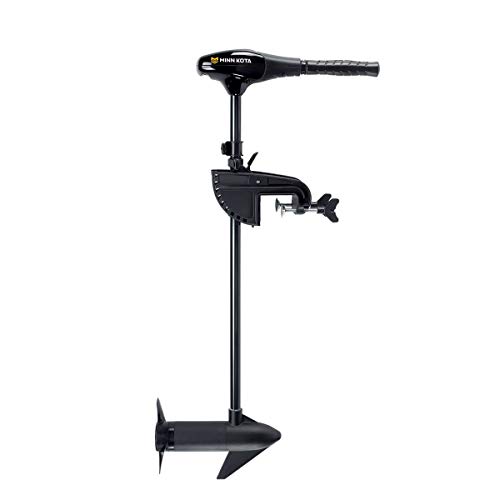
The Endura C2 uses a 30-pound thrust design with a 30-inch shaft, intended for freshwater use. It features a 6-inch telescoping tiller for comfortable, all-day control, and a push-to-test battery meter integrated with the motor head for quick status checks. The 10-position lever lock bracket allows easy angle adjustments. Built with reinforced composite construction to resist warping, flexing, and UV damage, it’s best for casual anglers and small craft in calm water. A potential limitation is that heavy vegetation may require a more powerful propeller.
- Best for: budget-conscious freshwater kayaks and casual anglers
- Why chosen: reliable basic control with durable construction
- Tip: use with appropriate prop for vegetation-rich waters
Newport Kayak Series 36lb Thrust Transom Motor
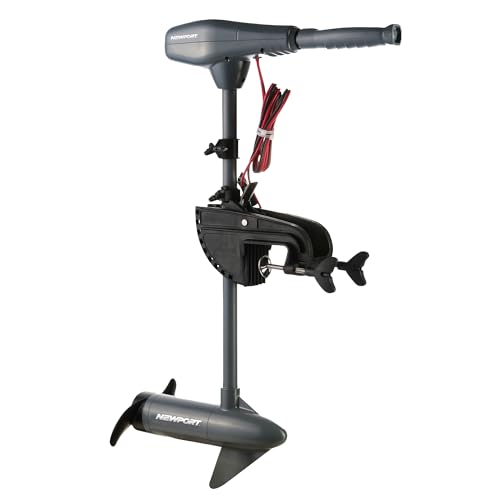
This 36-lb thrust model is designed specifically for kayaks with a 24-inch fiberglass shaft, allowing variable depth placement. It offers 8 speeds (5 forward, 3 reverse) and a 6-inch telescoping handle for precise steering. The motor head is aluminum with corrosion-resistant hardware suitable for saltwater and freshwater use. This unit is best for kayakers who need a compact, saltwater-capable solution with straightforward speed control. Limitation: shorter shaft may require extra attention in rougher waters or larger waves.
- Best for: kayak anglers needing saltwater compatibility
- Why chosen: compact, adjustable depth with clear throttle control
- Tip: confirm shaft length suits your kayak height and transom
Newport NV-Series 36lb Thrust Trolling Motor

The NV-Series 36lb unit pairs a compact 30-inch shaft with eight speeds for versatile control. It features a LED battery indicator for quick runtime checks and durable all-aluminum construction with corrosion-resistant hardware suitable for saltwater conditions. This setup is well-suited for smaller boats and kayaks where weight and efficiency matter. A caution: users in extremely windy or choppy conditions may prefer a higher-thrust option for stronger propulsion.
- Best for: kayaks needing reliable saltwater-ready propulsion
- Why chosen: balanced power, depth control, and visibility indicators
- Limit: not the strongest option for very windy days
Newport NV-Series 55lb Thrust Saltwater Transom Motor
This 55-pound thrust motor is designed for saltwater use with 12V power, offering 8 speeds (5 forward, 3 reverse) and a robust aluminum motor head with corrosion-resistant hardware. It includes a 30-inch shaft and a 3-blade propeller intended to deliver steady, low-end torque for calm or moderate waters. Best for: anglers and small boat users who need more power and longer run times. Limitation: higher thrust leads to greater weight and battery consumption, so plan battery capacity accordingly.
- Best for: higher power needs on small boats
- Why chosen: strong thrust with reliable saltwater construction
- Limit: heavier and more battery-intensive than 36lb models
Newport Kayak Series 55lb Thrust Transom Motor
This 55-pound thrust option is designed for kayaks requiring more power, offering an 8-speed range and a 24-inch fiberglass shaft for variable depth placement. It is saltwater-rated with corrosion-resistant aluminum hardware, making it suitable for longer trips in mixed-water conditions. Best for: larger kayaks or heavier loads where stronger propulsion is needed. Caution: a heavier motor may impact paddling balance and transom fit on smaller craft.
- Best for: larger kayaks needing more thrust
- Why chosen: high thrust with dependable saltwater durability
- Limit: heavier than lower-thrust options
Buying Guide: Key Considerations For Choosing A Kayak Trolling Motor
What size of thrust do you need? For calm lakes and easy maneuvering, 30–36 pounds may be sufficient. For stronger currents or larger kayaks, 55 pounds or more provides better acceleration and control. Consider your typical water type (freshwater vs. saltwater) and choose corrosion-resistant hardware accordingly.
Is shaft length important? Kayaks often need shorter or mid-length shafts to keep the motor close to the waterline. Check your cockpit height and transom fit when selecting shaft length. A telescoping tiller enhances comfort on long trips, but ensure it locks securely at your preferred reach.
What about control and battery indicators? Motors with LED battery indicators help you manage runtime without guesswork. Look for multiple forward/reverse speeds for fine-tuned navigation, especially in tight spaces or around reeds and docks.
How easy is installation and maintenance? Universal mounts increase compatibility, but ensure mounting hardware is stainless steel and corrosion-resistant for longevity in saltwater. Consider propeller design and spare parts like pins, nuts, and washers for quick maintenance.
Performance And Durability Considerations
Lightweight composite bodies reduce weight and improve mounting ease, yet durable aluminum and magnesium hardware resist corrosion. A robust propeller design improves performance in vegetation or current, while a reliable tilt-and-turn handle aids steering precision. In saltwater environments, prioritize models with corrosion-resistant hardware and seals to prevent water ingress.
FAQs
- Q: How much thrust is ideal for a standard kayak? A: 30–36 pounds is usually adequate for calm conditions; 55 pounds or more is better for heavier setups or stronger currents.
- Q: Can I use a trolling motor on a canoe or small boat? A: Yes, if the mount and shaft fit securely and the motor is rated for the vessel type, but always follow the manufacturer’s mounting guidelines.
- Q: Do all trolling motors work in saltwater? A: Many are designed for both freshwater and saltwater, but confirm corrosion-resistant hardware and a saltwater rating before use.
- Q: What maintenance is needed? A: Regularly inspect mounting hardware, propeller, and seals; clean after salt exposure; store with battery disconnected if not in use for extended periods.
- Q: Is a longer shaft better? A: Not necessarily; it depends on transom height and water depth. Too long a shaft can increase drag and affect balance.
- Q: Do these motors require special batteries? A: Most 12V systems use standard deep-cycle or marine batteries; always verify compatibility with your motor’s voltage and current draw.