Best Small Outboard Motors for Kayaks: Compact Power for Paddlers
Answer: For kayaks and small boats, compact, lightweight outboard motors provide practical propulsion without sacrificing stability. This guide highlights five small outboard options ideal for kayaks, inflatables, and dinghies. The best fits vary by needs—quiet trolling, saltwater durability, portability, or high thrust for heavier setups. The chosen products offer clear advantages for different scenarios: casual lakeside paddlers, serious anglers, or saltwater explorers. Read on to compare features, suitable use cases, and practical buying considerations.
| Product | Best For | Key Benefit |
|---|---|---|
| KUSINDOG Outboard 4 Stroke 4 HP | Inflatable kayaks and small boats | Air-cooled 4-stroke with reverse; durable and versatile |
| Newport NV-Series 36 lb Thrust | Lightweight kayaks and canoes | Quiet, saltwater-ready, efficient 2-battery setup |
| Minn Kota Endura C2 | Freshwater fishing trips | Tiller control and durable construction |
| Bixpy K-1 Outboard Kit | Portable power for quick, on-demand propulsion | Ultra-light kit with wireless remote |
| Newport NV-Series 55 lb Thrust | Heavier loads and tougher water | High thrust with multiple speeds and long shaft |
Outboard 4 Stroke 4 HP for Inflatable Kayaks

- Brand: KUSINDOG
- Engine: 4-stroke, 60cc displacement
- Cooling: Air-cooled for durability
- Reversing: Manual reverse with hook handle
- Compatibility: Suitable for freshwater and saltwater environments
Best for: Paddlers needing a compact, adaptable motor for inflatables and small boats. Choose this if you want a 4-stroke design with easy reverse and broad water compatibility. Caution: Ensure proper mounting and ventilation to prevent overheating in prolonged use.
Newport NV-Series 36lb Thrust Trolling Motor

- Brand: Newport Vessels
- Thrust: 36 lb, 12V or 24V options
- Shaft: 30″ for variable depth
- Construction: Saltwater-ready, corrosion-resistant
- Prop: Two-blade for efficiency
Best for: Lightweight kayaks and canoes needing quiet, efficient propulsion with decent battery life. Better for: smaller watercraft and mixed freshwater/saltwater use. Limitation: Higher thrust needs larger batteries for extended runs.
Minn Kota Endura C2 Transom-Mount
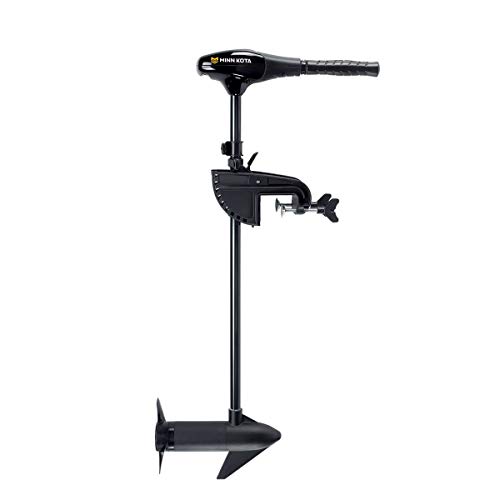
- Brand: Minn Kota
- Thrust: 30 lb
- Shaft: 30″
- Features: Telescoping tiller, battery meter, durable reinforced construction
- Use: Freshwater trolling and light fishing setups
Best for: Anglers who want precise control and reliability in freshwater. Choose this for a stable tiller experience and robust marine-grade materials. Limitation: Not optimized for heavy saltwater exposure without protective coatings.
Bixpy K-1 Outboard Kit
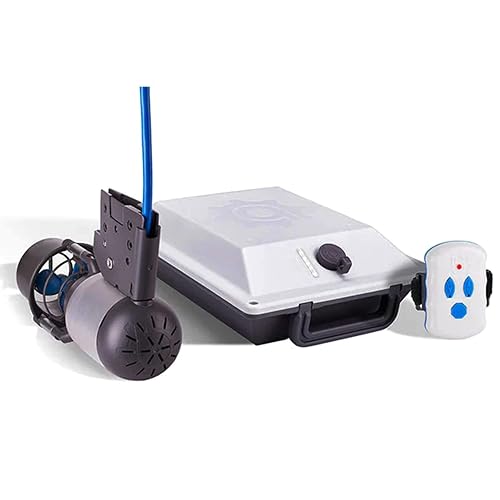
- Brand: Bixpy
- Power: 400 W; thrust up to 33 lb
- Weight: About 10 lb for motor + battery setup
- Includes: Wireless remote and quick-release mount
- Best for: Quick, portable power for kayaks, stand-up paddleboards, and inflatables
Best for: Lightweight, modular power with wireless control. Choose this if you want a compact electric kit that can be moved between craft. Caution: Battery management and mounting system require careful setup for secure mounting on smaller boats.
Newport NV-Series 55lb Thrust Saltwater Motor
- Brand: Newport Vessels
- Thrust: 55 lb
- Shaft: 30″ length
- Features: LED battery indicator, adjustable mount angle, 3-blade propeller
- Power: 12V operation suitable for saltwater and freshwater
Best for: Heavier loads or demanding conditions where higher thrust improves performance. Choose this for long trolling sessions and higher-speed needs. Limitation: Heavier and bulkier than lighter models, requiring more space and battery capacity.
Buying Guide
What to consider when choosing a small outboard motor for a kayak:
- Thrust vs. weight: Higher thrust helps move heavier boats but increases weight and battery or fuel needs.
- Power source: Gas engines are powerful but heavier and louder; electric models are quiet and easy to maintain but depend on battery capacity.
- Water type: Saltwater requires corrosion-resistant builds; freshwater models may suffice for lakes and rivers.
- Mounting compatibility: Check transom compatibility, shaft length, and mounting hardware for your kayak or dinghy.
- Control method: Tillers provide direct control; remote or wireless setups offer convenience for certain craft.
- Maintenance: Four-stroke gas engines typically demand more ongoing maintenance than electric motors.
- Portability: If you transport often, weight and ease of mounting/dismounting matter more.
FAQ
- What size outboard motor is best for a kayak?
For most recreational kayaks, a motor in the 30–55 lb thrust range (electric) or 4-stroke 4 hp (gas) is a practical starting point, balancing power and weight.
- Are electric kayak motors better for saltwater?
Electric motors with corrosion-resistant housings are suitable for saltwater but require proper rinsing and maintenance after use.
- Do I need a long shaft for my kayak motor?
Yes if your kayak has a deeper hull or you encounter variable depths; a 30″ shaft is common for many recreational kayaks.
- Can I mount a motor on any kayak?
Mounting depends on the transom or stern design and available space. Always verify compatibility with your kayak model.
- What maintenance do gas outboards need?
Gas engines require regular oil checks, fuel stabilization, air filter cleaning, and spark plug inspection as part of routine care.
- Is a trolling motor quieter than a gas outboard?
Yes, trolling motors (electric) are generally quieter and produce less vibration, beneficial for wildlife and fishing.