Best Small Marine Fuel Tanks for Compact Boats
Find the right small marine fuel tank for your outboard or dinghy with reliable multi‑layer construction, compatibility with common engines, and easy transport features. This guide highlights five compact tanks ideal for small boats, inflatables, and deck boats. It targets buyers who need portable, space‑saving fuel storage without sacrificing safety or fuel integrity. Each option is chosen for durability, ease of use, and practical fuel management in tight spaces.
Summary at a glance:
| Product | Capacity | Best For | Key Benefit |
|---|---|---|---|
| Attwood 8803LP2 | 3 gallons | Small boats, portable refueling | Automotive‑grade multi‑layer construction |
| Scepter 6 Gallon | 6 gallons | Under‑seat storage, higher range | Built‑in gauge and vented cap |
| VEVOR 3.17 Gallon | 3.17 gallons | Compact decks, easy transport | HDPE with UV resistance, long hose |
| AloneGoer 3 Gallon | 3 gallons | Yamaha outboards and spares | HDPE‑EVOH barrier to reduce evaporation |
| PeakPursuit 3 Gallon | 3 gallons | Deck boats, inflatables | I‑shaped handle, 9.8 ft hose |
Attwood 8803LP2 EPA and CARB Certified 3-Gallon Portable Marine Fuel Tank

Best for: small boats needing a compact, compliant tank with steady flow. The 3‑gallon Attwood 8803LP2 uses automotive‑grade multi‑layer construction for durability in closed systems. It is designed to endure harsh environments and temperature swings, making it a reliable choice for coastal days and weekend adventures. An automatic vacuum valve provides consistent fuel flow without manual venting, reducing operator steps during refuelings.
Why selected: Its EPA and CARB certification ensures regulatory compliance for California and other markets, and the built‑in auto vent helps maintain smooth operation in varying conditions. The compact size keeps it out of the main cabin while still offering sufficient range for small craft.
Limitation: Data does not specify compatibility with all marine fittings; verify hose and pickup connections before purchase. Also, as with any portable tank, ensure proper storage of vented caps to avoid accidental spills.
Portable Boat Fuel Gas Tank 3 Gallon/12L With Transfer Hose & Gauge
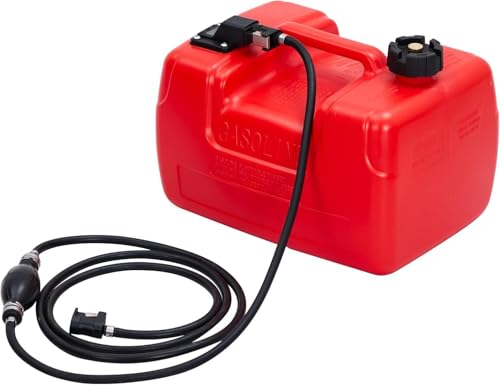
Best for: anglers and day‑boaters needing a portable, easy‑to‑carry tank with clear level indicators. This 3‑gallon option offers an ergonomic I‑shaped handle for comfortable transport and a clear fuel gauge to monitor levels at a glance. The built‑in filter helps keep fuel clean for smoother engine performance, which is beneficial for longer outings or boats with sensitive fuel systems.
Why selected: The included gauge and filter provide practical visibility and maintenance benefits, aiding in planning refuels and minimizing fuel quality concerns on longer trips.
Limitation: The data notes a built‑in filter but does not specify exact filter replacement intervals—plan for routine checks if you use this tank frequently.
Scepter 6 Gallon Portable Marine Gas Can

Best for: vessels needing extended range with a compact footprint for under‑seat storage. The Scepter can provides a 6‑gallon capacity in a slim profile, with a 2‑way vented cap that allows fuel air flow during refueling and automatically releases pressure above 5 PSI to prevent vapor buildup. A built‑in fuel gauge plus compatibility with standard marine fittings makes this a versatile choice.
Why selected: Higher capacity in a shallow form factor suits boats with tight storage but longer trips, reducing the need for frequent refueling stops. The vented cap design adds safety in vapor management.
Limitation: The can accepts standard fittings but requires separate purchase of a compatible fuel pickup line for full utilization of the gauge.
VEVOR Boat Fuel Tank 3.17-Gallon/12-L Marine Tank

Best for: boaters seeking durable, compact storage with a long hose for flexible fueling. The 3.17‑gallon tank is built from high‑density polyethylene and is designed to resist aging, impacts, and corrosion. A 9.8 ft hose provides reach to motor fittings without moving the tank, and the design stresses UV resistance and a compact footprint for deck storage.
Why selected: The durable material and longer hose are practical for tight layouts where movement near the motor is inconvenient. It is a solid choice for salt spray environments with the caveat of avoiding prolonged direct sun exposure to reduce aging.
Limitation: Extended sun exposure can accelerate aging; park in shade when possible and rotate fuel storage locations to minimize UV exposure damage.
AloneGoer 3 Gallon Portable Boat Fuel Gas Tank
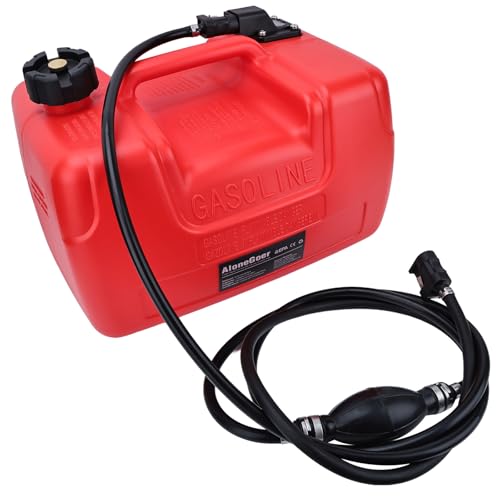
Best for: Yamaha outboard users and those needing a spare or towing‑friendly fuel option. This 3‑gallon tank employs HDPE‑EVOH barrier technology to minimize fuel evaporation, which improves fuel efficiency and reduces fumes. It includes a connector replacement for certain Yamaha models, aligning with engine compatibility in dual‑tank setups.
Why selected: The multi‑layer co‑extrusion barrier is a strong argument for longevity in humid or salty environments and for owners who want to minimize fuel loss. Its compatibility notes make it a strong candidate for Yamaha‑equipped boats.
Limitation: Specific Yamaha connector compatibility should be confirmed for your exact model; availability of replacement connectors may vary by seller.
Buying Guide
What capacity do you actually need? For short jaunts, 3 gallons is often enough for small boats; for longer days or higher cruising speeds, a 6‑gallon option may be preferable. Consider storage space, under‑seat access, and whether you want built‑in gauges or external readings.
Are venting and evaporation control important? Yes. EPA/CARB compliant models with vented caps help manage pressure and minimize fumes, improving safety and compliance on board.
What material and construction matter? Look for multi‑layer barriers or HDPE with EVOH to reduce fuel permeation and extend tank life in marine environments. UV resistance is beneficial for sun exposure and longevity.
How easy is refueling and transport? Tanks with ergonomic handles, long hoses, and clear gauges simplify refueling and daily handling. A lightweight, portable design is essential for small boats or inflatables where space is limited.
What about installation and compatibility? Verify that the tank’s fittings, hoses, and pickup lines align with your engine’s intake and existing marine fittings. Some tanks require additional components for full compatibility.
Safety and storage tips: Store tanks upright in a cool, shaded area away from direct heat. Use proper venting during filling to avoid pressure buildup, and cap any vents securely after use to prevent contamination or spills.
Frequently Asked Questions
- What is the best small fuel tank for under‑seat storage? A compact 3‑to‑6 gallon tank with a slim profile and secure cap is ideal for under‑seat storage, such as the Scepter 6 Gallon or Attwood 3‑Gallon models.
- Do these tanks meet EPA/CARB regulations? Several options shown are EPA and CARB certified; verify the specific model listing to ensure compliance for your region.
- Which tank reduces fuel evaporation the most? Tanks with multi‑layer co‑extrusion barriers or EVOH technology reduce evaporation more effectively than standard plastic tanks.
- Is a built‑in fuel gauge necessary? Built‑in gauges aid monitoring on longer trips, but you can also use external gauges or sight gauges if provided.
- Can I use these tanks with diesel or ethanol blends? Some models support ethanol‑blended fuels; confirm fuel compatibility with your engine and the specific tank design.
- How should I store a portable tank when not in use? Store upright away from direct sun, heat, and fumes. Use caps with vents closed unless refueling to prevent spills.