Best Small Engine Jack Plate: 4″ Setback Options for Outboard Motors Up to 35HP
Answering buyers who want to raise or extend the mounting position of a small outboard engine, this guide highlights the top 5 4″ setback jack plates for engines up to 35 HP. These options are ideal for skiffs, aluminum boats, inflatables, and other small craft. They help improve engine height, reduce cavitation, and optimize trim for better speed and handling. This article explains who each product is best for, why it was selected, and practical considerations to help you choose.
Summary table of selected products
| Product | Best For | Setback | Notes |
|---|---|---|---|
| Camoo MJ-1-DP Jack Plate | Skiffs and inflatables needing a wooden mounting block | 4 inches | Wood block included; cast aluminum |
| VELCKING MJ-1-DP Black | Precise height tuning on small boats | 4 inches | Adjustable height 0–100 mm; rubber pads |
| VELCKING MJ-1-DP White | Same as Black variant with different color preference | 4 inches | Adjustable height; durable construction |
| RUIANOMG MJ-1-DP | Long shaft to short shaft compatibility | 4 inches | Cast aluminum; corrosion resistant |
| Bzcovac MJ-1-DP Mini | Compact, 6–35 HP setups with mounting wood | 4 inches | Wood mounting included; optimized propulsion |
Camoo MJ-1-DP Jack Plate 4″ Setback

Best for boats that use a wooden mounting block and want a straightforward 4″ setback. This cast aluminum offset jack plate is designed for clamp-on outboard motors up to 35 HP, making it a practical choice for skiffs, aluminum boats, and inflatables. The wooden mounting block is included to ensure a precise fit and secure installation. Best for buyers who prefer a ready-to-install package with traditional mounting wood.
- 4″ setback for improved engine position and waterflow
- Includes pre-cut wooden block for a snug fit
- Suitable for short transoms when using a long shaft motor
Who it’s best for: small boats that rely on a simple, wood-supported setup and want reliable performance gains without complex adjustments. Caution: the wooden block dimensions should be verified for your transom and motor to avoid fit issues.
VELCKING MJ-1-DP Black 4″ Setback

This model emphasizes adjustable height in 20 mm increments from 0 to 100 mm, enabling precise tuning for ride and performance. It includes rubber pad mounting blocks and stainless steel screws to help protect the engine and crossmember during mounting. Best for boaters who want ongoing height customization and a robust mounting package for 35 HP applications.
- Height adjustment range supports performance tuning
- Secure, damage-minimizing mounting hardware
- Durable hard steel alloy construction
Who it’s best for: owners who tinker with engine height to optimize trim and efficiency. Caution: steel hardware can require periodic inspection for corrosion in saltwater environments.
VELCKING MJ-1-DP White 4″ Setback

This white variant offers the same height adjustability and secure mounting hardware as the black version, with a color choice that may better match your boat’s exterior. It maintains a 4″ setback and is built from hard steel alloy for durability in marine conditions. Best for owners who want the same performance package as the Black version but prefer a lighter-looking component on deck.
- 0–100 mm height adjustment in 20 mm steps
- Stainless screws and rubber blocks for secure mounting
- Durable, corrosion-resistant construction
Who it’s best for: buyers who value consistent performance with color-coordinated hardware. Caution: ensure color choice matches your boat’s aesthetic and does not create glare or visibility issues in bright sun.
RUIANOMG MJ-1-DP 4-Inch Setback
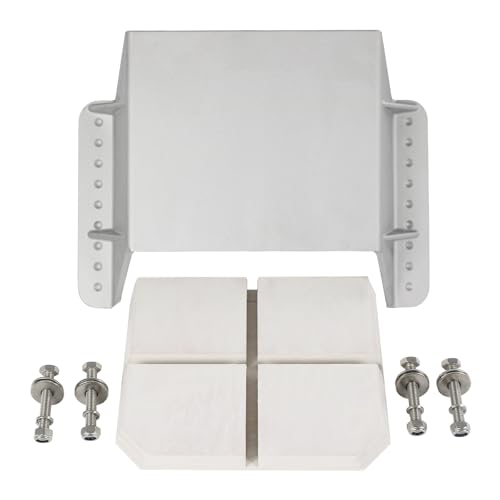
Designed for clamp-mounted outboard motors up to 35 HP, this cast aluminum jack plate extends the transom by 4 inches. It’s positioned as an option for long-shaft engines on short-shaft boats, enabling better hull clearance and engine protection in shallow water. Best for boats that frequently navigate shallow areas and need a reliable, corrosion-resistant component.
- 4″ setback increases hull clearance
- Cast aluminum provides corrosion resistance
- Suitable for a wide range of small boats
Who it’s best for: boaters needing a robust upgrade to enable long shaft compatibility on shorter transoms. Caution: verify mounting screw compatibility with your engine and transom materials before installation.
MJ-1-DP Mini Jack Plate 4″ Setback

The Mini Jack Plate from FQRANBO focuses on compatibility with outboard motors up to 35 HP and includes a wooden mounting block. It emphasizes adjustable height from 0 to 100 mm and improves top speed, acceleration, and fuel efficiency by optimizing trim and engine position. Best for compact boats that need reliable performance without extensive modification.
- 4″ setback with 0–100 mm height adjustment
- Includes wooden mounting block for precise fit
- Enhances hydrodynamics and propeller efficiency
Who it’s best for: owners seeking a cost-effective, wood-inclusive solution for small boats that prioritize improved performance and trim control.
Buying Guide: Key Considerations for Small Engine Jack Plates
What size and compatibility should I look for?
Most small engine jack plates labeled 4″ setback support engines up to 35 HP. Confirm the engine shaft length (short vs long) and transom height on your boat to ensure the plate can accommodate a proper fit.
Should I choose adjustable height or fixed height?
Adjustable-height plates let you tune trim and performance for different water conditions and loads. Fixed-height or fixed-offset plates offer simplicity and fewer moving parts. Choose based on how often you change engine height.
What about mounting materials and corrosion resistance?
Cast aluminum and hard steel alloys are common. Aluminum resists corrosion well in marine environments, while steel variants may require more maintenance in saltwater. Rubber pad blocks and stainless screws reduce vibration and prevent damage to the transom.
Wooden mounting blocks: are they necessary?
Wood blocks provide a fitment baseline for some plates. If your kit includes a wooden block, ensure it matches your transom and engine mounting pattern. If not, verify pre-cut dimensions or consider a plate that uses standard hardware.
Performance impacts: what to expect?
Raising the engine height and increasing setback can reduce cavitation, improve propeller efficiency, and potentially boost top speed. You may also notice smoother handling in shallow water. However, improper mounting can cause porpoising or bow rise, so proper setup is essential.
Installation considerations
Prepare mounting hardware, sealants, and basic tools. Follow the manufacturer’s installation guidelines, including torque specs for screws and alignment procedures. If you lack experience, consider professional assistance to avoid transom damage.
FAQ
- What does a 4″ setback do for my small outboard?
- Can I use these plates on inflatables?
- Is adjustable height worth it for daily use?
- Do I need the wooden mounting block?
- Will a jack plate affect boat stability?
- How do I know which model is best for my engine?
A 4″ setback moves the engine farther from the transom, increasing waterflow under the propeller and reducing cavitation, which can improve speed and efficiency on small boats.
Yes, many models are designed for aluminum boats, inflatables, and skiffs, provided the motor and transom are compatible with a 4″ setback.
If you frequently encounter different water depths and loads, adjustable-height plates offer tangible benefits by letting you fine-tune performance in real time.
Wooden blocks simplify installation for specific models. If your plate includes one, ensure it matches your transom pattern and motor bracket. Otherwise, use standard mounting hardware recommended by the manufacturer.
Properly installed jack plates can improve stability by optimizing trim and power delivery. Incorrect installation or excessive height can lead to handling changes, so follow torque specs and alignment instructions closely.
Match the plate to engines up to 35 HP and verify shaft length compatibility with your boat’s transom. If in doubt, check the manufacturer’s specifications and consult installation guidelines.