Best Small Boat Gas Tank Options for Safe Onboard Fuel Storage
If you’re choosing a small boat gas tank, you want reliability, compatibility with your outboard, and a design that minimizes fuel evaporation and spills. This guide highlights five well-suited options for American boaters, from compact 3-gallon tanks to larger 6-gallon cans. These models are best for inflatable boats, deck boats, and small outboard-powered craft. The following choices emphasize durability, fuel efficiency, and ease of transport. A quick product table helps you compare key specs at a glance.
| Product | Capacity | Best For | Key Benefit |
|---|---|---|---|
| Scepter 3 Gallon Portable Marine Gas Can | 3 gal / 11.4 L | Under-seat storage on small boats | Built-in fuel gauge and two-way vented cap |
| VEVOR Boat Fuel Tank | 3.17 gal / 12 L | Outboard engine refueling on portable setups | HDPE construction, long hose, corrosion resistant |
| AloneGoer 3 Gallon Portable Tank | 3 gal / 12 L | Yamaha-compatible, harsh marine environments | Multi-layer barrier reduces fuel evaporation |
| attwood 3-Gallon Portable Marine Tank | 3 gal / 11.4 L | Harsh environments, reliable flow | Automotive-grade multi-layer construction |
| Portable Boat Tank 3 Gal (LIZHOUMIL) | 3 gal / 12 L | General portable use for small boats | Clear fuel gauge, built-in filter |
Scepter 3 Gallon Portable Marine Gas Can

Capacity and practicality define the Scepter 3 Gallon Marine Gas Can. It features a 3-gallon capacity suitable for under-seat storage on small boats. The built-in fuel gauge and a two-way vented cap help monitor and regulate flow during refueling. Best for boaters who prioritize quick checks and secure storage beneath seats. Caution: ensure the vented cap is properly closed to prevent fuel vapor release in hot conditions.
VEVOR Boat Fuel Tank, 3.17 Gal

The VEVOR 3.17-gallon tank offers a robust option for outboard refueling on a variety of boats. It comes with a long hose and a 9.8 ft length to reach the motor, plus HDPE construction designed to resist aging, impact, and corrosion. Best for boaters needing a larger portable option with easy transport. Choose this if you require higher capacity without sacrificing portability. Limitation: avoid prolonged direct sun exposure to minimize aging.
AloneGoer 3 Gallon Portable Boat Fuel Tank
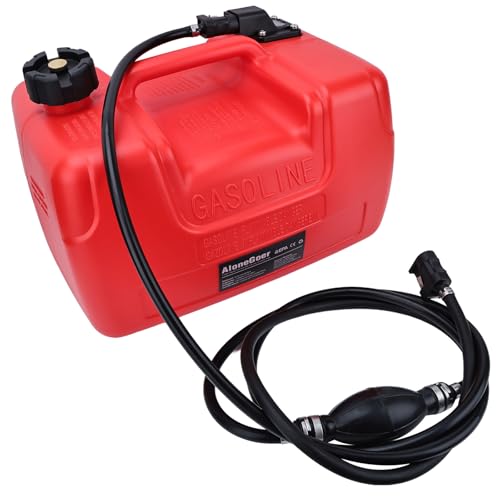
This 3-gallon tank emphasizes a multi-layer barrier technology (HDPE-EVOH-HDPE) to minimize fuel molecule permeation, reducing evaporation significantly. It’s UV-stabilized and salt spray resistant, making it suitable for harsh marine environments. Best for Yamaha outboard users and boaters seeking a dedicated, durable spare tank. Limitation: ensure compatibility with your specific Yamaha connector model before use.
Portable Boat Fuel Gas Tank, 3 Gal (LIZHOUMIL)
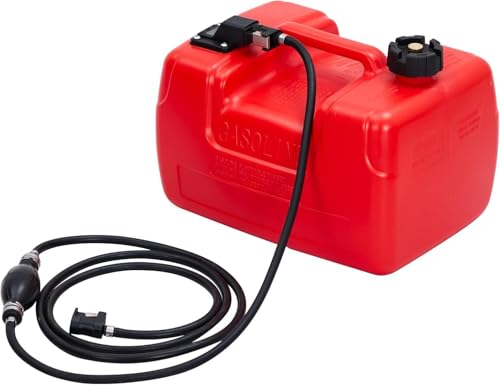
The LIZHOUMIL 3-gallon tank emphasizes an ergonomic I-shaped handle for easy carrying and a clear fuel gauge with a built-in filter. It’s designed for general portable use on yachts and fishing boats. Best for boaters who want straightforward visibility of fuel levels and simple operation. Caution: ensure filtering system remains clear of debris to avoid engine disruptions.
attwood 8803LP2 EPA and CARB Certified 3-Gallon

The Attwood 3-gallon model uses automotive-grade multi-layer construction rated for harsh environments. It includes an automatic vacuum valve for steady fuel flow without manual venting. Best for boats operating in varied climates where consistent fuel delivery matters. Choose this if you need reliable flow control and a proven multi-layer build. Limitation: ensure your venting requirements align with the automatic valve behavior in your setup.
Buying Guide
What capacity should you choose?
For small boats and occasional trips, 3 gallons (11–12 L) is typically sufficient for short runs or as a spare tank. If you regularly travel longer distances or want less frequent refueling, consider 6-gallon options, though they occupy more space and add weight.
Which features matter most?
- Fuel gauge: Quickly check level without removing caps.
- Vent system: Two-way vented caps help prevent pressure buildup but must be compatible with your engine and fuel type.
- Hose length and diameter: Ensure compatibility with your outboard’s fuel line connector; longer hoses offer flexibility on larger boats.
- Material and barrier technology: Multi-layer plastics reduce evaporation and resist salt spray, extending life in marine environments.
Compatibility and installation considerations
- Connector type: Confirm Yamaha, universal, or other connectors match your outboard motor. Replacement tanks may indicate specific model compatibility.
- Mounting and space: Measure under-seat storage, deck space, or gunwale mounting options to fit the tank profile.
- Vent and cap safety: Ensure ventilation does not release vapors in enclosed spaces and complies with local regulations.
Durability in marine conditions
- UV stabilization and salt spray resistance protect against sun exposure and humidity.
- Impact resistance and age resistance help maintain structural integrity during transport and use on rough water.
FAQ
- Can I use any marine gas can with my outboard? Not always. Check compatibility with your outboard’s fuel connector and ensure the cap and vent design suit your refueling procedure.
- Is a built-in fuel gauge essential? It helps monitor fuel level at a glance, reducing the risk of running out mid-ride. It is especially useful on boats with underseat storage.
- Will these tanks resist saltwater exposure? Yes, tanks with UV stabilization and salt spray-resistant formulations are designed for harsh marine environments, but prolonged direct sun should be avoided when possible.
- What should I consider about venting? A two-way vented cap prevents vacuum buildup yet prevents excessive vapor release. Ensure the system matches your refueling frequency.
- How do I choose between 3 gal vs 6 gal? Choose 3 gal for frequent refueling, compact spaces, or backup storage. Choose 6 gal for longer trips or when carrying extra fuel is desirable and space permits.
- Are these tanks EPA or CARB certified? Several models in this category offer EPA or CARB compliance, indicating adherence to emissions and safety standards appropriate for recreational boating.