Best Small Boat Bow Thruster Options for Easy Docking and Precise Maneuvering
Find the right bow thruster to simplify docking, anchor turns, and tight-quarter handling on a small to midsize boat. This guide highlights five top options suited for anglers, coastal cruisers, and day-boaters who want predictable, controllable maneuverability without complex installations. Each pick is described with its ideal user, key strengths, and a concise limitation to consider before purchasing.
| Product | Best For | Why Selected |
|---|---|---|
| VETUS Bow Thruster – 55 kgf – 12V | Compact cruisers and boaters needing reliable torque | Solid thrust in a small form factor; good balance of power and installation footprint. |
| Lewmar 140TT 2.2kw Gen. 2 Bow Thruster -12V | Sporty dinghies and small craft needing strong sideways control | High power for confident docking and winded berths; modern Gen. 2 design. |
| VETUS Bow Thruster 7512D 75KGF-12V-D185MM | Rugged boats requiring substantial thrust | Higher thrust for bigger craft or windy conditions; durable build. |
| VETUS Bow Thruster – 95 kgf – 12V | Heavier small boats and frequent docking in choppy conditions | Top-end power for challenging environments; strong performance. |
| Lewmar 110TT Boat Thruster Kit | All-in-one kit for complete docking confidence | Includes joystick control and accessories; best for turnkey installation. |
VETUS Bow Thruster – 55 kgf – 12V

The 55 kgf model from Vetus targets compact sail and powerboats where a modest, dependable push is enough for precise berthing in calm to moderate conditions. Best for boats in the 15–25 foot range that need predictable lateral thrust without oversizing the system. This option is favored for smaller cabins and engine rooms where space is limited. A potential limitation is lower thrust in strong winds or heavy seas, which may require a larger unit on bigger hulls.
Lewmar 140TT 2.2kw Gen. 2 Bow Thruster -12V

Designed for higher-thrust needs, the Lewmar 140TT Gen 2 delivers strong lateral control ideal for small cruisers, center-console boats, and yachts nearing the 25–35 foot mark. It’s best for frequent docking in tight marinas or windy afternoons where sharper steering is required. Choose this if you want robust performance with a compact footprint. A caveat is that installation and wiring are more involved than smaller units, so plan accordingly.
VETUS Bow Thruster 7512D 75KGF-12V-D185MM

This 75 kgf unit from Vetus offers substantial sideways thrust for boats that regularly face gusty docking conditions or need extra nimbleness in tight spaces. It’s well-suited for boats approaching mid-range sizes or boats that require more robust control than smaller thrusters provide. A limitation is that higher thrust often means slightly larger dimenstions and more complex installation, so ensure your hull space accommodates it.
VETUS Bow Thruster – 95 kgf – 12V
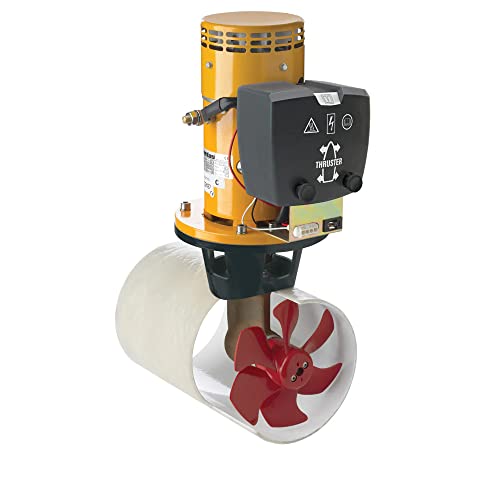
For boats that routinely contend with strong crosswinds or tidal currents, the 95 kgf Vetus model provides substantial torque and control. This option is best for larger small-craft or heavier dayboats where maneuverability cannot be compromised. The key limitation is the heavier installation footprint and higher electrical draw; confirm your vessel’s electrical capacity and mounting space before selecting this model.
Lewmar 110TT Boat Thruster Kit

This all-in-one Lewmar kit includes a 1.5 kW thruster, five-blade propellers, joystick control, and power distribution components. It’s best for boaters who want a complete, ready-to-install solution with docking confidence on a wide range of small to mid-sized boats. A limitation is that kit pricing can be higher than a bare thruster plus separate controls, so compare total installed cost and compatibility with existing systems.
Buying Guide: What to Consider When Choosing a Small Boat Bow Thruster
- Boat size and weight: Match thrust to hull length and displacement. Higher kgf thrust is better for windy days and larger small boats, while smaller crafts benefit from modest power for fine control.
- Electrical compatibility: Confirm 12-volt systems are available on board and check alternator capacity or shore power options to handle peak draw without affecting other systems.
- Installation footprint: Measure available stern space, interior clearance, and prop tunnel dimensions to ensure a fit. Some units require hull modifications or tunnel integration.
- Control options: Consider joystick, wireless, or panel controls. All-in-one kits provide ease of installation but may limit future upgrades.
- Maintenance and seals: Look for robust seals and corrosion resistance for saltwater use. Regular inspection of anodes, seals, and propellers extends life.
- Operational considerations: Higher-thrust units respond more aggressively; practice in safe areas to gain confidence before docking in tight marinas.
Frequently Asked Questions
- What is a bow thruster and what does it do?
– A bow thruster provides horizontal thrust at the bow to aid sideways movement, enabling easier docking and maneuvering in tight spaces. - Do I need a professional to install a bow thruster?
– Installations vary in complexity. Some kits are DIY-friendly for experienced boat owners, while others may require professional electrical and hull work. - What thrust level should I choose for a 25–35 foot boat?
– Higher thrust (e.g., 75–95 kgf) is beneficial in windy or current conditions, especially for larger small boats; smaller boats can often use 55 kgf or similar depending on docking needs. - Will a bow thruster drain my battery?
– Bow thrusters draw significant current during operation. Ensure your battery bank and charging setup support short, frequent bursts without compromising essential systems. - Are all bow thrusters compatible with joystick control?
– Many kits support joystick or remote control, but verify compatibility with existing helm electronics or control hubs before purchase. - Can I upgrade later if I buy a smaller unit now?
– Some installations may be adaptable, but changing thrust capacity often requires different tunnel dimensions and mounting hardware, so plan ahead.
By aligning the right bow thruster with your boat size, docking conditions, and control preferences, you can enhance maneuverability while keeping installation practical. The five options featured above balance power, size, and value to suit common needs for small to mid-sized American boats.