Best Slow-Cure Marine Epoxy for Durable Wet-Environment Repairs
Slow-cure marine epoxies are ideal when you need extra working time for complex repairs or larger projects near water. This guide highlights five top options that balance open time, strength, and waterproof performance. The best pick for DIY hobbyists, professional boat repairs, and woodworking projects varies by surface, curing conditions, and required durability.
| Product | Best For | Why Chosen |
|---|---|---|
| WEST SYSTEM G/flex Epoxy (2- 4oz) | Wet or damp substrates | Excellent bonding to challenging hardwoods and underwater-capable applications. |
| J-B Weld 50172 MarineWeld Syringe | Underwater or water-exposed repairs | Strong waterproof bond with 1:1 mix and versatile surface compatibility. |
| J-B Weld 8272 MarineWeld Marine Epoxy – 2 oz. | General marine repairs | Steel-reinforced, high tensile strength, fully waterproof when cured. |
| Bob Smith Industries BSI-205 Slow-Cure Epoxy | Large projects requiring long working time | 30-minute working window and strong, durable bonds. |
| Brampton Marine Epoxy | Boat repairs in wet environments | Fast, underwater-capable cure with robust adhesion. |
West System G/flex Epoxy (2-4 oz)

G/flex 650 is a versatile liquid epoxy designed for permanent waterproof bonding of fiberglass, ceramics, metals, and plastics. It bonds damp woods and exotic hardwoods, and can be used on wet surfaces, even underwater with appropriate techniques. Best for projects involving difficult-to-glue woods or submerged repairs, where long working time and strong adhesion are required.
Best for: Bonding damp or underwater substrates and tough hardwoods. Limitations: Not ideal for very thin pieces where fast setup is needed.
J-B Weld 50172 MarineWeld Syringe
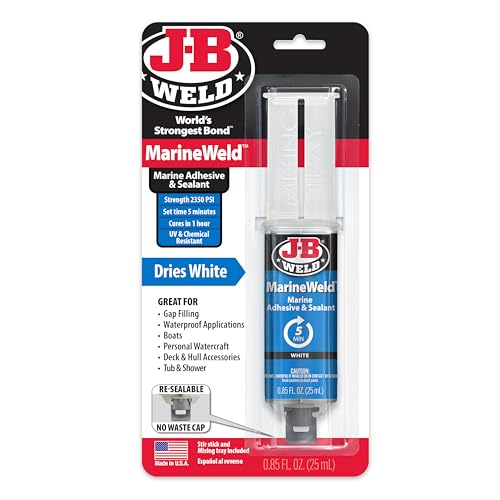
MarineWeld in a syringe provides a convenient 1:1 mix with quick handling for marine repairs. It offers a waterproof, chemical- and UV-resistant bond, suitable for various surfaces including metal, fiberglass, and plastics. Best for quick, durable repairs where underwater or wet-surface work is common.
Best for: Underwater or water-exposed repairs that require reliable waterproof performance. Limitation: Requires careful cleanup to prevent skin contact during mixing.
J-B Weld 8272 MarineWeld Marine Epoxy – 2 oz.

This two-part epoxy forms a tough, durable bond for DIY marine and watercraft repairs. It cures to a dark grey color and offers substantial tensile strength with resistance to water, petroleum, chemicals, and heat. Best for durable repairs on metal and composite surfaces where a strong set is needed after 4–6 hours initial set.
Best for: Long-lasting repairs on metal and fiberglass. Limitation: Longer cure time than fast-setting options; plan around 16–24 hours full cure.
Bob Smith Industries BSI-205 Slow-Cure Epoxy

BSI-205 Slow-Cure epoxy offers a generous 30-minute working time, making it suitable for larger projects or detailed alignment tasks. Upon full cure, it forms a tough, impact-resistant bond ideal for load-bearing joints and multi-surface adhesion to wood, fiberglass, metal, glass, ceramics, and many plastics.
Best for: Projects requiring precise positioning and longer working time. Limitation: Not ideal when the fastest possible cure is needed.
Brampton Marine Epoxy

Brampton Marine Epoxy is designed for wet environments with a 5-minute work life and a full cure in about an hour at 72°F. It cures underwater and adheres well to fiberglass, wood, plastics, ceramics, and metal. Best for fast, reliable repairs in boats, showers, and other water-exposed areas.
Best for: Quick underwater repairs and wet-surface fixes. Limitation: Requires precise timing to maximize the short working window.
TotalBoat 5:1 Marine Epoxy Kit

This 5:1 system is formulated for bonding, coating, and laminating across wood, fiberglass, carbon fiber, and metal. Available as quart, gallon, and larger kits, it offers slow and fast hardeners. The slow option provides longer pot life for wetting out cloth and larger builds. Best for boat building and repairs requiring strong, versatile bonding.
Best for: Comprehensive boat-building or major repairs with extended work time. Limitation: Larger kit sizes may be heavier to handle for small projects.
TotalBoat High Performance Epoxy Kit
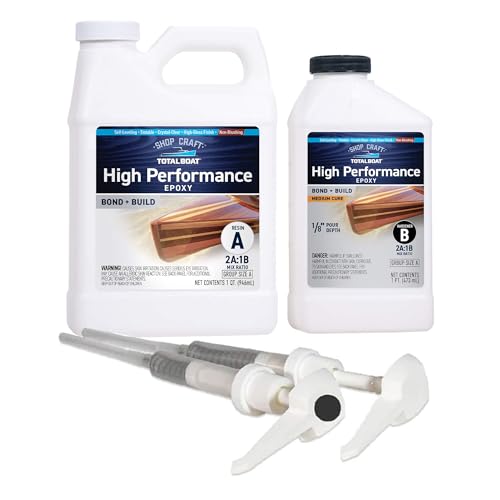
Crystal-clear marine-grade resin and hardener designed for woodworking, boat building, laminating, and repairs. The non-blushing system reduces washdown work between coats, and options include slow, medium, or fast hardeners to tailor cure times. Best for clear coatings and projects where safety and visibility of the final layer matter.
Best for: Clear finishes and precision laminating on wooden or composite surfaces. Limitation: Multiple hardener options require selecting the right catalyst for your project timeline.
Loctite Marine Epoxy, White
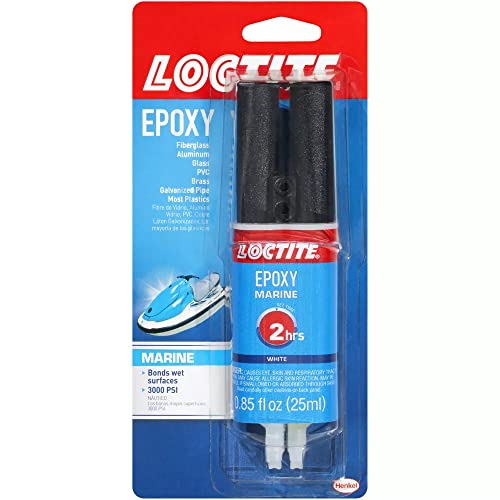
Loctite Marine Epoxy bonds wet surfaces and can be applied underwater. The double syringe applicator ensures equal resin and hardener mix for a reliable bond. It sets in about 2 hours with full cure in 24 hours, making it a balanced choice for projects where you need predictable timing and underwater capability.
Best for: Short-to-mid-range projects that require underwater curing and straightforward mixing. Limitation: Underwater cure works best with thorough surface prep and proper technique.
Buying Guide: Slow-Cure Marine Epoxy Essentials
- Working Time vs. Cure Time: Longer working times help with complex joints; longer cure times can delay full strength. Choose a system that matches your project size and environmental conditions.
- Surface Compatibility: If bonding damp wood, fiberglass, metal, or plastics, ensure the epoxy specifically notes those substrates.
- Underwater Performance: For hull repairs or submerged work, select epoxies rated for underwater cures and moisture tolerance.
- Viscosity and Wetting Out: Low-viscosity formulas wet cloths and complex joints better; higher viscosity may be preferable for gap filling.
- Color and Finish: Some kits cure to clear or dark colors. For visible repairs or coatings, choose options offering clear, non-blushing finishes.
- Kit Composition: Fully integrated kits with resin, hardener, colorants, and mixing supplies simplify preparation and consistency across projects.
- Safety and VOCs: Look for low-odor and low-VOC options for indoor use and shop safety considerations.
Frequently Asked Questions
- What is slow-cure epoxy best used for in marine projects? It provides more working time for large or intricate repairs where precise alignment is needed before the final cure.
- Can slow-cure epoxy cure underwater? Some slow-cure formulations can cure underwater with proper technique and surface preparation; check the product’s underwater performance claims.
- Are there color options for marine epoxies? Yes, some kits cure clear or dark grey; color options may be limited depending on the kit.
- Is mixing ratio important? Yes. Most marine epoxies use a 1:1 or specified resin-to-hardener ratio. Accurate mixing ensures proper cure and strength.
- Which epoxy is best for wood and fiberglass laminates? Systems designed for multi-surface adhesion and slow hardeners are typically ideal for glassing and wooden boat components.
- What maintenance should follow curing? Light sanding or coating after full cure improves durability and water resistance, but follow manufacturer recommendations.