Best Side Loading Kayak Roof Racks for Effortless on-Road Transport
Answer: Side-loading roof racks are ideal for single-person loading, reducing strain and making it easier to slide kayaks, canoes, or boards onto a raised crossbar without climbing. This guide highlights top options that balance ease of use, durability, and fit for common American vehicles. The best picks are suited for solo adventurers, family trips with multiple boards, and SUVs with tall clearance. Below is a quick product snapshot to help compare key features at a glance.
| Product | Best For | Key Benefit |
|---|---|---|
| TOOENJOY Heavy-Duty Lift Assist Roof Rack | Solo loading with high capacity | Smart-Lift mechanism for effortless loading |
| FORWODE Premium Kayak Roof Rack | Two heavy kayaks or a canoe | Thick carbon steel design with fold capability |
| Rhino Rack Nautic 570 | Wide variety of hull shapes | Large padded cradles and side-loading |
| Rhino-Rack Universal Side Loader | One-person loading for tall vehicles | Pivot-style loader for quick setup |
| Yakima JayLow J-Cradle | Versatile for 1 or 2 boats | Adjustable, secure, adaptable to crossbars |
TOOENJOY Heavy-Duty Lift Assist Roof Rack
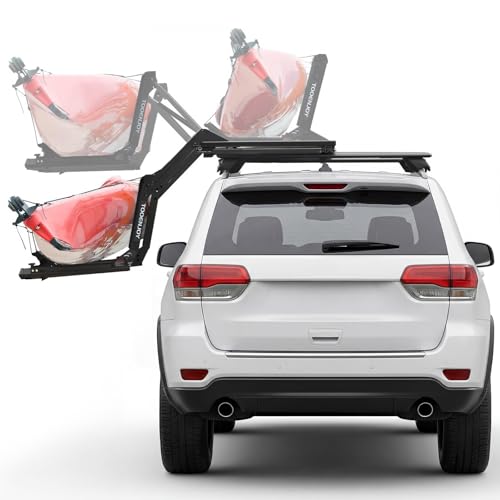
Best for solo loading with heavy items. This unit features a Smart-Lift Mechanism that raises and lowers kayaks, canoes, and more with a 100 lb capacity. It is designed for extended crossbars and offers a secure locking system for peace of mind during travel. Choose this if you frequently load heavy watercraft by yourself and have adjustable crossbars.
Best for: One-person loading on adjustable crossbars. Limitation: Requires compatible crossbar spacing and may need an accessory adapter for fixed crossbars.
Notes: The rack supports 100 lbs and can be used for various load types beyond kayaks, including ladders and cargo boxes. For compatibility, verify crossbar distance and consider the accessory adapter if your setup is fixed or non-extendable.
FORWODE Premium Kayak Roof Rack

Best for dual kayaks or a canoe on SUVs and trucks. The frame is built from high-strength carbon steel with a thickened 1.2 mm wall and 25 mm diameter, supporting up to 160 lb. It features a fold design to adapt to different kayak shapes and includes multiple straps and anchors for secure transport. Choose this if you frequently carry two heavy watercraft and need a robust folding option.
Best for: Two heavy watercraft; long-lasting, corrosion-resistant use. Limitation: Heavier frame may require more effort to mount and remove.
Rhino Rack Nautic 570 Side Loading Carrier
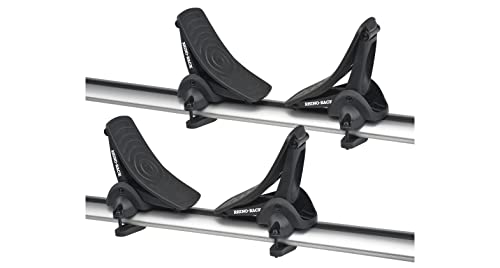
Best for wide hull compatibility with padded cradles. This carrier emphasizes universal fit across many roof rack systems and features 180-degree rotation for side loading. It suits paddlers or anglers who need dependable, low-friction loading from the vehicle side. Best for: Those who want flexible loading angles and compatibility across brands. Limitation: May require additional fitting for unusual crossbar systems.
Rhino-Rack Universal Side Loader

Best for one-person loading with tall SUVs and vans. This side loader is designed to pivot onto the crossbars quickly, letting you lift one side onto the rack and then pivot the other end into place. It’s ideal for solo operators who value quick setup and straightforward use. Limitation: May require precise alignment with crossbars and may not fit every fixed system without adapters.
Why selected: Combines ease and universality, improving one-person operation across many platforms.
Yakima JayLow J-Cradle Rooftop Mount

Best for flexibility with 1 or 2 kayaks. The JayLow supports one kayak in a J-cradle or two kayaks vertically. It offers adjustable upright positioning via a cam lever for secure, custom fits. This rack is well-suited for users who value adaptability across different boat sizes and crossbar setups. Limitation: May be more expensive and requires compatible crossbars for full functionality.
Why selected: High versatility and secure load with straightforward adjustments for varying boat counts.
Buying Guide
What loading style fits your vehicle? Side-loading racks excel when parking space is limited or you want to minimize twisting motions to place a watercraft onto the roof. If you frequently load from the passenger side or a tight driveway, prioritize side-loading designs that offer pivot or lift-assisted features.
How heavy are your watercraft and how many will you carry? For solo users carrying a single kayak, look for lift-assist or side-loading mechanisms with moderate weight capacity. For two boats, choose models advertised for dual loads with sturdy cradles and secure tie-downs.
What crossbar type do you have? Some racks require adjustable crossbars, while others work with most factory rails. Check compatibility notes and consider adapters if you have fixed crossbars. Longer crossbar span generally improves stability for wider hulls.
What is your vehicle profile? Tall SUVs, trucks, and vans benefit from side-loaders designed to minimize lifting height and provide easy side access. If you have a lower roofline, traditional roof racks with secure cradles may suffice, but ensure you still maintain safe clearance and wind resistance.
What materials and corrosion resistance matter? Stainless steel or powder-coated frames resist road salt and weather, extending rack life. For frequent water exposure, choose rot- and rust-resistant saddles or cradles to preserve shape and grip over time.
Ease of installation and maintenance also matters. Lightweight frames with clearly labeled adjustment points reduce setup time. Inspect strap anchors and locking mechanisms regularly to ensure ongoing security during trips.
Frequently Asked Questions
- Are side-loading racks easier to use than top-loading racks? Side-loading racks are generally easier for solo loading because they bring the boat to the side of the vehicle, reducing overhead lifting and balance challenges.
- Can I use these racks on any vehicle? Most are designed to fit common crossbar systems; verify crossbar width, spread, and whether adapters are needed for fixed rails.
- What is the typical weight capacity I should consider? For single kayaks, 75–100 lbs is common. Dual-boat setups often require higher capacity or two compatible racks.
- Do I need additional accessories? Many models include straps and pads; some require extra adapters or tie-downs for optimal security on tall vehicles.
- How do I ensure safe loading and unloading? Use lift-assisted or side-loading mechanisms, practice a stable stance, and always secure boats with bow and stern ties plus cradles.
- What maintenance helps extend rack life? Regularly inspect locking mechanisms, lubricate moving parts, and clean cradles to prevent corrosion and wear.