Best Self Build Canoe Kits for Model Makers and Beginners
Yes—these self-build canoe kits are ideal for hobbyists who want a hands-on project that teaches traditional wood model techniques. The top picks here suit different buyer needs: beginners who want guided assembly, intermediate hobbyists seeking historically accurate designs, and DIY enthusiasts who enjoy long-term build projects. Below you’ll find five well-matched options with clear guidance on who benefits most from each kit, plus practical buying tips and a concise FAQ.
| Product | Brand | Approx. Length | Best For |
|---|---|---|---|
| Midwest 981 Indian Girl Canoe 1:12 | Model Expo | 15-7/8″ long | Beginner to intermediate, strip-plank technique |
| Midwest 982 Peterboro Canoe 1:12 | Model Expo | 15-7/8″ long | Introductory wood model building, beginner friendly |
| Midwest 949 Big Canadian Canoe 1:8 | Model Expo | 23″ long | Historical accuracy, larger project for steady progress |
| Midwest Dinghy | Model Expo | — | Beginner to mid-level, step-by-step |
| Midwest Chesapeake Bay Skipjack 1:28 Scale | Model Expo | 21″ long | Moderately experienced builders seeking a detailed sailing model |
Midwest 981 Indian Girl Canoe 1:12 Kit

Best for beginners who want a guided start with a classic Native American-inspired design. This kit uses laser-cut basswood parts and strip plank construction to introduce the builder to a fundamental method used in ship modeling. Detailed, illustrated instructions accompany the kit to support a smooth building process. The compact length makes it suitable for a desk or display space while still offering a rewarding build experience.
Who it’s for: new wood model builders or hobbyists seeking a concise, technique-focused project. Why chosen: clear construction method, beginner-friendly, and historically themed. Caution: smaller parts require careful handling to avoid loss during assembly.
Midwest 982 Peterboro Canoe 1:12 Kit
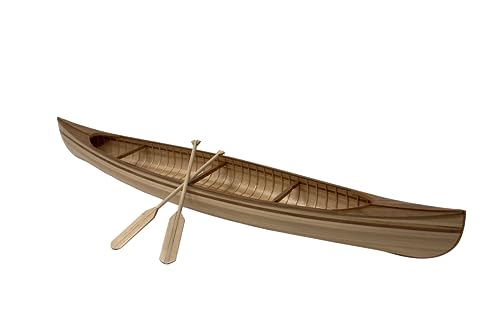
Best for total beginners who want a straightforward build with strong, laser-cut parts and comprehensive instructions. This kit emphasizes easy construction and structured guidance, making it ideal for a first-time wood model project. The dimensions and design closely mirror the Indian Girl kit, offering a similar entry point with a slightly different hull profile for variety.
Who it’s for: first-time wood model builders seeking a reliable, well-supported start. Why chosen: consistent assembly experience with clear illustrated instructions. Caution: occasional alignment requires patience to ensure keel and frames fit perfectly.
Midwest 949 Big Canadian Canoe 1:8 Kit
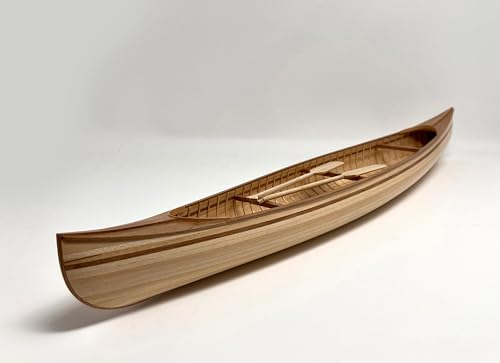
Better for intermediate builders who want a larger, more ambitious project with historical fidelity. The kit includes easy-to-follow instructions and highly detailed parts, enabling attention to scale and proportion. Its bigger size makes display impact, while still remaining manageable for dedicated hobbyists.
Who it’s for: builders who want a more substantial finish and an authentic look. Why chosen: Level 3 of the Apprentice Success series offers a deeper, longer build with accurate historical design. Caution: larger project requires more workspace and time commitment.
Midwest Dinghy Wooden Ship Model Kit

Best for beginners who want to learn wood model ship building with a solid stepping-stone project. This kit is designed to develop skills and confidence gradually, featuring historically accurate parts and comprehensive illustrated instructions. It’s a practical choice for learners building toward more complex sailing models.
Who it’s for: new builders planning to expand to more complex ships. Why chosen: a clean progression from simple frames to intricate fittings. Caution: may require careful handling of tiny fittings during rigging steps.
Midwest Chesapeake Bay Skipjack 1:28 Scale Kit

Best for builders with some prior experience who want a detailed sailing model. The kit features laser-cut basswood and mahogany parts, with a complete fittings set for sails, rigging, and display. It requires some cutting, fitting, and shaping, reflecting a more involved build that yields a historically accurate Skipjack.
Who it’s for: experienced hobbyists seeking a quality sailing model with authentic fittings. Why chosen: rich kit contents and scale for a more ambitious finish. Caution: the build may be lengthy and demands patience and precision during rigging steps.
Buying Guide: Self Build Canoe Kit Considerations
- Skill level: Start with beginner-friendly sets that emphasize guided assembly and illustrated instructions. Move to larger or more detailed hulls as skills grow.
- Scale and size: Smaller models fit on a desk; larger kits offer a more dramatic display but require more workspace and time.
- Materials and construction: Look for laser-cut basswood parts and clear step-by-step instructions. Strip plank and traditional building methods are common in traditional canoe or ship models.
- Historical accuracy: If you value authentic designs, select kits described as historically accurate or modeled after original boats.
- Included fittings: A complete fittings set (rigging, sails, cleats, and bases) adds value and reduces the need for additional purchases.
- Display readiness: Some kits include hardwood display bases; consider whether you want a display-friendly finish or plan to frame the model later.
- Time commitment: Larger kits may take longer to complete. Plan for longer sessions if you’re building a 23″ canoe or a 21″ sailing ship.
FAQ
- What is the typical skill progression with these kits? Beginners start with simple hulls and illustrated instructions, then advance to larger ships with more complex rigging and fittings.
- Are these kits suitable for display or collection purposes? Yes, most kits are designed to be displayed once completed and often include display bases or easy-to-display hulls.
- Do kits require special tools beyond basic hobby supplies? Basic tools such as hobby knives, small files, glue, and clamps are typical; some kits may require additional items listed in the instructions.
- What should I consider when choosing a scale? Smaller scales offer quicker builds and compact displays; larger scales provide more detailed finishing and a stronger visual impact.
- Can these kits be a family project? Yes, they’re suitable for supervised learning and can be shared among hobbyists of varying ages with appropriate supervision for small parts.
- Is historical accuracy guaranteed by the kit? Kits aim to reflect historical designs, but variations may exist due to model-specific interpretations and kit production.