Best Red Underwater Boat Lights for Nighttime Visibility
For sailors and boaters seeking vivid red illumination underwater, these lights provide visibility, safety, and ambiance. This guide highlights five reliable options suited for different vessels and conditions. The top picks target divers, anglers, night-time cruisers, and pontoons, with emphasis on waterproofing, beam spread, and easy installation.
The following quick reference table compares the five selected products on key points such as light output, waterproof rating, and installation notes.
| Product | Beam / Output | Waterproof Rating | Best For | Notes |
|---|---|---|---|---|
| NBWDY 2Pcs Red Underwater Light | 6000LM total | IP68 | Large boats, yachts, and pontoons | Stainless steel, long warranty |
| UWDESY 2Pcs 27 LEDs Red Marine Lights | Broad flood light | IP68 | Small to mid-size boats, transom use | Low power, durable |
| Hilitand Underwater Boat Lights | 42 LED beads, 125° angle | IP68 | Recreational boats, decks | Simple installation |
| BHBP 2pcs 90LED Red Underwater Lights | 4500LM total | IP68 | Nav lights, night fishing | Sturdy 316 stainless steel |
| UCINNOVATE 2X 6.9” Blue/Red Lights | 84 LEDs, 3600lm | IP68 | Yachts, pontoons, decks | High durability ASA body |
NBWDY 2Pcs Red Underwater Light

- Features: IP68 waterproof lens, 316 stainless steel cover; 120 LEDs delivering a 6000LM output; wide flood effect for high visibility underwater.
- Best for: Large boats, yachts, pontoons, or pools that require bright, even red illumination underwater.
- Caution: Ensure mounting hardware is compatible with 316 stainless steel fixtures to avoid galvanic corrosion on older hulls.
UWDESY 2Pcs 27 LEDs Red Marine Lights

- Features: IP68 waterproof, 27 LEDs per light, broad flood effect; designed for transom, trailer, and deck lighting on small to mid-size boats.
- Best for: Boaters needing compact, energy-efficient red lighting with easy mounting on transoms or decks.
- Caution: Data notes “2 times the strength of other underwater lights” but real-world results depend on water clarity and battery capacity.
Hilitand Underwater Boat Lights
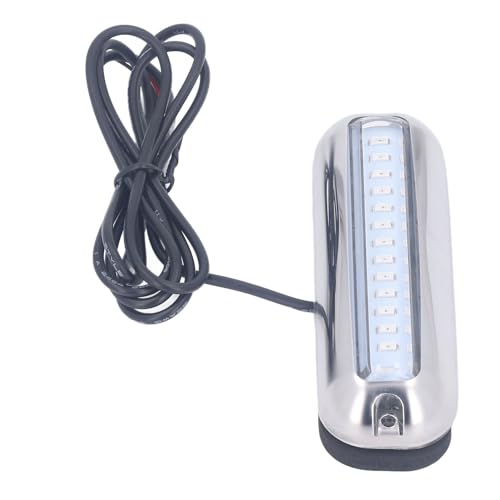
- Features: 42 LEDs with 125° wide-angle beam; DC10-30V operation; simple two-wire installation with included mounting options.
- Best for: Boats needing a high-clarity red beam with broad coverage and straightforward installation.
- Caution: Installation assumes hull compatibility with two-screw mounting; verify vessel hull thickness before mounting.
BHBP 2pcs 90LED Red Underwater Lights
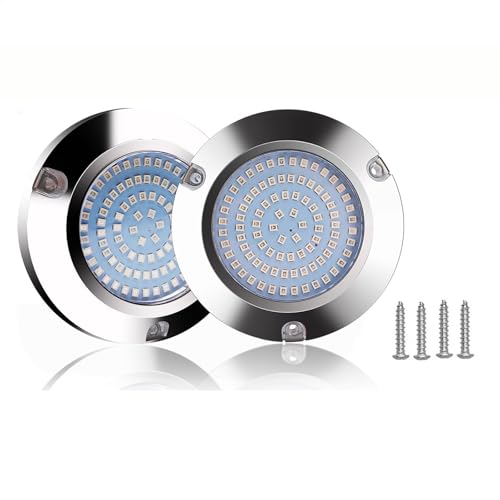
- Features: 90 LEDs per light, 4500LM total; IP68 waterproof with 316 stainless steel housing and PC lens for heat dissipation and durability.
- Best for: Night fishing, deck illumination, and as prominent navigation markers on sailboats and yachts.
- Caution: Heavier stainless steel units may require reinforced mounting points on thinner hulls.
UCINNOVATE 2X 6.9” Marine LED Lights

- Features: 84 LEDs per pair, 3600LM, IP68; 12-36V operation; ASA body with UV and impact resistance; 10-meter lighting range in clear water.
- Best for: Yachts, pontoons, and larger boats needing durable, long-range underwater illumination with strong weather resistance.
- Caution: Do not use below a waterline depth of 16 inches; verify mounting depth to avoid glare or washout.
Buying Guide
What should I look for in red underwater boat lights?
Key factors include waterproof rating, beam angle, brightness, voltage compatibility, and hull mounting options. IP68 ensures full submersion protection, while a wide beam angle improves coverage along the hull. Verify the voltage range (10-30V DC is common) to match your boat’s electrical system. Durability features such as stainless steel housings and UV-resistant plastics extend life in saltwater environments.
How many lights do I need for effective coverage?
For most recreational boats, two to four lights along the transom or hull provide adequate coverage for nighttime visibility and ambiance. Larger vessels may benefit from additional units placed at bow and stern sections to eliminate dark spots.
Which mounting approach works best?
Two common methods exist: flush mounting with screws for a neat look or adhesive mounting for easier installation on non-structural surfaces. When possible, use anti-slip pads or gaskets to seal gaps and reduce vibrations. Ensure the hull surface is clean and dry before installation.
Are red lights suitable for fishing or navigation?
Red lights preserve night vision better and reduce glare for anglers. They also help distinguish shapes along the waterline. For navigation, combine red with other colored lights to meet local maritime requirements and improve overall visibility.
Maintenance and longevity considerations
Regular inspection for seals and mounting hardware prevents premature water intrusion. Look for corrosion on stainless steel fixtures and replace worn gaskets as needed. Clean lenses periodically to maintain brightness and beam quality.
Pros and cons snapshot
- Bright, long-lasting illumination: Excellent for night visibility but can be power-intensive on higher-output models.
- Submersible reliability: IP68 ratings protect against water ingress; ensure proper sealing during maintenance.
- Ease of installation: Adhesive or screw mounting options cater to different hull types; plan cable routing carefully.
FAQ
- Q: Are red underwater lights legal for all boats?
- A: Red lights are common for underwater and deck lighting; ensure compliance with local boating regulations and navigation rules for your area.
- Q: Do these lights require professional installation?
- A: Most installations can be DIY with basic tools, but consult a marine electrician if you’re unsure about wiring or waterproofing.
- Q: Will red lights attract fish?
- A: Some red lights may attract bait in certain water conditions, but results vary by location and water clarity.
- Q: How do I know the right voltage for my boat?
- A: Check your vessel’s electrical system; many marine lights operate within 10-30V DC. Pick models that match your supply.
- Q: Can I mix brands?
- A: Yes, mixing brands is possible, but ensure compatible voltages, IP ratings, and mounting methods to avoid performance gaps.