Best Propylene Glycol Marine Antifreeze for Boats and RVs
Propylene glycol marine antifreeze protects water systems, engines, and heating loops in cold weather. This guide compares top-performing options and explains which one is best for boats, RVs, or home heating uses. The recommended picks prioritize burst protection, corrosion inhibitors, and compatibility with various metals and systems. Use this overview to choose antifreeze that matches your climate, system type, and maintenance plans.
Summary table of selected products:
| Product | Best For | Key Benefit | Best Temperature Protection |
|---|---|---|---|
| STAR BRITE Premium -100° | Aqua-Hot, Hydro-Hot, marine heating | Superior heat transfer with burst protection | -100°F |
| Star Tron Star-Cool Premium | High-performance engines and marine uses | Extended service life with POAT inhibitors | Varies by dilution |
| West Marine -50°F | Boat cooling and engine systems | Ready-to-use, protects aluminum and brass | -50°F |
| STAR BRITE -200°F | Extreme cold environments, RV and water systems | Extreme burst protection | -200°F |
| Century Heat Transfer Fluid | RV heating and hydronic systems | Non-toxic, high boiling point | High, depends on system |
STAR BRITE Premium -100° Boiler System Antifreeze

This propylene glycol heating and cooling fluid is designed for boiler and hydronic systems. It offers burst protection down to -100°F (-73°C) at full strength and includes premium corrosion inhibitors to guard internal components. Best for owners who operate in cold coastal or inland winter conditions and need reliable freeze protection without sacrificing heat transfer efficiency.
Who it’s best for: boat and RV owners with Aqua-Hot or Hydro-Hot style heating, or any system requiring strong heat transfer and chemical protection. Why selected: it combines burst protection with corrosion inhibitors and is manufactured in the USA for domestic supply reliability.
Limitations: full-strength protection is specified at very low temperatures, so dilution in milder climates may reduce protection level. Ensure correct mixing according to system requirements.
Star Tron Star-Cool Premium Synthetic PG Engine Coolant

This is a propylene glycol-based coolant and antifreeze formulated for engines, motorcycles, snowmobiles, and marine applications. It emphasizes extended service life with POAT technology for corrosion resistance and leak prevention, while remaining compatible with all engine types. Best for: high-performance engines that require reliable cooling, anti-corrosion protection, and a longer service interval.
Why selected: it blends a robust corrosion-inhibition package with eco-friendly, biodegradable characteristics for multi-vehicle use.
Limitation: the product is designed for a range of engines; verify compatibility with your specific marine or RV system before mixing with other fluids.
West Marine -50°F Engine & Water System Antifreeze
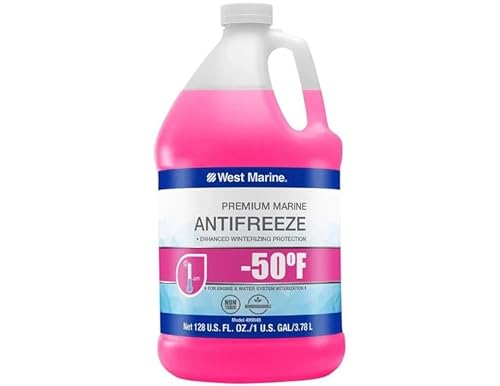
This ready-to-use, non-toxic propylene glycol antifreeze protects both engines and water systems with a pre-mixed formula. It provides burst protection down to -50°F and includes advanced inhibitors to shield metal components such as aluminum, brass, copper, and solder. Best for: boaters who want a straightforward, immediate protection solution without dilution steps.
Why selected: its ready-to-use nature reduces handling errors and ensures quick winterization for small to mid-size vessels.
Caution: -50°F protection is lower than extreme polar conditions; in areas prone to harsher freezes, choose a stronger option or use supplemental protection.
STAR BRITE Premium -200°F Antifreeze
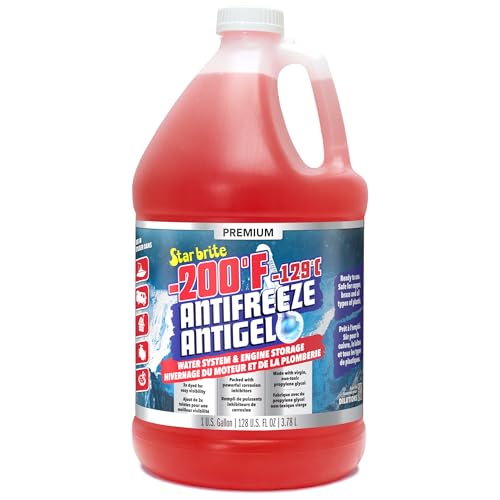
This product provides extreme cold protection for RV, marine, and water systems. It uses virgin propylene glycol with corrosion inhibitors and is suitable for potable water systems where prevention of rust and wear is critical. Best for: locations with severe winter weather or systems exposed to freezing temperatures beyond typical marine operations.
Why selected: extreme protection helps prevent pipe and component damage in unheated spaces. Choose this if your climate regularly tests sub-zero conditions.
Limitation: extremely low-temperature protection may be more than needed in moderate climates; consider a milder option to optimize cost and performance.
Century Heat Transfer Fluid, RV Antifreeze

This ready-to-use red propylene glycol antifreeze is recommended by Aqua-Hot, Oasis, and Timberline for heating systems in RVs and hydronic setups. It emphasizes non-toxic formulation, high boiling point, and efficient heat transfer. Best for: RV owners who rely on hydronic heating and want a safer, GRAS-rated fluid with broad system compatibility.
Why selected: widely recognized in RV heating markets for non-toxicity and robust heat transfer. Useful where a non-corrosive, safe-to-handle solution is preferred.
Limitation: as a fill-for-system-specific guidance, verify compatibility with your unit’s heat transfer loop and fill procedures before use.
Sanco Industries Propylene Glycol – Food Grade

This 4-gallon value pack provides food-grade propylene glycol suitable for humidor solutions, RV antifreeze, solvent use, moisturizers, and other applications. It’s USA-made in a BPA-free container with resealable lid. Best for: users who need a versatile, food-grade glycol for multiple non-edible applications and a bulk supply for seasonal winterization.
Why selected: the value pack helps reduce trips to the store and supports various non-critical uses. Consider this option for bulk preparations and multi-use scenarios.
Limitation: not specifically formulated as a dedicated marine antifreeze; ensure it’s suitable for the intended system and concentration before use in critical components.
ComStar Freeze Safe – Blue Antifreeze

ComStar Freeze Safe is a blue-colored, prediluted 80% propylene glycol antifreeze with metal corrosion inhibitors. It is designed for refrigeration and mechanical systems, offering durable inhibitors across a wide range of applications. Best for: users who want a ready-to-use, corrosion-inhibiting glycol with established use in multiple systems.
Why selected: strength lies in its inhibitor package and wide application reach, making it a flexible choice for mixed-use facilities. Caution: verify the dilution level intended for your specific system to avoid under- or over-filling.
Buying Guide: Key Considerations For Propylene Glycol Antifreeze
- System compatibility: Check whether your boat, RV, or home heating system requires potable water-safe formulations or standard non-potable glycol antifreeze.
- Protection temperature: Select based on lowest expected ambient temperatures and system exposure. Extreme cold environments demand stronger protection (e.g., -100°F to -200°F).
- Corrosion inhibitors: Look for inhibitors that protect metals used in your system (aluminum, copper, brass, solder). Avoid formulations without adequate inhibitors for longevity.
- Ready-to-use vs. concentrated: Determine if you prefer pre-mixed, ready-to-use solutions or concentrates requiring dilution. Ready-to-use reduces mixing errors.
- Environmental and safety considerations: Food-grade or GRAS formulations may be preferred for certain applications, especially where incidental contact could occur.
- Maintenance and service life: Some products promise longer service intervals; confirm compatibility with your maintenance schedule and OEM guidelines.
- Certification and origin: U.S.-made products may offer consistent supply and certain quality expectations; verify any relevant compliance for your locale.
FAQ
- What temperature protection should I look for in marine antifreeze? Answer: Choose based on your climate; extreme cold zones benefit from products rated to -100°F or lower, while milder climates may be fine with -50°F or -200°F options depending on system exposure.
- Is ready-to-use antifreeze better than concentrated variants? Answer: Ready-to-use reduces dilution errors and simplifies winterization, but concentrates can be more cost-effective for large systems or multiple applications.
- Can I mix different antifreeze brands? Answer: Mixing is generally not recommended unless specified by the manufacturer. Use the product that matches your system’s requirements and follow OEM guidelines.
- Is propylene glycol safe for potable water systems? Answer: Some formulations are designed for potable water and include inhibitors to prevent corrosion and rust, but always verify compatibility with your local plumbing and codes.
- How long does propylene glycol antifreeze last in a closed system? Answer: Many products offer extended service life, ranging from 1–2 years or more, depending on usage and dilution. Check product data for specifics.
- What should I do if my antifreeze is discolored or contaminated? Answer: Do not use contaminated fluid; replace with a fresh batch and clean the system according to the manufacturer’s guidelines.