Best Portable Fish Finders for Kayaks: Easy, on-the-Go Depth and Fish Location
Looking for a portable fish finder perfect for kayak fishing? This guide highlights top compact models that help you locate depth, fish, and bottom structure on the move. Best for kayak anglers who need lightweight, easy-to-use gear that won’t slow you down. We compare five options, focusing on portability, battery life, and sonar features to help you choose the right tool for your water adventures.
Summary of selected products
| Product | Best For | Key Benefit |
|---|---|---|
| Yoocylii Handheld Fish Finder | Portable kayak and dock fishing | Very light with neck strap for hands-free use |
| LUCKY Portable Fish Finder Handheld | K paddlers needing color display | 2.4″ color TFT screen and 26 ft depth range |
| Venterior Portable Rechargeable | Wireless, castable flexibility | Wireless sensor up to 262 ft from handheld unit |
| LUCKY Kayak Portable Castable | Wires-free kayak setups | Long sensor range and 90° beam for spotting schools |
| Garmin Striker 4 with Transducer | All-around kayak/boat sonar | Clear Vu sonar and GPS waypoint mapping |
Yoocylii Handheld Fish Finder Portable Kayak Model

The Yoocylii handheld unit provides depth readings, approximate fish location, and fish size (small/medium/big). It also highlights weed and bottom features like sand and rocks. This model excels for kayak anglers who want a compact, easy-to-carry option with simple sonar feedback. Best for casual anglers who fish from kayaks, docks, or ice and value portability above all else. A neck strap allows hands-free operation when you’re reeling or casting. It runs on four AAA batteries and yields several hours of continuous use. Note that optimal performance requires the transducer bottom to be horizontal when moving under 5 mph.
Why selected: It’s among the lightest, simplest options for quick checks of depth and fish in target zones. Best for one-handed use and quick scouting in calm water. Caution: performance can be limited in rough waters or at higher speeds; battery life depends on fresh batteries.
LUCKY Portable Fish Finder Handheld Kayak Model
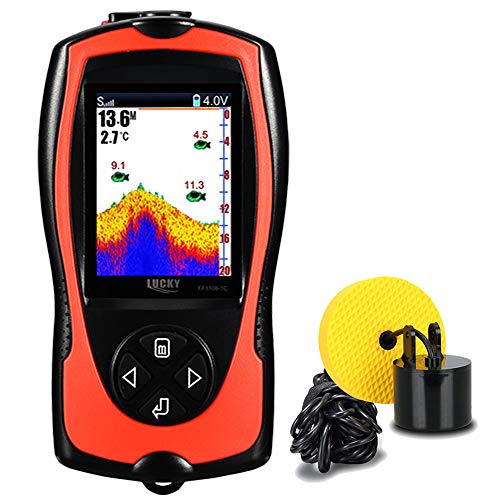
This kayak-friendly unit features a 2.4-inch color TFT display and 26-foot operating depth. It displays water depth, temperature, fish size, and fish depth, with two modes (Transducer and Simulation) for practice and real use. Battery life runs around five hours on a full charge, making it suitable for half-day trips or longer sessions with careful power management. Best for color visualization and ease of interpretation in daylight. A caution: the wired transducer means you’ll need a clean mounting setup if you want to move quickly between spots.
Why selected: The color display and clear depth/fish readouts help distinguish target species and structure. Choose this if you prefer visual clarity on the screen and a straightforward handheld experience. Caution: not fully wireless—requires a wired transducer for real data gathering.
Venterior Portable Rechargeable Wireless

The Venterior system uses a wireless sonar probe with a handheld display, offering up to 262 feet of sensor range. It detects water depth, temperature, fish size, and bottom contour, and includes both Work and Simulation modes. The display supports unit conversion between feet and meters. Best for kayak anglers who want a truly wireless setup and the flexibility to cast the sensor away from the hull. Limitation: some users report that wireless reliability can vary with water conditions; line tethering is a useful backup.
Why selected: It provides a true wireless option that reduces hull integration concerns on lightweight kayaks. Best for minimal wiring and easy portability. Caution: probe range and signal performance may vary with water conditions and distance from the handheld unit.
LUCKY Kayak Portable Castable Fish Depth Finder
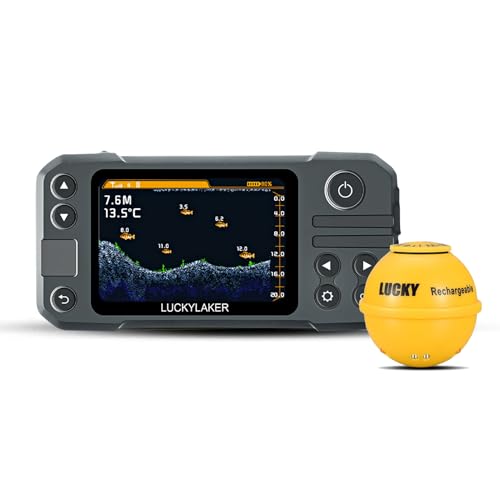
This castable device emphasizes a long-range sensor and a 3.5-inch LCD display with clear fish depth and bottom contour readings. It provides a 90-degree beam and an 3-147 ft depth scanning range, helping kayak anglers locate schools efficiently. Best for anglers who want a wide scanning area from shore or boat, with a focus on depth and fish positioning. Caution: the larger, longer-range sensor may require more careful casting technique to maximize data quality.
Why selected: Its long-range, wide-beam sonar supports broader scouting when you’re moving across water. Choose this if you want substantial coverage and a straightforward display. Avoid if you need the smallest, most compact option.
Garmin Striker 4 With Transducer

The Garmin Striker 4 offers a 3.5-inch display with CHIRP sonar and built-in GPS waypoint marking. It includes a GT20 transducer for traditional CHIRP and CHIRP ClearVü sonar, enabling clearer target separation and structure imaging. Best for kayaks that want reliable sonar performance and a straightforward GPS feature to map fishing spots. Caution: higher price and slightly larger footprint than ultra-compact options.
Why selected: It combines accurate sonar with practical navigation features, making it a strong all-around choice for serious kayak anglers who also want waypoint navigation. Choose this if you value integrated GPS mapping and crisp imaging in a single unit.
Buying Guide
What should you consider when choosing a portable kayak fish finder?
- Portability and weight: Prioritize lightweight, compact models for easy transport and mounting on small kayaks.
- Display type and size: Color displays are easier to read in bright sun; larger screens show more detail but are bulkier.
- Transducer and signal: Wired transducers provide consistent data; wireless options reduce hull mounting but may be susceptible to interference.
- Depth and water type: Ensure the device supports the maximum expected depth and works in both freshwater and saltwater if you dip into the ocean.
- Power options: Battery life should cover your typical trip length; check whether AA batteries or rechargeable packs are preferred.
- Additional features: Bottom contour, fish size, and weed/rock detection help in selecting spots; built-in GPS adds navigation value.
FAQ
- Are portable fish finders waterproof? Most models are designed for water exposure, but always confirm IP rating and usage guidelines.
- Do I need a transducer on a kayak? A transducer is required for traditional sonar readings; wireless variants offer hull-free operation but may be less consistent.
- Can I use these on saltwater? Yes, many are saltwater compatible; verify sensor corrosion resistance and cleaning requirements for longevity.
- What’s the best display size for kayak use? A 2.4-3.5 inch screen balances readability with compactness for most kayak setups.
- How does GPS improve fishing? GPS helps you map and revisit productive spots, mark structure, and navigate returning routes safely.
- Do these devices work at varying speeds? Some models require slow movement under 5 mph to maintain accurate depth and bottom readings.