Best Portable Battery Chargers for Boats: Quick-Power Jump Starters and Maintainers
Answering the common buying question for boat owners: choose a portable battery charger or jump starter that is reliable, marine-ready, and easy to carry on deck. The top picks below are suited for different boaters—from weekend sailors needing a quick boost to anglers who want a robust power bank for devices and lights. Each entry notes who it’s best for and why it was selected, with practical cautions when relevant. A compact buying table summarizes key points for fast comparison.
| Product | Best For | Key Strength | Limitations |
|---|---|---|---|
| NOCO Boost GB40 | Boaters needing quick engine starts and mobile charging | High 1000A peak, spark-proof safety, built-in USB power bank | Requires proper 12V connections; not a replacement charger for large batteries |
| YONHAN 20A 12V/24V Charger | Boat owners seeking long-term battery maintenance | Smart 7-stage charging, winter mode, repairs & maintenance features | Not a jump starter; must be plugged into an outlet |
| TowerTop 12V Smart Charger | Mariners needing automatic, efficient charging for multiple battery types | 4 adjustable currents, fast charging, auto-desulfation and memory settings | Some models may be sensitive to extreme environments; verify marine rating |
| TREKURE Jump Starter 8000A | Boats with large 12V systems or diesel engines | Very high peak current, multiple backup charging modes, built-in light | Bulkier; may be heavier to carry on small boats |
| BooKoo A9 Jump Starter 4000A | Compact, all-in-one jump start and USB charging for day trips | Strong jump-start power with USB-C, compact and portable | Smaller battery capacity than larger models; plan for higher energy use requires recharge |
NOCO Boost GB40: 1000A UltraSafe Jump Starter
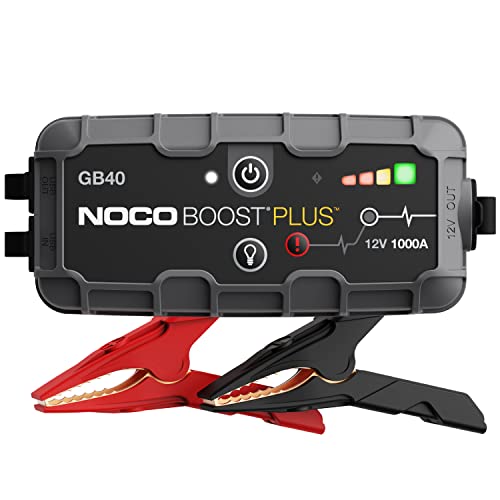
The NOCO Boost GB40 delivers up to 1000 amps for quick engine starts on boats with engines up to 6.0L gas or 3.0L diesel. It features patented spark-proof and reverse polarity protection for safe connections to any 12V system. Its integrated power bank charges smartphones and tablets in about 3 hours, making it a practical deck companion for emergencies and on-water activities.
Best for: boat owners who want fast starts and a built-in USB power source in a compact package. This is ideal when you need a reliable boost on a remote dock or after a long day of fishing.
Caution: Ensure proper connection order and keep cables clear of moving parts. It’s a jump starter first and a charger second, so plan for engine starting needs before relying on it for devices.
YONHAN 20A 12V/24V Battery Maintainer

The YONHAN charger is a 20A trickle charger suitable for 12V and 24V systems, including LiFePO4 and various lead-acid chemistries. It supports 7-stage charging, winter adjustments, and a high-efficiency repair mode to wake idle batteries. This unit is designed to maintain and repair batteries when the boat is idle, making it a strong choice for winterization or long-term moorage.
Best for: boat owners who need a robust maintainer to protect marine and deep-cycle batteries during off-season or long trips. It’s not a jump starter, so use a separate boost device when you need an engine start.
Caution: It cannot repair a totally dead battery. It requires power from an outlet and proper configuration for battery type to avoid mischarging.
TowerTop 12V Smart Car Battery Charger

The TowerTop charger offers 4 current settings (2A/10A/25A/AUTO) with a 25A max, aiming to charge a 100Ah battery in under 3.5 hours. It supports automatic detection, pulse repair after full charge, and memory of last settings. Compatible with 12V sealed lead-acid batteries and deep-cycle marine batteries, it can support boats with multiple battery banks and varying chemistries.
Best for: mariners who want a versatile, auto-maintainer that adapts to temperature and battery type, while delivering faster topping-up between trips.
Caution: Ensure the model you choose is rated for marine use and that it handles the specific battery chemistry on board to maximize safety and effectiveness.
TREKURE Jump Starter 8000A

The TREKURE jump starter delivers an 8000A peak current, sufficient for diesel engines up to 12L and gas engines of various sizes. It includes an 26800mAh power bank with an 18W fast charge USB port, a built-in LED light with multiple modes, and a compact form factor for easy storage. It supports multiple charges and up to 24 months of standby with a long cycle life.
Best for: boaters who need a high-capacity, all-in-one jump starter with strong lighting and device charging on long trips or in remote marinas.
Caution: Heavier and larger than compact models; ensure you can transport it safely on small craft and store it securely during rough seas.
BooKoo A9 Jump Starter 4000A
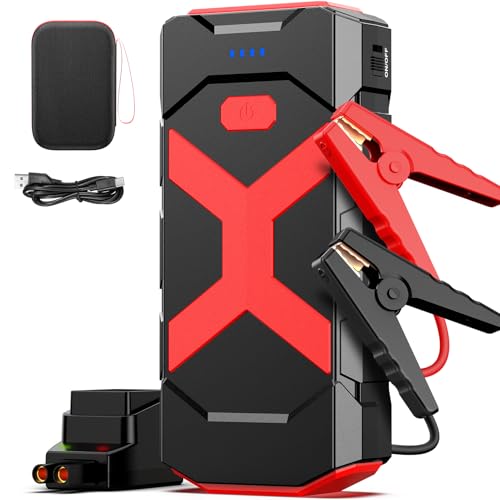
The BooKoo A9 provides 4000A peak power with a 20000mAh capacity and USB outputs for quick device charging. It’s designed for gasoline engines up to 12L and diesel up to 10L, with a compact form factor and a storage box to keep components organized. It supports USB-C charging and quick recharges for frequent travelers on the water.
Best for: boaters seeking a compact, versatile jump starter with modern charging options for both engine starts and mobile devices. Useful for day trips and smaller craft.
Caution: While compact, its energy capacity is lower than larger jump starters—plan for recharges after use and during multi-day trips.
Buying Guide
What type best fits your boat?
Battery maintainers are ideal for seasonal boats that sit idle for long periods. Jump starters are essential for emergency starts on the water, especially in remote locations. For larger boats with diesel engines, higher peak current models may be necessary.
How to choose by battery chemistry?
Lead-acid (including AGM and GEL) and LiFePO4 battery banks are common on boats. Ensure charger or jump starter is compatible with your battery type. Some devices support multiple chemistries, offering flexibility if you switch battery types.
Portability vs. power
Smaller units are easy to store in glove boxes or deck boxes but may have limited capacity and fewer features. Larger units offer more starting power and longer device charging but require more space and handling care.
Safety and marine use
Look for features such as spark-proof connections, reverse polarity protection, and temperature compensation. If a device is marketed as marine-ready, confirm IP ratings or water-resistance suitable for boat use.
Maintenance and versatility
Consider devices that double as USB chargers or power banks for on-board electronics. A model with a built-in flashlight can be helpful for night repairs or signaling on the water.
Cautions for on-board use
- Keep all devices away from standing water and moisture-heavy areas.
- Store cables and accessories securely to prevent loose connections during rough seas.
- Charge batteries away from fuel sources and heat sources to minimize risk.
Quick comparison at a glance
- Best for quick engine starts: NOCO Boost GB40 or TREKURE 8000A, depending on engine size.
- Best for maintenance: YONHAN charger for long-term battery care between trips.
- Best for multi-battery boats: TowerTop charger with auto features and multiple modes.
- Best compact option for small boats: BooKoo A9 with USB-C and portable design.
FAQ
- What is the main difference between a jump starter and a battery maintainer?
Answer: A jump starter provides high current to start a dead battery; a maintainer provides low, steady current to keep a battery charged and healthy when not in use. - Can I use a car charger on a marine battery?
Answer: Yes, if the charger is compatible with marine battery chemistries (lead-acid or LiFePO4) and designed for 12V/24V systems on boats. - Do all jump starters work with diesel engines?
Answer: No; verify peak current and engine size. Diesel engines generally require higher peak currents. - Is a high-amperage jump starter always better?
Answer: Not always; power needs depend on engine size, battery condition, and cold-weather scenarios. Larger starters add weight and bulk. - What safety features matter most on a boat?
Answer: Spark-proof connections, reverse polarity protection, battery-temperature compensation, and proper housings to prevent short circuits. - Should I store a charger on deck?
Answer: Store in a dry, ventilated compartment away from direct sun and moisture; ensure it is off and secured during travel.