Best Paddle Board With Motor: Top Picks for Effortless Power on the Water
If you want to add motor-assisted propulsion to a stand-up paddle board, these five products offer integrated or add-on motor solutions designed to expand range, reduce fatigue, and boost speed. They are best suited for long-distance paddlers, anglers who want hands-free fishing, beginners seeking easier cruising, and recreational users exploring open water without tiring quickly.
| Product | Type | Best For | Key Benefit |
|---|---|---|---|
| Spatium Fishing Paddle Board with Motor | Inflatable SUP with integrated motor | Fishing enthusiasts and family users | Detachable electric fin with side steering for hands-free glide |
| LEDONNE Electric Fin for SUP | Electric fin conversion kit | Long paddling trips and heavy gear | Up to 8 km/h, remote-watch control, lightweight |
| Electric Fish Fins for Paddle Surf (MDYHY) | Electric fin with battery option | Versatile riders in varied water | Brushless motor for added thrust |
| Electric Paddle Board Motor Fin (Paradise Pad) | Motor fin with 4 speeds | Prolonged trips and faster transit | Long battery life and four-speed control |
| Mountocean Y03 Electric Fin | 350W motor with wireless remote | Saltwater and freshwater use | Low-noise propulsion and multiple speed levels |
Spatium Fishing Paddle Board With Motor

The Spatium board features a triple-chamber design, delivering exceptional stability with a 48″ width and a capacity up to 660 lbs. It is built for 1–2 adults for cruising, fishing, or casual use on calm or surf conditions. A notable highlight is its detachable electric fin and a tail steering system for hands-free propulsion. Best for anglers and learners who want steady navigation with an assisted glide, this board reduces fatigue during long sessions. A potential limitation is that stability depends on proper inflation and weight distribution.
LEDONNE Electric Fin for SUP
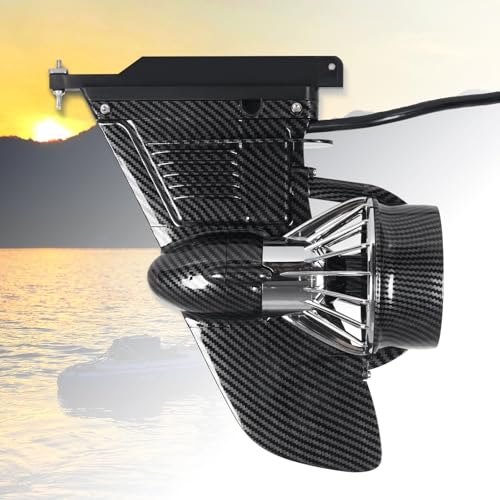
The LEDONNE e-fin is designed to extend paddling range, offering up to 8 km/h in ideal conditions. It is suitable for long tours, heavy gear fishing, and riders of all skill levels, including beginners. The system is easy to install, with a water-resistant battery and a watch-based control. It supports modes for different conditions, including water weed management. A caveat is that battery life and speed depend on water conditions and battery maintenance.
Electric Fish Fins for Paddle Surf (MDYHY)

MDYHY offers electric fins that provide thrust up to 28 pounds and are built from durable engineering plastics and aluminum. They’re suitable for both freshwater and seawater and come in models that accommodate 12V and 24V systems. This option is best for riders who want a compact propulsion add-on with flexible voltage support. A limitation is that performance varies with battery power and water salinity, so planning is essential for longer trips.
Electric Paddle Board Motor Fin (Paradise Pad)

Paradise Pad’s motor fin features a 36V battery and a 350W motor with four speeds, delivering up to 10 hours of life on the first speed and endurance at higher speeds. It is designed for easy installation on many boards that use a fixed fin box. This solution is ideal for riders seeking extended cruising capacity. A caution is that compatibility depends on fin box type and installation space.
Mountocean Y03 Electric Fin

The Mountocean Y03 uses a 350W motor and a stainless-steel motor housing with corrosion resistance, delivering up to 18.5 lbf of thrust with four speed levels. It’s designed for both saltwater and freshwater use and emphasizes a lightweight, low-noise experience. Choose this if you want a robust, versatile motor for varied waters; avoid if your board lacks suitable fin box compatibility or if you need maximum quiet operation in extremely calm conditions.
Buying Guide: Key Considerations for Motor-Powered Paddle Boards
What type of motor is right for your board? Decide between integrated motors on inflatable boards and add-on fins. Integrated systems usually offer more stability and easier installation, while add-on fins provide flexibility for multiple boards. Consider battery life, charging options, and spare parts availability.
How much speed and range do you need? If you plan longer trips, prioritize higher battery capacity and longer runtimes. For casual use and fishing, moderate thrust with efficient power management can be enough.
Which water conditions will you encounter? For saltwater or choppy conditions, corrosion resistance and sealed electronics matter. For calm lakes, lighter and quieter options may be sufficient.
Board compatibility and safety: Check fin box compatibility, weight limits, and how easy it is to service or replace parts. Ensure proper handling and waterproofing for all electronic components.
Maintenance and storage: Look for models with durable housings, lightweight batteries, and accessories that simplify transport. A compact carrying solution helps with portability on trips and in storage spaces.
Frequently Asked Questions
- Can any paddle board be fitted with a motor? Many boards support motor fins with adaptable fin boxes, but compatibility varies. Check fin box type and weight limits before purchasing.
- How long does a motor-fin battery last? Battery life depends on motor power, speed setting, and water conditions. Most units provide several hours at base speeds and shorter durations at higher thrust.
- Is a motor fin difficult to install? Installation ranges from a quick swap on add-on fins to a more involved setup for integrated systems. Follow manufacturer instructions and consult a professional if unsure.
- Are motor fins suitable for beginners? Yes, but beginners should practice in safe, calm waters and start at lower speeds to build balance and control.
- Do these systems work in saltwater? Many are designed for both freshwater and saltwater, but you may need corrosion-resistant parts and periodic maintenance for salt exposure.
- What maintenance is required? Regularly check connections, inspect seals, and keep batteries charged and dry when not in use.