Best Paddle Board for Beginners: Stable, Easy-to-Learn Inflatable SUPs
For newcomers to stand-up paddling, stability, easy setup, and a forgiving deck matter most. This guide highlights five beginner-friendly inflatable SUPs that emphasize balance, wide paddles, and practical accessories. Each pick suits different beginner profiles: casual learners, families, and those who value portability. Below, you’ll find a quick product summary, followed by detailed notes on why each board may fit your needs and where to avoid common pitfalls.
| Product | Best For | Why It Stands Out |
|---|---|---|
| Niphean Inflatable SUP with Stabiltrac | Balanced beginners and families | Stability-focused design, comprehensive accessory kit |
| SLOOSH Ripple 10’6″ | Small group, pets, light gear | Very wide, high weight capacity, solid rigidity via FortaFusion |
| Roc 10’6″ Inflatable SUP | Budget-conscious learners | High weight limit, solid warranty posture |
| Niphean Ultra-Light 10′ | Portability-minded beginners | Ultra-light with versatile accessories |
| FBSPORT 11′ Premium | Family or teaching situations | Wide stance with multi-fin stability |
Niphean Inflatable Paddle Board With Stabiltrac Fin Design

The Niphean 10’6” board measures 10’6″ x 33″ x 6″ and weighs about 19 lbs, with a 450 lb capacity. It uses Stabiltrac fins for directional stability and comes with a complete accessory set: adjustable paddle, three fins, safety leash, pump, backpack, waterproof bag, repair kit, and instructions. This model is best for beginners who want a stable platform that accommodates adults, youth, and even pets. A 3-year manufacturer’s guarantee adds long-term assurance, plus a 30-day return window. Caution: the board’s bulk may be less ideal for tiny riders or very tight storage spaces.
Best for: first-time paddlers, families, and casual paddling with gear or pets.
SLOOSH Inflatable Paddle Board, Ripple 10’6″

The Ripple 10’6″ board is 33″ wide and supports up to 450 lbs. It features a round nose for stability, a tri-fin setup for tracking, and FortaFusion tech to approach the stiffness of hard boards when inflated to 12-15 psi. It’s ideal for families or beginners who plan to bring kids, dogs, or gear on paddle sessions. The trade-off is a slightly longer setup time and the need to maintain pressure for best performance. Caution: avoid extreme high-speed maneuvers on very light riders.
Best for: learners with a need for stabilizing capacity and occasional passenger or gear carriage.
Roc 10 ft 6 in Inflatable SUP

The Roc board emphasizes a high 350 lb weight limit and a robust build with a three-year warranty. It’s positioned for learners who want a reliable, affordable option with room for light gear or a second rider. The data highlights durability and safety as selling points. Caution: “premium” materials sometimes imply higher price, so compare with feature-for-feature value before buying.
Best for: beginners prioritizing budget-friendly stability and a clear warranty path.
Niphean Ultra-Light 10’6” Inflatable
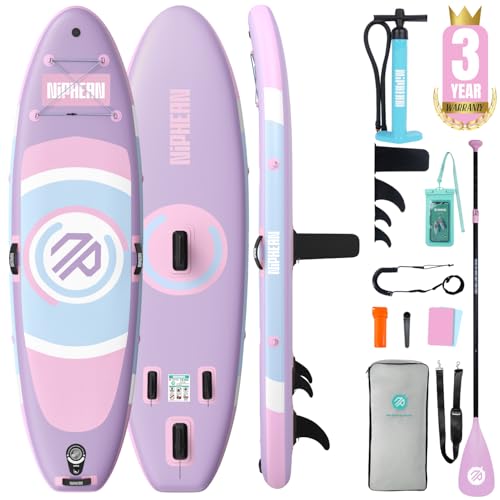
This Ultra-Light Niphean model weighs about 17.8 lbs and uses a wider deck and a large balance fin to improve stability and glide. It offers 9 D-rings for accessories, including options like kayak seats or coolers. It’s best for learners who value easy handling, yoga use, and the flexibility to attach gear. Limitation: slightly fewer fins than some tri-fin designs may affect turning precision for very active beginners.
Best for: beginners who want yoga-friendly stability and optional gear attachment.
FBSPORT 11′ Premium Stand Up Paddle Board

The FBSPORT board measures 11′ x 33″ and is designed to accommodate up to 350 lbs. It features a wide, stable stance and a triple-fin setup for improved tracking and maneuverability. The deck is non-slip, and the package includes a leash, pump, and carry bag, making it appealing for families or group lessons. Caution: the larger size may be less convenient for very compact storage spaces or solo travelers with limited vehicle space.
Best for: family use, beginners teaching others, or paddlers who want easy stability plus a complete gear set.
Buying Guide
- Stability first: For beginners, look for a wide deck (at least 32–33 inches) and a high volume. A broad stance reduces tipping risk during initial attempts.
- Weight capacity and rider count: Choose a board with a weight rating that accommodates your body weight plus gear. If you anticipate bringing a child or pet, opt for higher limits (around 450 lbs).
- Construction and rigidity: Many inflatable boards use dual or triple-layer PVC with reinforced sidewalls. Higher PSI can improve rigidity; check recommended inflation ranges.
- Accessories included: A complete kit (pump, leash, repair kit, backpack, adjustable paddle) reduces the need to shop separately and helps ensure you can start paddling right away.
- Portability and storage: If you travel or have limited storage, prioritize lighter boards (under 20 lbs) and those with compact carry bags.
- Maintenance and warranty: Look for manufacturer protections and easy warranty terms. A longer guarantee reflects confidence in build quality and longevity.
- Riding environment: Consider where you’ll paddle most—calm lakes vs. choppier rivers. Some boards perform better with added fins for tracking in moving water.
FAQ
- What size paddle board is best for beginners? A 10’6” to 11’ board with a width of 32–33 inches offers stability without sacrificing ease of travel.
- Do inflatable boards feel as solid as hard boards? High-quality inflatable boards with proper inflation approach can feel very rigid and stable, closely resembling hard boards when inflated to the recommended PSI.
- Is a larger board better for beginners? Generally yes for stability, but it may be harder to carry and store. Choose a size that matches your space and travel needs.
- Can kids use beginner boards? Yes, many boards support up to 450 lbs and have wide decks; supervision and proper gear are advised for younger paddlers.
- What accessories are essential? At minimum, an adjustable paddle, a pump, a leash, and a repair kit. A backpack helps with portability.
- How do I know if a board is right for me? Consider your weight, typical paddling environment, storage space, and whether you’ll bring gear or pets on sessions.