Best Outboard Motor Power Pack Solutions for Small Boats
Best outboard motor power packs are essential for reliable boating in varying conditions. This guide highlights five top options, outlining who they’re best for, their standout features, and any limitations to consider. Ideal buyers include hobbyists seeking affordable two-stroke options, small-boat users needing fuel efficiency, and compact setups for inflatable or dinghy vessels. The following table summarizes the featured products for quick comparison.
| Product | Power (HP) | Engine Type | Cooling | Best For |
|---|---|---|---|---|
| COFECO Hangkai 18HP Outboard | 18 | 2-Stroke | Water | Powerful small boats, longer trips |
| COFECO 6.5HP 4-Stroke | 6.5 | 4-Stroke | Water | Fuel efficiency, easy starts |
| HinLIaDa 2.3HP 2-Stroke | 2.3 | 2-Stroke | Air (cooling holes) | Lightweight inflatables |
| BJTDLLX 12HP 2-Stroke | 12 | 2-Stroke | Water | Small vessels needing steady power |
| Other Options | Varies | — | — | General guidance |
COFECO Hangkai 18HP Outboard Motor

The COFECO Hangkai 18HP is a 2-stroke, 246cc engine delivering up to 13.2kW (18 HP) and a maximum 5500 RPM. It includes an 8″ three-bladed propeller and a CDI ignition system with water cooling for reliable starts and thermal protection. A suspension tilt and anti-vortex plates help reduce tilt and turbulence for smoother operation. The external fuel tank holds about 6.34 gallons, and the carburetor is designed for higher fuel efficiency, consuming around 1.18 gallons per hour. Best for mid-sized boats that require strong, quick power and longer cruising capability. Caution: 2-stroke engines typically require careful fuel-oil mixing and more frequent maintenance compared to some four-stroke models.
Why it’s selected: This model is best for boaters who need substantial thrust and higher RPM for faster planing and rough-water performance, while still prioritizing fuel efficiency per hour. It’s a solid match for anglers or tour boaters who operate in varied conditions and want reliable CDI starts.
COFECO 6.5HP 4-Stroke Outboard
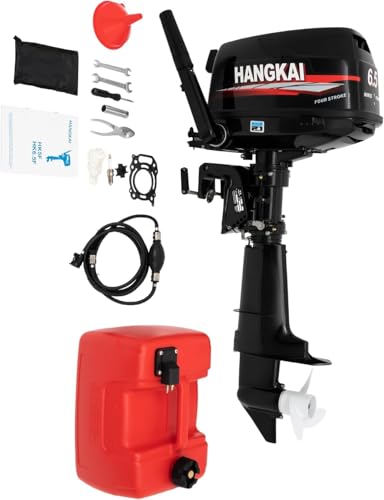
This 4-stroke, 6.5 HP engine displaces 123cc and uses a CDI ignition with a water-cooling system. It offers a maximum output of 4.8kW and lower fuel consumption, averaging 0.52 gallons per hour. Best for small boats that prioritize steady, economical propulsion and easier cold starts. Limitation: lower power output means slower planing and limited high-speed performance on heavier craft.
Why it’s selected: Choose this if you want a compact, efficient motor that’s easier to start and operate with calm and predictable throttle response. It’s well suited for calm days and slower cruising on small vessels or lightly loaded boats.
HinLIaDa 2-Stroke 2.3HP Outboard
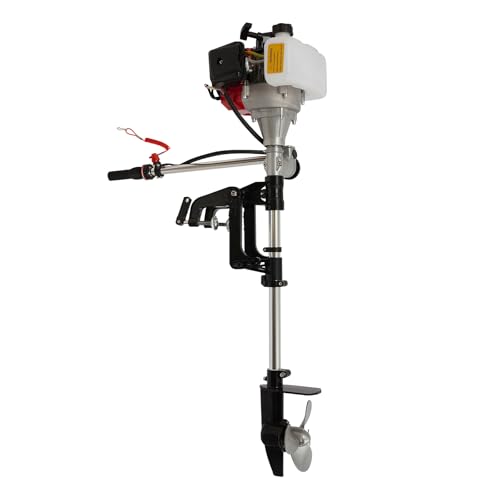
HinLIaDa’s 2.3HP two-stroke engine delivers about 1.7kW of power with an operating range of 4500-8500 RPM. It includes a manual pull-start mechanism and features a steering angle greater than 120 degrees for easy maneuverability. Best for lightweight inflatable boats or small yachts where portability and simple operation matter. Limitation: lower horsepower means modest top speed and slower planing on larger craft.
Why it’s selected: Opt for this unit when weight and space are at a premium, and you need straightforward operation for small inflatables or tight maneuvering in confined spaces.
BJTDLLX Short Shaft 12HP Outboard

BJTDLLX offers a 2-stroke 12 HP model with a 169cc displacement and water cooling for enhanced engine longevity. It produces an estimated thrust range and speed suitable for small sailboats or inflatable craft under 19.69 feet. It features a tiller-style control and three forward-safe gears. Best for boats needing reliable mid-range power with simple, durable construction. Limitation: 12 HP may still be insufficient for larger loads or heavier hulls on longer trips.
Why it’s selected: This engine provides a good balance of power and compact size, making it a solid upgrade for readers who outgrow entry-level motors but don’t require large horsepower for small vessels.
CDI Switch Box Replacement for Mercury

This CDI switch box replacement is designed for compatibility with Mercury outboards and other models via part number 332-7778A12 or similar. It includes installation notes, ground wiring guidance, and compatibility references. Best for readers who need a CDI power-pack replacement or upgrade to restore reliable ignition. Limitation: some installations may require basic wiring familiarity.
52CC 2.3 HP Outboard Motor by KTYHNPM
This 2.3 HP, 52cc 2-stroke motor uses a CDI ignition with forced air cooling. It provides up to 8500 RPM and a quick start via a hand-pull starter. Best for tiny boats, anglers in calm waters, or as a backup motor on inflatables. Limitation: limited horsepower may not suffice for heavier loads or high-speed needs.
KTYHNPM 4-Stroke 7.5HP Outboard
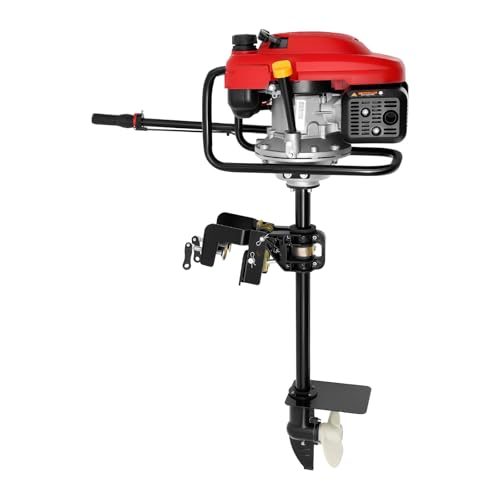
This 4-stroke, 7.5 HP motor delivers up to 3.5 kW with a stable CVT-like transmission for smooth gear changes and consistent driving. It includes multiple cooling holes to dissipate heat quickly and supports longer runtimes. Best for readers who want a reliable, steady ride with fewer vibration concerns. Limitation: heavier than small two-stroke units, which may impact lightweight boats or compact transoms.
Buying Guide
What size and power should you choose? Consider the boat length, load, hull type, and typical cruising speed. For planing performance, aim for higher horsepower relative to boat weight. If fuel economy matters, prioritize engines with efficient carburetors and CDI ignition.
What type of engine suits your use case? Two-stroke engines are lighter and often cheaper but require more maintenance and oil mixing. Four-stroke engines are heavier but typically more fuel-efficient and easier to start and maintain. Select based on maintenance preference and operating conditions.
What cooling method matters? Water cooling helps maintain engine temperature on longer trips, but ensure compatible mounting and mounting clearance. Air cooling can be simpler and lighter but may overheat under high loads.
What installation considerations exist? Check shaft length (short vs long), mounting pattern, and transom compatibility. Some models come with tiller control or remote steering; ensure your boat has the appropriate setup or plan for adapter options.
Are there maintenance or spare parts concerns? Review the availability of CDI modules, spark plugs, seals, and fuel pumps in your region. Having replacement parts on hand reduces downtime during trips.
FAQ
- What engine power do I need for a small inflatable boat? – For inflatable boats under 10 feet, 2-6 HP is often sufficient for calm water; larger inflatables may require 8-12 HP for planing and faster cruising.
- Is a four-stroke engine better than a two-stroke for beginners? – Four-stroke engines are generally easier to start and run with better fuel efficiency, while two-strokes are lighter and can be cheaper upfront.
- How important is CDI ignition in choosing an outboard? – CDI ignition improves starting reliability and quick response, especially in varying temperatures and fuel conditions.
- What maintenance should I plan for a 2-stroke motor? – Regular oil-fuel mixing, fuel system checks, and spark plug inspection; monitor cooling and exhaust systems closely.
- Can I mix and match parts from different brands? – It’s best to match components designed for your engine; mismatched CDI boxes or ignition parts may cause misfire or startup issues.