Best Portable Outboard Gas Tanks for on-Board Fuel on the Go
Answering the needs of boaters who require reliable, portable fuel storage, this guide highlights the best outboard motor portable gas tanks. These options are suited for anglers, recreational boaters, and rescue crews who need extra fuel without sacrificing space. Each product section explains who it’s best for, why it was chosen, and any potential limitation to consider. A quick buying table at the top helps you compare at a glance.
| Product | Capacity | Best For |
|---|---|---|
| AloneGoer 3 Gallon Portable Gas Tank | 3 gal / 12 L | Spare tank for Yamaha outboards, compact boats, tight storage spaces |
| VEVOR Boat Fuel Tank 3.17 Gal | 3.17 gal / 12 L | Small craft, easy transport, versatile for short trips |
| Attwood 6 Gallon Portable Tank | 6 gal | Regular long-day trips, broader compatibility |
| DEF Portable Boat Tank 6 gal | 6.3 gal / 24 L | Durable, two-cap sealing/venting options, better flow |
| Scepter 6 Gallon Portable Gas Can | 6 gal / 22.7 L | Under-seat storage, EPA/CARB compliant venting |
AloneGoer 3 Gallon Portable Gas Tank
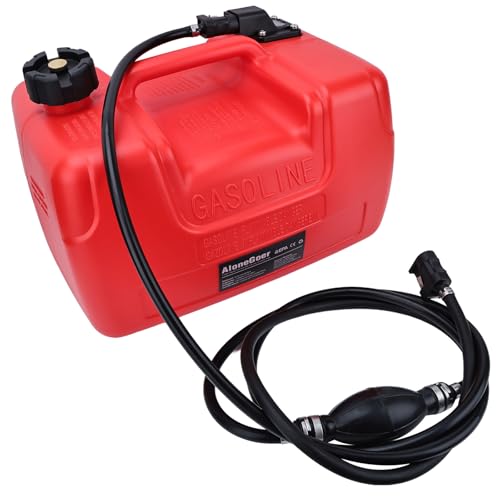
Best for Yamaha outboards and compact boats. This 3-gallon tank uses a multi-layer HDPE-EVOH-HDPE barrier to reduce fuel permeation by about 98% compared to standard tanks, helping preserve fuel quality. The design includes UV stabilization and a salt-spray resistant formulation for seaside environments. The included marine fuel line connector suits Yamaha 6YL-24201-24-00 ports, making it an ideal spare or contingency fuel tank on board.
Who it’s best for: boaters with Yamaha outboards or tight storage spaces who need a durable, low-profile tank. Why chosen: high barrier technology minimizes evaporation, extending fuel life between trips. Limitation: the 3-gallon capacity may require frequent refueling on longer trips.
VEVOR Boat Fuel Tank, 3.17 Gal

Best for small craft that need a compact, sturdy transfer tank. The 3.17 gal/12 L tank comes with a 9.8 ft/3 m hose designed to mate with Yamaha connectors. Made from high-density polyethylene, it resists aging, impact, and corrosion and includes a molded top handle for easy carrying. A note: avoid long direct sun exposure to prevent aging and expansion.
Who it’s best for: anglers or day-trippers with limited storage who want a durable, easy-to-handle transfer tank. Why chosen: solid build and long hose support flexible fueling. Limitation: avoid prolonged sun exposure to prevent degradation.
Attwood 8806LP2 EPA Certified 6 Gallon Tank

Best for regular use on larger boats or for crews needing more fuel on board. This 6-gallon EPA-certified tank includes a cap with a built-in vacuum valve, eliminating the need for manual venting. This feature simplifies fueling and reduces spillage risk. The tank is designed to meet EPA and CARB regulations, making it a solid choice for compliant operation.
Who it’s best for: boaters prioritizing regulation compliance and venting convenience. Why chosen: built-in venting reduces handling steps. Limitation: larger footprint than smaller tanks; not ideal for ultra-tight storage.
VEVOR Marine Tank, 6.34 Gal

Best for extended days on water needing substantial on-board fuel with gauge visibility. This 6.34 gal/24 L tank features a built-in gauge and a separate inlet/outlet to prevent spills. A 9.8 ft hose is compatible with many marine interfaces. Note: avoid prolonged direct sunlight to prevent aging and expansion.
Who it’s best for: boaters who want visible fuel levels and secure flow control. Why chosen: gauge helps monitor fuel, reducing risk of running dry mid-trip. Limitation: gauge only effective when mounted level and properly seated.
Scepter 6 Gallon Portable Gas Can

Best for under-seat storage with integrated features. The 6-gallon Scepter can includes a 2-way vented cap that allows airflow during refueling and automatically vents to relieve vapor pressure. It has a built-in fuel gauge and pick-up, with compatibility for diesel and ethanol-blended fuels. The design is EPA & CARB compliant and suits boats that require a tall, space-saving option.
Who it’s best for: boaters seeking a compact can with built-in fueling convenience and regulatory compliance. Why chosen: vented cap and gauge streamline refueling. Limitation: tall profile may not fit under all seats or compartments.
Portable Boat Fuel Tank, 3 Gallon
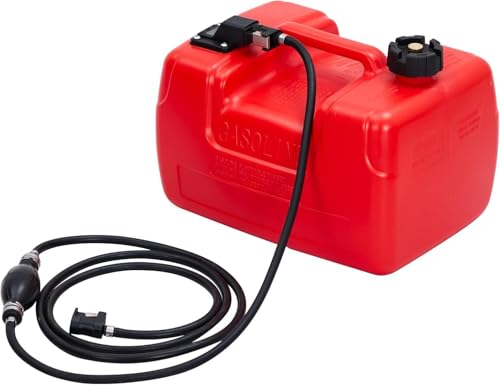
Best for compact boats and tight storage spaces needing a lightweight refuel option. This 3-gallon/12 L tank features an ergonomic I-shaped handle for comfortable transport and transparent fuel gauge with a built-in filter to help keep fuel clean for engine performance.
Who it’s best for: boaters requiring portable fueling with clear level indicators. Why chosen: easy grip and integrated filter support reliable fueling. Limitation: lower capacity may require more frequent fuel stops.
Buying Guide
What capacity should I choose?
Consider your typical trip length and engine consumption. Smaller boats may do well with 3–6 gallons, while longer days or larger engines benefit from 6–12 gallons. Match the tank capacity to your outboard’s fuel usage and available storage.
What features improve reliability?
- Vent capabilities: EPA/CARB vented caps reduce vapor buildup and simplify refueling.
- Fuel level gauge: Built-in gauges let you monitor fuel without opening the tank.
- Barrier technology: Multi-layer barriers reduce evaporation and extend fuel freshness.
- Durability: UV stabilization and corrosion resistance extend life in salt spray and humid climates.
Is compatibility important?
Check hose length and connector types. Some tanks specify Yamaha-compatible connectors or standard marine fittings. Ensure the hose length is sufficient for your deck layout and that the connector matches your motor’s fuel line.
Where should I store a portable fuel tank?
Store away from direct sunlight in a well-ventilated space. Keep tanks upright when possible and use secure mounting or docking areas to prevent tipping or leakage.
What about safety and compliance?
Choose EPA and CARB compliant options when possible. Use vented caps where provided to prevent vapor buildup and check that the container is designed for marine use to withstand salt spray and humidity.
How does a built-in gauge help?
A built-in gauge saves time by letting you quickly evaluate fuel levels before trips, reducing the risk of running out mid-journey and helping with planning fueling stops.
FAQ
- Q: Are these tanks certified for marine use?
A: Most listed options are designed for marine environments and comply with EPA/CARB where stated. Always verify the product page for exact certifications. - Q: Can I use diesel in these tanks?
A: Some models specify compatibility with diesel and certain ethanol blends. Read the features to confirm compatibility for your fuel type. - Q: Do they come with hoses and fittings?
A: Several include hoses or provide compatible connectors; some may require separate purchase of a fuel line. Check each product’s features for specifics. - Q: Is the 3-gallon tank enough for long trips?
A: It depends on engine size and usage; consider larger capacities if you frequently run extended trips without refueling stops. - Q: Will UV exposure degrade these tanks?
A: Many tanks use UV stabilization and corrosion-resistant materials, but prolonged direct sun exposure should still be avoided when possible.