Best Outboard Kick Up Plate Solutions for Safe, Efficient Trailering and Shallow-Water Navigation
When choosing an outboard kick up plate (jack plate or transom reinforcement), the goal is clear: raise or reinforce the engine for shallow water, protect the lower unit during obstacles, and maintain reliable steering control. This guide highlights five top options and explains who each is best for. Whether you’re a casual weekend boater, a pro angler, or a marine mechanic stocking for clients, these picks cover a range of engine horsepower, mounting styles, and installation needs.
| Product | Best For | |
|---|---|---|
| Bob’s Machine Kick-Back Jac Plate | Casual riders with up to 115 HP engines | Delrin rollers and bearings offer smooth operation and a safety motor tether point |
| Winibo 6″ Electric Hydraulic Jack Plate with Kick-Back | Shallow-water trolling, up to 200 HP | 6″ stroke with hydraulic lift, kick-back, and grease fittings for maintenance |
| Winibo 8″ Adjustable Outboard Jack Plate (JP5800C) | Long shaft on short shaft transoms, versatile mounting | 4″ vertical range, high-strength 6061 aluminum, corrosion resistant |
| Outboard Transom Reinforcement Backing Plate | Heavy-duty reinforcement for larger motors | 0.2″ thick aluminum, universal compatibility, full-pattern design |
| RUIANOMG MJ-1-DP 4″ Setback | Small boats needing 4″ setback for up to 35 HP | Cast aluminum, enhances engine clearance, supports long shaft mounting on short transoms |
Bob’s Machine Kick-Back Jac Plate

Features include compatibility with outboards up to 115 HP, Delrin rollers and bearings for smooth operation, and a motor tether attachment point for safety. Best for boaters seeking a simple, reliable upgrade to reduce interference with transom water flow while protecting the lower unit. This plate emphasizes straightforward installation and durability. A potential limitation is its horsepower ceiling, which may exclude higher-output engines that require larger jack plates.
Winibo 6″ Electric Hydraulic Jack Plate with Kick-Back

Best for shallow-water navigation and higher horsepower setups. The 6.69-inch lift with a 30° kick-back helps prevent damage when traversing obstacles, and the electric hydraulic mechanism enables smooth, automatic adjustments. Locking pins secure the plate during reverse operation or trailering. Grease fittings at pivot points support ongoing maintenance. Choose this if you want precise, motor-height control with a hydraulic system; avoid if you require a compact, non-hydraulic option for minimal electrical components.
Winibo 8″ Adjustable Outboard Jack Plate (JP5800C)

Best for mounting a long shaft engine on a short shaft transom, offering a full 4-inch vertical adjustment. It’s built from high-strength 6061 aerospace aluminum with T6 heat treatment for corrosion resistance in harsh marine environments. This model excels when you need a flexible height range to adapt to varying water depths or different prop choices. Limitations include the potential for more complex installation relative to fixed-height options.
Outboard Transom Reinforcement Backing Plate

Best for heavy-duty reinforcement on larger motors. This 0.2″ thick aluminum plate provides universal compatibility and full-pattern design to distribute loads across the transom. It’s a solid choice when extra transom strength is needed to prevent flex or damage under heavier engines. Limitation: may require additional mounting hardware and may not fit every transom shape without modification.
RUIANOMG MJ-1-DP 4 Inch Setback
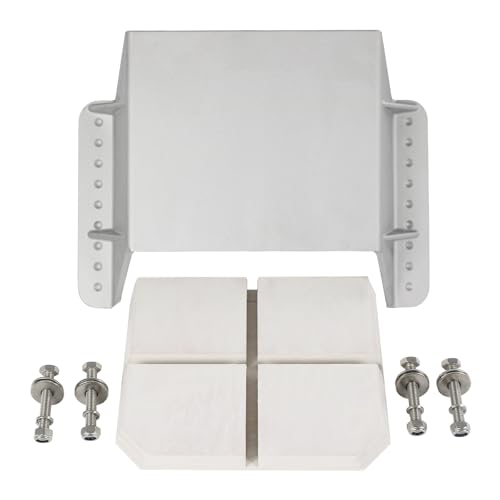
Best for small boats needing a 4″ setback to accommodate long shaft engines on short transoms. The plate uses cast aluminum construction for improved strength and corrosion resistance. It increases engine clearance and can enhance stability at higher transom heights. Consider this option if your vessel regularly operates in shallow water or requires better hull protection with a compact plate; it may be less suitable for larger engines requiring more lift.
Buying Guide
- Engine horsepower compatibility: Select a plate that supports your maximum HP. Higher-horsepower boats often need thicker plates or longer setback.
- Plate type and mechanism: Hydraulic, electric, and manual lift options each offer different maintenance needs, lift ranges, and reliability in saltwater environments. Choose based on expected maintenance and desired ease of use.
- Setback and lift range: Determine how much engine height you need to clear shallow water or avoid bottom contact. Short transoms and long shafts benefit from adjustable or longer-setback designs.
- Material and corrosion resistance: Look for aluminum (6061 series) with protective finishes for longevity in marine conditions. Heavier reinforcement plates provide extra durability on larger motors.
- Installation complexity: Some plates require additional supports, brackets, or drilling. If you’re not a professional, consider options marketed as “bolt-on” or with included mounting hardware.
- Maintenance access: Grease fittings and accessible pivot points simplify upkeep. Delrin or low-friction bearings can reduce wear and noise over time.
- Safety considerations: Tether points, locking pins, and secure mounting help prevent loss of control during towing and trailering.
FAQ
- What is a kick-up plate used for on an outboard?
– A kick-up plate (jack plate) raises or extends the engine height to improve shallow-water performance and protect the lower unit from obstacles. - Do hydraulic jack plates require more maintenance?
– Yes, hydraulic plates need regular checks of hydraulic fluid and seals, plus lubrication of moving parts at pivot points. - Can I install a jack plate on any transom?
– Most jack plates are designed for standard transoms, but you should verify compatibility with your transom height and mounting pattern before purchase. - Is a larger setback always better?
– Not always. A larger setback increases engine clearance but can affect steering response and weight distribution; choose based on boat design and operating conditions. - Which plate is best for a small boat with a 30 HP motor?
– For small boats up to 35 HP, the MJ-1-DP 4″ Setback or similar compact options offer adequate clearance and simple installation. - Should I choose manual or electric lift?
– Manual is simpler and cheaper; electric or hydraulic lifts provide easier, hands-free adjustments, especially for varying depths.