Best Outboard Boat Motors for Small Boats and Inflatables
The top picks below target buyers seeking reliable, compact outboard motors for inflatable boats, small yachts, fishing craft, and sailboats. Each option highlights who it’s best for and why, with practical trade-offs to consider before purchase. Use this guide to compare power, shaft length, fuel tech, and control features at a glance.
| Product | Power | Shaft | Fuel Tank | Key Benefit |
|---|---|---|---|---|
| Outboard Boat Motors, 18HP (246cc) | 18 HP | 40 cm | 24 L | Strong 2-stroke performance with water cooling and CDI ignition |
| 2 Stroke 18HP Heavy Duty Outboard | 18 HP | Short shaft | 6.34 gal | Rugged build for rough waters with CDI ignition and ergonomic handle |
| 4-stroke 6HP Outboard | 6 HP | Short shaft | — | Lightweight, easy forward/neutral operation and safety features |
| 18HP Outboard, 246cc CDI | 18 HP | Short shaft | 24 L | Water-cooled with CDI ignition and efficient fuel use |
| 52CC 2.3 HP Outboard | 2.3 HP | — | — | Compact and quick-start CDI, air-cooled |
Outboard Boat Motors, 18HP 246cc Short Shaft
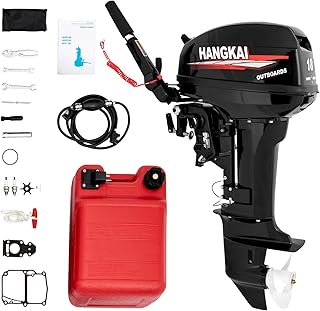
Best for inflatable boats and small fishing craft needing solid power in a compact unit. This 2-stroke 18HP model uses water cooling to improve reliability and offers 360-degree steering with no need to shift gears for reverse. A 24-liter fuel capacity supports longer trips. The tiller control and manual start keep operation straightforward for hobbyists and light-boat users. Caution: 2-stroke engines generally require mixed fuel and may need more frequent maintenance than four-stroke designs.
2 Stroke 18HP Heavy Duty Outboard

Best for inflatable and rubber boats navigating rough water. It features a large internal fuel tank (about 6.34 gallons) and a CDI ignition system for quick starts. The engine’s design emphasizes ease of carry, with a convenient fuel hose and ergonomic handle. Select this if you plan longer runs in choppy conditions and prioritize a robust oil/fuel mix management. Limitation: heavier weight relative to ultra-light models may affect handling on ultra-small crafts.
4-stroke 6HP Outboard Motor

Best for beginners and casual paddlers seeking light, simple operation. This 4-stroke engine delivers 4–15 km/h with a three-blade propeller and streamlined body to reduce drag. It offers forward and neutral gears and a tilt-safe design for steady cruising. Safety features include an anti-swirl plate and emergency flameout rope, and the auto-overheat shutdown adds protection. Choose this if you value balance and ease over max power.
18HP Outboard Motor, 246cc CDI

Best for serious small-boat users needing reliable CDI ignition and water cooling. With 18HP and a 246cc two-stroke layout, it features a 24L fuel tank and a tiller control handle. The engine’s cooling system helps maintain performance, and the combination of high-reliability ignition and efficient fuel use supports longer outings. Limitation: 2-stroke engines typically require more frequent maintenance and oil mixing compared to four-stroke alternatives.
52CC 2.3 HP Outboard

Best for ultra-compact setups and light-fishing craft needing quick-start CDI plus air cooling. This small motor tops out around 2.3 HP, making it ideal for tiny inflatable boats or as a backup motor. It uses forced air cooling and aims for simple maintenance. Choose this if you need a minimal footprint and straightforward operation on tiny boats; avoid if you demand higher propulsion power.
Buying Guide
Key considerations when selecting an outboard motor for small boats and inflatables:
- Power needs: Match horsepower to boat size, weight, and intended use. Higher HP offers more speed but higher weight and fuel use.
- Shaft length: Short shafts are common on inflatable and small boats; ensure compatibility with your transom height.
- Cooling system: Water cooling generally offers better reliability for longer runs; air cooling is lighter but may overheat faster on extended use.
- Ignition type: CDI systems enable quicker starts and reliable ignition; consider ease of maintenance and availability of parts.
- Fuel capacity and economy: Larger tanks extend range but add weight. Check fuel consumption per hour for planning.
- Control style: Tillers provide direct control; consider whether you need remote throttle shifting or neutral gear options.
- Durability and maintenance: Look for robust housings, anti-vortex plates, and safety features like overheat protection and flameout safeguards.
Common buyer questions
- What is the typical life span of a 2-stroke outboard motor? Answer: Life span varies by maintenance, usage, and model, but 2-stroke engines generally require more frequent oil-fuel management and may need more tune-ups than four-stroke models.
- Which motor is best for a small inflatable boat? Answer: A lightweight, short-shaft model with CDI ignition and water cooling is usually best for small inflatables seeking reliability and easy starts.
- Do I need a fuel tank larger than 6 gallons? Answer: If you plan long trips or frequent use, a larger tank improves range; otherwise a 4–6 gallon capacity can be sufficient for short outings.
- Is a 6 HP engine enough for12- to 14-foot boats? Answer: For light activities, a 6 HP may suffice, but larger or heavier boats may require more power for planing and safe maneuvering.
- What safety features should I look for? Answer: Look for anti-swirl plates, emergency flameout options, overheating protection, and easy-start ignition for safer operation.