Best on-Board Trolling Motor Chargers for Marine Batteries
When selecting an on-board trolling motor charger, the goal is reliable, multi-bank charging that protects battery longevity across different chemistries. This guide highlights top on-board chargers from trusted brands, focusing on models ideal for bass boats, flats, and recreational craft. It covers best-for scenarios, charging capabilities, and practical limitations to help you choose the right setup for your battery banks and boat size.
| Product | Banks | Best For | Notes |
|---|---|---|---|
| Minn Kota 1823155 MK 315D Digital On-Board Charger | 3 Banks | Powerful, compact multi-bank charging for mid-sized setups | Digital control with temperature compensation |
| Minn Kota Precision MK-318PCL On-Board Charger | 3 Banks | Customizable for multiple battery chemistries | Independent bank type selection |
| Minn Kota Precision MK-110PCL On-Board Charger | 1 Bank | Solo 12V system with robust digital charging | Great for single-battery boats or adding a dedicated bank |
| Guest 2720A On-Board Charger | 2 Banks | Rugged, dual-voltage marine charging | IP67 waterproof rating; 12/24V capable |
| Minn Kota Precision MK-440PCL On-Board Charger | 4 Banks | Higher-bank setups with versatile battery type support | Digital multi-stage charging with temperature compensation |
Minn Kota 1823155 MK 315D Digital On-Board Charger

Three 5-amp charging banks deliver a compact multi-bank option for boats with a moderate number of trolling motor batteries. Best for: boats with two to three 12V batteries requiring balanced, temperature-aware charging. The charger uses automatic temperature compensation to adjust for ambient conditions, ensuring a stable charge. It includes digital control for precise charging stages and LED indicators for charge status and errors. Limitation: lower per-bank amperage may be slower for high-usage boats with frequent deployments.
Minn Kota Precision MK-318PCL On-Board Marine Battery Charger

Three independently configurable banks handle various battery chemistries (12V AGM, Flooded Lead Acid, Gel, Lithium LiFePO4). Best for: mixed-chemistry boats that require per-bank customization for safe, optimized charging. It uses automatic multi-stage charging with digital control and automatic temperature compensation. Better for: fleets or craft with diverse battery packs. Caution: higher upfront cost for advanced features, but it offers flexible setup across banks.
Minn Kota Precision MK-110PCL On-Board Marine Battery Charger

Single-bank, 10-amp charging provides a strong, dedicated charge for one battery. Best for: boats with a single trolling motor battery or where a dedicated bank is preferred for critical performance. It supports multiple battery chemistries and uses microprocessor-based control for precise charging. Limitation: only one bank, so you’ll need additional chargers for more batteries.
Connect-Ease RCE24VBK 24-Volt Trolling Motor Connection Kit
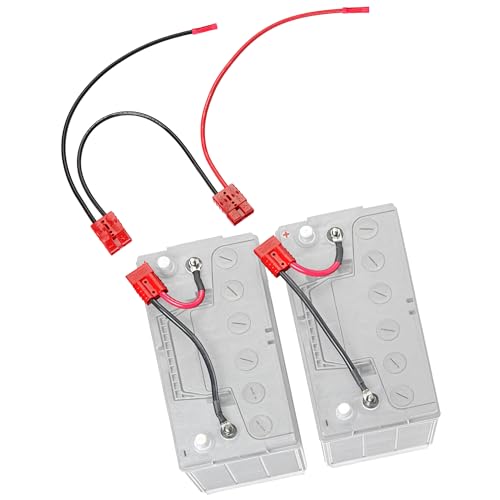
24-volt trolling motor connection kit with onboard charging features. Best for: boats using a 24V trolling motor system where easy, corrosion-resistant connections streamline setup. Projection of improved reliability comes from corrosion-resistant components and straightforward connections. Limitation: this kit emphasizes connections and charging integration, so verify compatibility with your specific trolling motor and battery configuration.
Guest 2720A On-Board Battery Charger

Two-bank charger with 12/24V support and IP67-rated waterproofing. Best for: saltwater or harsh marine environments where reliable protection is essential. Independent charging and monitoring per bank provide flexible control. Caution: 20A total across two banks may limit high-demand scenarios if both banks run at peak simultaneously.
Minn Kota Precision MK-440PCL On-Board Charger

Four banks with 10 amps each offer solid multi-bank capacity for mid-to-large battery arrays. Best for: boats needing robust, flexible charging across multiple batteries with diverse chemistries. It features independent bank settings and multi-stage charging with temperature compensation. Limitation: higher power draw than smaller units, so ensure your electrical system can handle it.
Buying Guide: Key Considerations For On-Board Trolling Motor Chargers
- Bank count vs. battery layout: Match the number of banks to the number of trolling motor batteries you intend to charge. More banks enable charging independent of each battery’s chemistry.
- Battery chemistry support: Look for per-bank compatibility with AGM, Flooded Lead Acid, Gel, and LiFePO4 to prevent overcharging and extend battery life.
- Automatic multi-stage charging: Chargers with staged charging optimize voltage and current over time, reducing heat and extending battery life.
- Temperature compensation: Chargers that adjust for ambient temperature maintain accurate charging and prevent under- or overcharging.
- Waterproofing and durability: IP ratings and rugged housing help withstand marine environments, especially in saltwater or heavy spray.
- Installation footprint: Consider the space on the boat’s bilge or electronics compartment. Compact units save space without sacrificing performance.
- Monitoring and indicators: LED status and error notifications simplify maintenance and troubleshooting.
- Voltage compatibility: If you operate both 12V and 24V systems, ensure the charger supports both or select the correct model for your setup.
- Expansion potential: If you expect to add batteries later, choose a charger that supports more banks or has scalable options.
FAQ
- What is an onboard trolling motor charger?
An onboard trolling motor charger is a device installed in the boat that charges trolling motor batteries and other auxiliary batteries from the boat’s DC or AC power source, often with multiple independent charging banks.
- Why is temperature compensation important?
Temperature compensation adjusts charging voltage based on ambient temperature, ensuring safe and efficient charging and protecting battery life in varying conditions.
- Can I mix battery chemistries in a single charger?
Some models allow per-bank selection for different chemistries (AGM, Gel, Flooded Lead Acid, LiFePO4). If your setup uses mixed chemistries, choose a model with independent bank settings.
- Is waterproofing necessary for marine chargers?
Yes. Marine environments expose chargers to moisture, spray, and salt; IP ratings help prevent corrosion and short circuits.
- How many banks do I need?
Answer depends on the number of trolling motor batteries and any auxiliary banks. Plan for at least one bank per battery and consider future expansion.
- Do these chargers require special wiring?
Most onboard chargers connect to the boat’s DC system and may require dedicated circuits or AC input. Refer to manufacturer installation guides for wiring details.