Best Nitro RC Boat Fuel Choices for Serious Hobbyists
Players in the nitro RC boating scene want fuels that deliver power, reliability, and stable performance across run times. This guide highlights five well-regarded options suited for different types of boats, climates, and racing needs. Whether you’re chasing maximum speed, longer stints on the water, or consistent bottom-end power, these fuels can help you optimize performance. The top picks cover a range of nitro concentrations and include guidance on who each option is best for and any practical limitations to consider.
| Product | Nitro % | Best For | Notes |
|---|---|---|---|
| Torco RC Fuel 50% Nitro Boat Fuel Gallon | 50% | Mid-range power, flexible for varied conditions | Good balance of performance and lubrication |
| Torco RC Fuel 60% Nitro Boat Fuel Gallon | 60% | Higher power, competition-style setups | Enhanced power and run times |
| Torco RC Fuel 66% Nitro Boat Fuel Gallon | 66% | Top-end speed and peak performance | Highest among listed Torco boat fuels |
| VP Racing Fuels 4496107 20% Nitro Race Car Quad | 20% | RC boats needing reliable, lower-nitro operation | Ready for quick storage and transport |
| VP Racing 4496187 RC Pro Race 30 Motorsport Fuel | 30% | Racing and track-focused setups | Premium blend for RPM and protection |
Torco RC Fuel 50% Nitro Boat Fuel Gallon

Key features: More Power, Longer Run Times, Improved Lubrication. This mid-range option is ideal for boats that need a strong performance boost without pushing nitro concentration to the extreme. Best for hobbyists who race in varied tracks or conditions and want predictable torque delivery. A potential limitation is that as nitro percentage increases, tuning sensitivity can rise; this fuel provides a solid compromise between power and ease of use.
VP Racing 4496187 RC Pro Race 30 Motorsport Fuel 1 Quart

Key features: Dye-free to improve mileage and bottom end power, Multi-viscosity 9% synthetic/castor lubrication blend for RPM and protection, Ultra-clean burn. This option is well-suited for racers needing clean fuel combustion and robust lubrication at mid-range nitro. Choose this if you want a blend focused on steady bottom-end response and reliable performance in competitive environments. Caution: higher nitro content can demand meticulous tuning and temperature management.
Torco RC Fuel 60% Nitro Boat Fuel Gallon
Key features: More Power, Longer Run Times, Improved Lubrication. A step up from 50% nitro, this fuel is best for racers seeking maximum torque and acceleration while maintaining engine protection. Best for upgraded engines or setups tuned for higher rpm. Limitation: the higher nitro level can increase wear if the engine is not properly tuned or cooled.
TORCO RC Fuel 15% Nitro Airplane Air Gallon

Key features: More Power, Longer Run Times, Improved Lubrication. Though designed for airplanes, this lower-nitro option demonstrates Torco’s emphasis on stability and lubrication. It’s a reference point for pilots seeking a balance between performance and ease of use. For boats, consider it only if you require very low nitro concentrations or specific engine compatibility. Better for beginners or quieter, steady-running setups where high rpm is less critical.
VP Racing Fuels 4496107 20% Nitro Race Car 9% Oil – Quart
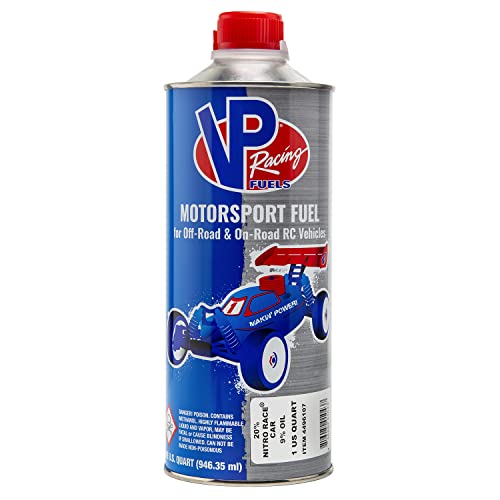
Key features: On the Move, Premium Blend, Compatibility. This 20% nitro option is designed for easy storage and transport while offering a proven blend for 1/8 scale street and trail applications. Best for racers who value portability and compatibility with a wide range of 20% nitro engines. Limitation: lower nitro content translates to reduced top-end power compared to higher-nitro fuels, which may affect peak speed on demanding tracks.
Buying Guide
What should you consider when choosing nitro RC boat fuel?
- Nitro concentration: Higher nitro typically yields more power but increases tuning sensitivity and potential engine heat. For beginners, mid-range fuels (around 50–60%) offer a gentler learning curve.
- Lubrication and oil type: Fuels with synthetic/castor blends provide better lubrication at high RPMs, extending engine life and stabilizing performance during long runs.
- Engine compatibility: Always confirm your engine’s recommended nitro range. Using a fuel with too much nitro can lead to detonation, while too little can reduce performance.
- Run-time balance: Some fuels emphasize longer burn times; others optimize power. Match your racing format and track length to your fuel choice.
- Storage and handling: Consider packaging size and transportability. Quart and gallon sizes affect convenience for club races and travel.
FAQ
- What nitro percentage is best for beginners? A mid-range option (around 50–60%) typically offers a good balance of power and ease of tuning.
- Do higher nitro fuels require special tuning? Yes, higher nitro fuels usually demand more precise tuning and cooling to prevent overheating and detonation.
- Can I mix different nitro fuels? Mixing is not generally recommended unless you have engine-specific guidance from the manufacturer.
- Which fuel is best for racing on varied tracks? Fuels with strong bottom-end power and clean burn, like the 30% and 60% options, often perform well across diverse conditions.
- How important is lubrication in nitro RC engines? Lubrication directly affects engine longevity and stability at high RPMs; fuels with robust oil blends help maintain performance during longer runs.
- Is there a fuel specifically for airplanes that’s suitable for boats? Some airplane fuels have properties that can translate to boats, but use only fuels recommended for your engine type and model to avoid damage.