Best Most Powerful Deep Cycle Battery Options for Off-Grid and Marine Use
If you’re choosing a deep cycle battery for RVs, boats, solar setups, or off-grid cabins, you want reliability, high discharge capability, and maintenance-free operation. The following five batteries stand out for power density and deep-cycle performance. They’re suited for heavy use, long runtimes, and demanding apps like trolling motors, life-supporting electronics, and solar storage. This guide highlights who each product is best for, with clear reasons to choose or avoid them based on stated features.
| Product | Best For | Key Strength |
|---|---|---|
| Renogy Deep Cycle AGM 12V 100Ah | RVers and campers needing solid daily power | High discharge current (1100A max) |
| Renogy Deep Cycle AGM 12V 200Ah | High-capacity off-grid or large solar arrays | Very high max discharge (2000A) |
| WEIZE Deep Cycle AGM 12V 100Ah | Budget-conscious off-grid and marine users | 3% self-discharge, strong 1100A max |
| Interstate Batteries Marine Deep Cycle 12V 100Ah | Mariners needing endurance for boats | Pure lead AGM with extended cycle life |
| OPTIMA D34M Bluetop | Dual-purpose needs with reliable starting power | Spiralcell tech and 750 CCA |
Renogy Deep Cycle AGM 12V 100Ah Battery

Best for: RV, camping, cabin, or off-grid systems requiring maintenance-free operation with strong discharge capability. This battery supports parallel up to four units and series connections without limitation, enabling scalable power for larger systems. It emphasizes safe chemistry and minimal maintenance, with a sealed design that helps prevent leaks.
Why selected: High maximum discharge current (1100A) makes it capable of handling demanding loads, such as inverters and motorized gear. The combination of safety and robust discharge is suitable for users who need reliable daily power without frequent upkeep.
Caution: As with any AGM unit, ensure proper ventilation and secure mounting to prevent vibrations that could affect terminals over time.
Renogy Deep Cycle AGM Battery 12V 200Ah

Best for: Large off-grid solar setups or RVs requiring substantial storage and long runtimes. This higher-capacity model is designed for prolonged use and demanding appliances.
Why selected: It offers a dramatically higher max discharge current (up to 2000A), enabling deeper cycles without sacrificing reliability. The maintenance-free design and thick AGM separators support longer service life in remote locations.
Caution: Higher capacity means heavier weight and larger footprint; verify space and mounting before purchase.
WEIZE Deep Cycle AGM 12V 100Ah Battery

Best for: RVs, solar, trolling motors, and off-grid systems where maintenance-free operation and efficient storage matter. The 3% self-discharge rate helps with long-term storage without frequent recharges.
Why selected: It combines a solid 1100A max discharge with a compact AGM design, and a relatively long shelf-life due to low self-discharge, making it suitable for backup power and seasonal use.
Caution: Operating temperature range should be observed; extreme temperatures can affect performance and life expectancy.
Interstate Batteries Marine Deep Cycle 12V 100Ah
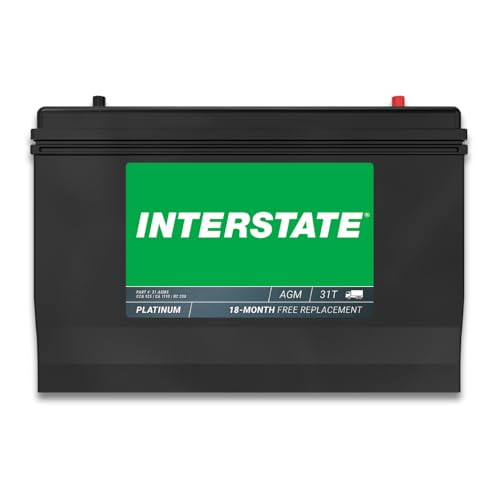
Best for: Boats and marine setups needing long-lasting deep-cycle power with dependable starting power. This dual-purpose battery is designed to discharge sustainability and recharge readiness for marine accessories.
Why selected: It emphasizes two-in-one deep-cycle capability with thick plates designed for repeated discharges, giving extended life compared with some conventional AGM options.
Caution: Not all marine batteries are interchangeable with automotive systems; confirm compatibility with your boat’s electrical layout before use.
OPTIMA Bluetop D34M Deep Cycle Battery

Best for: Versatile marine and RV applications needing reliable starting power with deep-cycle capability. The spiralcell technology is designed for consistent performance in challenging weather.
Why selected: 750 CCA and 120-minute reserve capacity provide a balance of starting power and deep-cycle endurance, with dual terminal posts for flexible mounting and connections.
Caution: Weight is substantial (around 43.5 pounds), so plan for proper handling and secure mounting to prevent movement during transit or wave action.
Buying Guide: Key Purchase Considerations
- Power needs: Match max discharge current and capacity to your load profile. Higher amperage is better for inverters, trolling motors, and heavy-duty appliances.
- Chemistry and maintenance: AGM batteries are maintenance-free and leak-resistant, making them suitable for storage-centric setups. Consider sealed designs for indoor installations.
- Size and weight: Larger capacity batteries weigh more and require more space. Confirm mounting space and weight limits for boats, RVs, or racks.
- Temperature tolerance: Battery performance can drop in extreme cold or heat. Check operating temperature ranges and plan storage environments accordingly.
- Durability and cycles: Deep-cycle performance depends on plate design and construction. Thicker plates and robust grids tend to extend lifespan under regular cycling.
- System compatibility: In multi-battery banks, ensure you can safely wire in series or parallel configurations. Verify manufacturer guidance on number of parallel connections and series limits.
- Storage and self-discharge: Batteries with low self-discharge are beneficial for seasonal use. Plan charging cycles to maximize longevity.
Frequently Asked Questions
- What is the difference between a deep-cycle and a starting battery?
Deep-cycle batteries are designed to provide steady energy over many cycles, while starting batteries deliver high surge current for engine cranking. - Which battery has the highest discharge current among the options?
The Renogy 200Ah model lists up to 2000A max discharge, making it the strongest in discharge capability among the selections. - Are AGM batteries maintenance-free?
Yes, AGM (Absorbent Glass Mat) batteries are sealed and designed to minimize maintenance, leak risk, and electrolyte handling. - Can I mix different brands in the same system?
It’s discouraged to mix batteries of different chemistries, capacities, or ages. If used in a bank, ensure matched specs for safety and performance. - What should I consider when choosing for a boat vs. an RV?
Boats emphasize weight, vibration resistance, and marine-grade durability; RV setups prioritize capacity, storage, and ease of installation. - How important is temperature rating?
Temperature affects capacity and lifespan. Operate within the recommended range to maximize life and performance.