Best Marine Water Heater Bypass Kits for RVs and Boats
Answering the core buyer need: these bypass kits let you winterize without drawing antifreeze through your water heater. They’re best for RV owners and boaters who want a quick, reliable way to bypass the water heater during cold seasons, saving antifreeze and reducing setup time. The top picks below emphasize durability, ease of installation, and compatibility with common 1/2″ NPT ports. The following table highlights the five products chosen for clear comparison.
| Product | Brand | Best for | Key Benefit |
|---|---|---|---|
| Camco Camper/RV Water Heater By-Pass Kit (35953) | Camco | 6-gallon RV water heaters | Saves 6-10 gallons of antifreeze per cycle with permanent install |
| RecPro RV Water Heater Bypass Kit | RecPro | DIY winterizing with pressurized hoses | Includes PPSU valves for heat and chemical resistance |
| RVGUARD RV Water Heater By-Pass Kit | RVGUARD | Durable, long service life | Brass valves; versatile 1/2″ NPT ports and fittings |
| Sunisfa RV Water Heater Bypass Kit | Sunisfa | Easy installation and adaptability | Brass construction with interchangeable adapters |
| Fundyliue RV P23505LFVP 12″ Reinforced By-Pass Kit | Fundyliue | Universal fit with multiple connectors | Three 1/2″ NPT valves; intuitive handle design |
Camco Camper/RV Water Heater By-Pass Kit — 35953

Best for: RV owners needing a permanent, low-maintenance bypass. This kit uses 1/2″–14 NPT tapered brass fittings that fit many 6-gallon water heaters. The design supports replacing repeat disconnections with a single permanent mounting, speeding up winterization while reducing the chance of leaks. A key caveat: ensure your heater thread compatibility before installation.
- Save Antifreeze: Bypasses the heater to stop antifreeze use during winterizing.
- Compatibility: 6-gallon RV water heaters; 1/2″–14 NPT tapered threads.
- Install Permanently: One-time setup to simplify future seasons.
RecPro RV Water Heater Bypass Kit
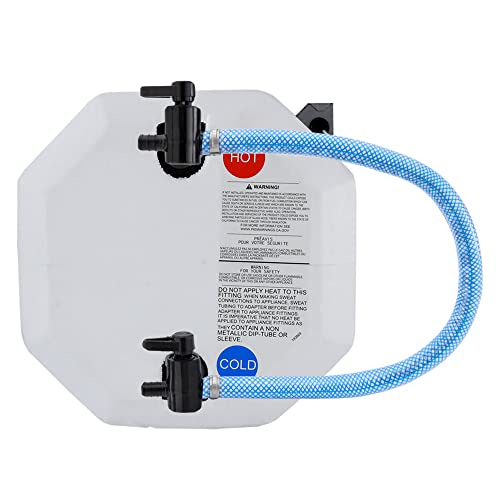
Best for: DIY installers seeking a simple, pressurized hose setup. The unit comprises PEX tubing with crimp rings and a pair of end fittings that fit common systems. PPSU valves offer resistance to heat and chemicals, extending life. Install the blue end to cold inlet and the red to hot outlet; hand-tighten with a 1/4 turn for a secure fit. Limitations: verify hose length and port layout for your specific rig.
- Includes PEX tubing and fittings for straightforward assembly.
- PPSU valves resist heat and chemicals better than standard plastic valves.
- Direction: blue (cold) to cold inlet; red (hot) to hot outlet.
RVGUARD RV Water Heater By-Pass Kit
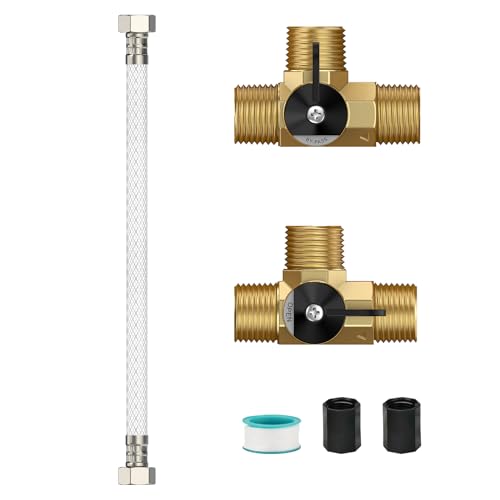
Best for: RV owners needing a robust kit with long life in harsh conditions. The 12″ reinforced hose and brass valves enhance durability against heat and chemicals. The kit includes three 1/2″ NPT male ports and dual female fittings, enabling flexible connections. Choose this if you want a more permanent, heavy-duty setup, but be mindful of matching port types to your system.
- Durable brass valves improve longevity over plastic equivalents.
- Long reinforced hose reduces wear and tear on connections.
- Unique design supports both male and female thread connections.
Sunisfa RV Water Heater Bypass Kit
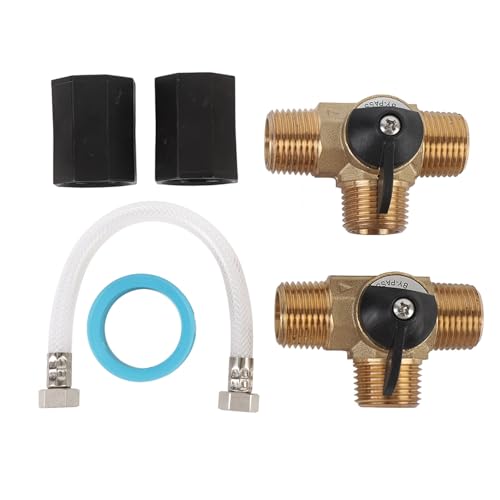
Best for: RV owners seeking an adaptable bypass with easy operation. The kit features a brass build and a practical design that supports connecting male or female threads as needed. It’s designed for straightforward installation and reliable performance in varying conditions. The limitation to watch for: confirm the exact valve arrangement matches your heater’s inlet/outlet layout before purchasing.
- Male and female adapters increase compatibility.
- Brass construction offers durability in cold and hot environments.
- User-friendly valve operation supports quick winterization checks.
Fundyliue RV P23505LFVP 12″ By-Pass Kit

Best for: RVs needing a universal-fit bypass with intuitive valve handling. This kit includes three male 1/2″ NPT tees and double female connectors to accommodate various plumbing setups. The triangular handle markings aid operation, and robust brass valves resist corrosion. Consider compatibility with your current piping layout to ensure a smooth installation sequence.
- Universal fit with three male ports and dual female connectors.
- Brass valves for hardware longevity and chemical resistance.
- Intuitive handle design improves valve operation in tight spaces.
Buying Guide
What to consider when choosing a marine water heater bypass kit:
- Compatibility: Confirm port size, thread type (1/2″ NPT), and heater capacity to ensure the kit fits your RV or boat’s water heater.
- Valve material: Brass valves tend to last longer than plastic in hot/cold cycles and chemical exposure.
- Hose length and reinforcement: Longer or reinforced hoses reduce strain on connections during winterization.
- Ease of installation: Permanent-mount designs save time in future seasons; consider whether you prefer a quick-turn bypass.
- Flexibility: Kits with adjustable adapters (male/female) handle a wider range of setups.
- Durability under cold weather: Look for corrosion resistance and robust fittings to withstand low temperatures.
- Maintenance implications: Some kits are easier to disassemble for cleaning or service; plan for future upkeep.
FAQ
- What is the main purpose of a water heater bypass kit?
To bypass the water heater during winterization, reducing antifreeze use and simplifying the process.
- Do all bypass kits fit 1/2″ NPT ports?
Most are designed for common 1/2″ NPT connections, but always verify your heater’s threading before buying.
- Are brass valves worth the extra cost?
Yes, brass valves typically offer better durability and chemical resistance than plastic valves.
- Can a bypass kit be installed permanently?
Some kits are designed for permanent mounting to speed up future winterizations; others are quick-turn models.
- What should I check before choosing a kit?
Check compatibility, hose length, valve material, and whether adapters are included for your plumbing setup.
- Is one kit better for boats than for RVs?
The same principles apply; select based on heater type, fittings, and space constraints rather than the vehicle type alone.