Best Marine Waste Holding Tank Systems for Boats and RVs
Answering the common question: which marine waste holding tank system should I choose? This guide highlights five practical options aligned with typical use cases—ranging from small boats to RVs and larger vessels. Each selection explains who it’s best for, why it’s a solid fit, and any limitations to consider. This makes choosing easier for boaters seeking reliable waste management, odor control, and easy maintenance.
| Product | Best For | Why It Stands Out |
|---|---|---|
| Jabsco 38110-0092 Marine Waste 10 Gallon Holding Tank | Small to mid-size boats needing ready dockside pump-out | Rugged polyethylene tank with 10 gal capacity and a high-flow macerator pump; includes run-dry protection. |
| Eco Strong Marine Holding Tank Treatment | Boats and RVs needing robust odor control | Bio-enzymatic and enzyme blend with lavender deodorizer for odor elimination and waste breakdown. |
| Camco Rhino 28-Gallon Tote Tank | Off-site waste transport and remote dump locations | Large capacity with heavy-duty wheels and gate valve; built for mobility and rugged use. |
| Walex Citra-Fresh Liquid Holding Tank Treatment | Liquid-based treatment for RVs and boats | Liquid deodorizer and waste breakdown; versatile for 2.5–40 gallon tanks. |
| Apexlife Marine Holding Tank Vent Filter 5/8″ | Odor control via vent filtration | Activated carbon vent filter reduces odor before it exits the vent hose; compatible with common vent hoses. |
Jabsco 38110-0092 Marine Waste Tank System

The Jabsco 38110-0092 combines a 10-gallon polyethylene holding tank with a 12 GPM macerator evacuation pump and run-dry protection. It is best for small to mid-size boats that require reliable dockside pump-out access and straightforward mounting. The system’s rugged tank construction supports marine environments, while the high-flow pump reduces pump-out time. A potential limitation is the fixed 10-gallon capacity, which may require more frequent pump-outs on larger crews or longer trips.
Eco Strong Marine Holding Tank Treatment

This treatment blends bio-enzymatic and enzymatic action with a lavender deodorizer to rapidly liquify organic waste and neutralize odors. It’s well suited for boats and RVs facing persistent odors and slow pump-outs. It’s described as three-in-one: enzymatic breakdown, odor control, and tank cleaning enhancement. A caveat is that effectiveness can hinge on regular use and correct dosage, as with many enzymatic products.
Camco Rhino 28-Gallon Tote Tank

The Camco Rhino tote tank emphasizes portability for remote dump sites. Its 28-gallon capacity provides extended use between pump-outs, and the oversized wheels plus a steel tow adapter make it suitable for moving waste across varied terrains. The large size is a benefit for longer trips, but it adds weight and may require two-person handling. It’s best for RVs or boats that need to transport waste off-site when a direct dump is unavailable.
Apexlife Marine Vent Filter 5/8″
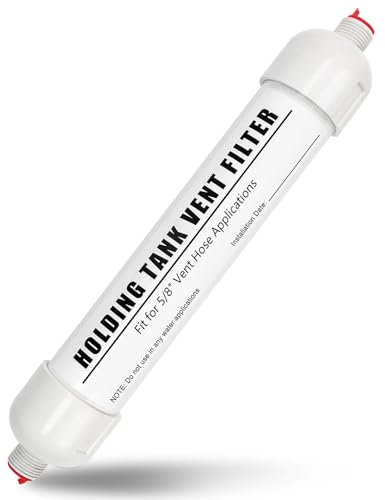
This vent filter uses coconut shell activated carbon to absorb and neutralize odors before they exit through the vent hose. It is best for boats with standard 5/8″ vent hoses and fits common vent plumbing. The filter helps reduce onboard odor in the living areas but does not treat waste itself; it’s a complementary odor-control option. A limitation is that it addresses vent odors rather than the waste itself, so it should be used with a tank treatment plan.
Buying Guide: Key Purchase Considerations
- Tank capacity vs. usage: Match tank size to crew size and trip duration. Larger boats or RVs may need bigger storage or more frequent pump-outs.
- Treatment vs. odor control: Choose enzymatic or bio-enzymatic treatments for waste breakdown and odor control, and consider vent filters to reduce onboard odors.
- Mobility and installation: Portable tote tanks are ideal when dock access is limited. Permanent installations benefit from compact, easy-to-service layouts.
- Materials and durability: Look for UV-stable, corrosion-resistant plastics or high-grade polymers for marine environments.
- Maintenance and compatibility: Ensure pump types, vent hoses, and mounting hardware align with existing boat systems.
Frequently Asked Questions
- What size holding tank should I choose for a small boat?
– A 6–10 gallon tank is typical for compact boats, offering enough capacity for short trips without frequent emptying. - Do I need both a tank treatment and a vent filter?
– They serve different purposes: treatments break down waste and odors in the tank; vent filters reduce odors exiting the vent. Using both provides comprehensive odor control. - Can I transport waste using a tote tank if dock access is far away?
– Yes, tote tanks like the Camco Rhino are designed for easy transport to a dump site with wheels and towing adapters. - Are enzymatic treatments safe for septic systems?
– Most marine treatments are designed to be septic-safe; check product directions to confirm compatibility with your system. - Will vent filters alone stop odors on a boat?
– Vent filters reduce vent odors but do not treat waste; combine with proper tank treatments for best results. - How often should I pump out a holding tank?
– Pump-out frequency depends on tank size, usage, and whether you’re using water-saving or composting options; follow local regulations and manufacturer guidance.