Best Marine Thru Hull Fittings for Reliable Boat Plumbing and Hull Sealing
When choosing marine thru hull fittings, durability, size compatibility, and corrosion resistance are the top priorities for a secure, leak-free hull. This guide highlights five well-suited options for common hose sizes and marine scenarios, with clear guidance on who benefits most from each choice. The table below quickly compares key specs to help you decide which is best for your vessel.
| Product | Material | |||
|---|---|---|---|---|
| Boltigen Thru Hull Fittings | 3/4″ I.D. | 316 Stainless Steel | All-around marine systems; water intakes and bilge lines | Verify hose ID before purchase |
| Seachoice 90-Degree Angled | ¾” I.D. | White plastic | Limited-space installations; tight bends | Not ideal for heavy-duty loads |
| SEAFLO Thru Hull Fittings (1″) | 1″ Hose | White plastic | Higher flow and larger hoses | Check for compatibility with valves |
| Grngven 3/4″ Fittings | 3/4″ Hose | ABS plastic | Easy DIY installs; corrosion resistance | Not metal; consider UV exposure |
| YOQVQOY 3/4″ Fittings | 3/4″ Hose | Corrosion-resistant material | Cost-effective sets; multiple fittings | Confirm hose clamps fit |
Boltigen Thru Hull Fittings for Boats

Product overview: A stainless steel thru-hull barb fitting sized for 3/4″ ID hose. The 316 stainless steel construction provides high corrosion resistance in saltwater environments. It’s suitable for use in water intakes, bilge pumps, and livewell systems. The straight barb design supports secure hose connections to minimize leaks.
Best for: Boat owners needing a durable, general-purpose 3/4″ thru-hull connection for multiple marine applications. This model is a solid all-around choice when reliability in harsher conditions matters most.
Why chosen: It combines quality stainless steel with straightforward installation and versatile use cases. The 3/4″ size aligns with many standard hoses used on small to mid-size craft.
Caution: Ensure correct pipe sizing because an incorrect hose ID can compromise the seal and hull integrity. Verify diameter and hose clamps compatibility before installation.
Seachoice 90-Degree Angled Thru-Hull Connector
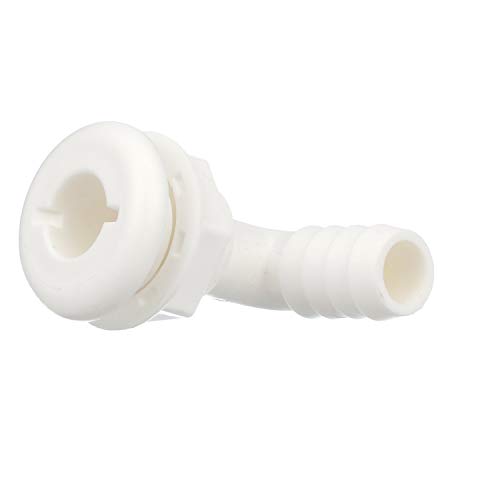
Product overview: A 90-degree marine thru-hull connector designed for 3/4″ inside diameter hose with a flange of 1-1/2 inches. The angled design helps in tight spaces and complex plumbing layouts, offering a reliable link between hull fittings and hoses.
Best for: Installers working in cramped engine rooms or near bulkheads where horizontal space is limited. This connector helps avoid awkward hose routing and kinks.
Why chosen: The angled configuration reduces strain on the hose and fittings in limited-space installations, improving long-term reliability.
Caution: The flange size should align with mounting surfaces; mismatches can require adapters or additional modification.
SEAFLO Thru Hull Fittings (1″)

Product overview: A 1″ thru-hull fitting suited for larger hoses and higher flow needs. The unit’s white color matches common boat hardware and reduces heat absorption from sunlight.
Best for: Vessels requiring higher-volume water passages, such as larger bilge lines or intake feeds, where flow capacity matters.
Why chosen: The 1″ size provides a straightforward upgrade path if your existing plumbing uses larger hoses or you anticipate higher water transfer rates.
Caution: Ensure compatibility with standard American threaded fittings if you plan to integrate with other hardware or valves.
Grngven Marine Plastic Thru-Hull Fittings

Product overview: ABS plastic thru-hull fittings designed for 3/4″ hoses, featuring corrosion resistance and simple above-waterline installation. The rotation torque is adjustable for a secure fit from the hull interior.
Best for: Do-it-yourself projects where cost and ease of installation are priorities, and 3/4″ hose connections are standard in the system.
Why chosen: These provide a straightforward, low-cost option with quick installation, suitable for temporary or budget-conscious upgrades.
Caution: Plastic fittings are less robust under heavy mechanical loads or prolonged UV exposure; avoid mounting in sun-exposed, high-stress areas without protection.
YOQVQOY 2Pcs Thru Hull Fitting (3/4″)
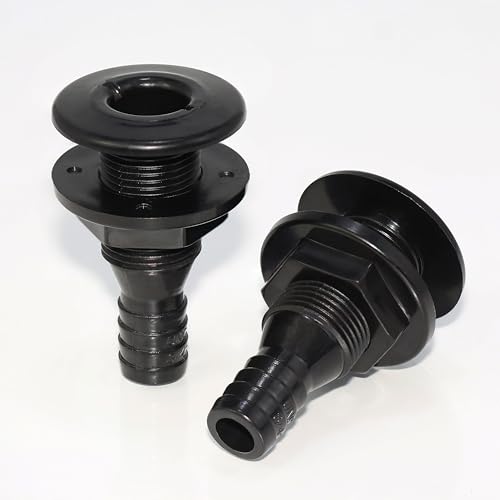
Product overview: A pair of 3/4″ thru-hull fittings designed for boats, featuring a corrosion-resistant exterior and robust construction.
Best for: Cost-conscious buyers needing multiple fittings for duplicate systems, spares, or repairing complete loops on smaller vessels.
Why chosen: The set format enables quick replacement or expansion without sourcing single units, improving readiness for maintenance.
Caution: Confirm the exact measurement of hose ID and the thread engagement to avoid mismatches with valve connections.
YOQVQOY Thru Hull Fittings (1″)
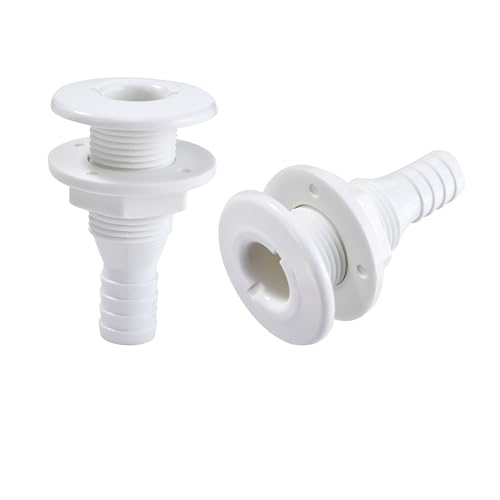
Product overview: A 1″ thru-hull option from YOQVQOY, designed for larger hoses and easier routing in open-water systems. The included construction focuses on corrosion resistance and fit for standard American fittings.
Best for: Vessels upgrading to larger hose lines or ensuring adequate flow for pump feeds and cooling lines.
Why chosen: Provides a reliable, mid-range option with compatibility for common 1″ hose assemblies and valves.
Caution: As with any 1″ component, verify mounting hole dimensions and valve compatibility to avoid misalignment during installation.
SEAFLO Thru Hull Fittings (3/4″)

Product overview: A 3/4″ thru-hull solution with a 4-year warranty and a white finish, designed for 3/4″ hoses. It provides solid corrosion resistance suitable for standard marine environments.
Best for: Everyday use on smaller to mid-sized boats where a dependable 3/4″ connection is adequate for water intake or drain lines.
Why chosen: The combination of warranty and straightforward sizing makes this a practical, low-risk choice for routine marine plumbing tasks.
Caution: Warranty terms may rely on proper installation; ensure correct sealing and clamping to prevent leaks.
Buying Guide: How To Pick The Right Marine Thru Hull Fittings
Assess the hose diameter first. Most marine thru-hull fittings in this selection fit 3/4″ or 1″ hoses, with a few options for tight spaces or larger volumes. Material matters: stainless steel offers excellent corrosion resistance; ABS and other plastics are budget-friendly and easy to install but may be less durable under heavy loads or UV exposure.
Consider installation space and alignment. Angled or straight barb designs affect how hoses route through the hull and how easy clamps are to secure. Plan for space limitations near bulkheads, pumps, and valves.
Match the exact interior and exterior interfaces. Check hose ID, barb size, and flange dimensions to ensure a secure seal and proper mounting surface against the hull. Some fittings require specific valve threads or adapters.
Durability and warranty. Stainless steel fittings with long-term corrosion resistance help in saltwater use. Plastic fittings can be convenient and light, suitable for non-critical lines or temporary setups.
Maintenance considerations. Periodic inspection for cracks, leaks, or corrosion is essential. Replace any worn gaskets or grommets, and ensure hose clamps remain tight but not over-torqued.
Frequently Asked Questions
- What size thru-hull fittings should I choose for a 3/4″ hose? Choose fittings labeled for 3/4″ I.D. hose to ensure a proper, leak-free connection and secure barb grip.
- Are stainless steel fittings better than plastic? Stainless steel offers superior corrosion resistance for saltwater use, while plastic fittings can be easier and cheaper for non-critical lines.
- Can I install a 1″ thru-hull where a 3/4″ was used? Yes, but you may need a larger hose and corresponding clamps, valves, and mounting clearance; verify all components fit together.
- Do all thru-hull fittings require a gasket? Many designs rely on O-rings or gaskets to seal against the hull; follow the manufacturer’s installation instructions for proper sealing.
- Is an angled fitting better for tight spaces? An angled fitting helps route hoses without kinks in cramped spaces and can improve reliability in confined areas.
- What maintenance should be performed on thru-hull fittings? Inspect for corrosion, cracks, and leaks; replace worn gaskets; ensure clamps are tight but not overtightened.