Best Marine Synthetic Gear Oil Options for Your Boat
If you need reliable gear oil for marine applications, this guide compares five top marine-grade synthetic options. It helps you choose based on engine type, gear system, and operating conditions. The recommended picks emphasize corrosion resistance, high-temperature stability, and compatibility with common stern drives and lower units. This overview is suited for boat owners, mechanics, and fleet operators seeking durable lubrication for saltwater and freshwater environments.
Summary table of selected products:
| Product | Brand | Weight/Size | Best For | Key Benefit |
|---|---|---|---|---|
| Lucas Oil 10652 Synthetic SAW 75W-90 | Lucas Oil | 1 Quart | General marine gear needs | Synthetic base with manufacturer guidance alignment |
| Synthetic 75W-90 Marine Gear Oil – 2 Pack | Generic | 2 × 1 Quart | Budget-friendly dual-pack setups | Strong marine protection and extended gear life |
| STAR BRITE 80W-90 Marine Gear Lube | STAR BRITE | 32 Oz (Quart) | All engines >100 hp | Long-term rust and corrosion protection |
| TRIAX Marine Gear SAE 90 Full Synthetic Oil | Triax | 6 Quart Pack | All stern drives and lower units | Fully synthetic with wide OEM compatibility |
| Quicksilver SAE 90 Gear Lube | Quicksilver | 32 oz | Outboard lower units and sterndrives | Extreme pressure with anti-wear protection |
Lucas Oil 10652 Synthetic SAW 75W-90 M8 Marine Gear Oil

Best for: General marine gear lubrication needs where the owner’s manual recommends a 75W-90 synthetic gear oil. This product is suitable for a wide range of stern drives and lower units when the manual specifies 75W-90. It supports consistent lubrication across varying sea conditions and engine loads.
Why selected: It provides a straightforward, OEM-aligned option with synthetic formulation designed to handle marine operating stresses. This choice is ideal for owners who want a simple, reliable upgrade without over-specification.
Caution: Always verify viscosity and approvals in the service manual before changing fluids to avoid mismatched specifications.
Synthetic 75W-90 Marine Gear Oil – 2 Pack

Best for: Budget-conscious buyers needing two quarts for ongoing maintenance, storage, or multiple gear units. Suitable for marine engines and gear systems requiring 75W-90 viscosity with marine-grade protection.
Why selected: The two-pack offering supports longer-term maintenance cycles and reduces the per-quart price, appealing to boat owners managing multiple lower units or sterndrives.
Caution: Check that the product meets your boat’s specific OEM requirements and that you avoid cross-using non-marine-approved blends in sensitive gear sets.
STAR BRITE 80W-90 Marine Gear Lube (32 oz)
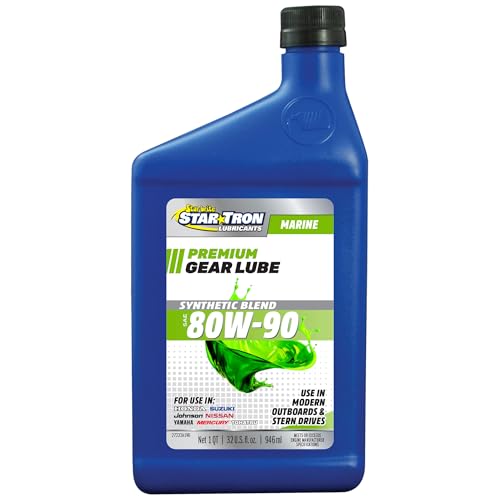
Best for: Engines over 100 hp requiring high-viscosity 80W-90 gear oil with robust rust and corrosion protection. Suited for saltwater use where long-term protection is critical.
Why selected: STAR BRITE is known for reliable marine lubrication performance, and this product emphasizes long-term protection and compatibility with a broad range of marine drives.
Caution: Higher viscosity may not be ideal for very cold environments; verify thermal performance for your climate.
TRIAX Marine Gear SAE 90 Full Synthetic Oil

Best for: All stern drives, lower gear units, and OEMs across boats and jets, including multiple makes. Ideal for owners who prefer full synthetic formulations for high-load operations.
Why selected: Its fully synthetic base and broad compatibility make it a versatile choice for diverse marine powertrains, including frequent towing or high-speed conditions.
Caution: As with any full-synthetic option, ensure compatibility with your drive’s seal materials and check service intervals per manufacturer specs.
Quicksilver SAE 90 High Performance Gear Lube

Best for: Outboard lower units and sterndrives above 75 hp needing strong protection against corrosion and wear. Suitable for boats operating in saltwater and aggressive towing conditions.
Why selected: Quicksilver’s formulation targets extreme pressure protection with anti-wear additives, helping to minimize gear wear in demanding marine service.
Caution: Use only in applications that specify 90 weight lubricants; using a lighter oil can compromise protection in severe load scenarios.
Buying Guide: Key Considerations for Marine Gear Oil
What viscosity should I choose?
Likely viscosities are 75W-90 or 80W-90. Choose 75W-90 if your engine manual specifies it or if you operate in moderate temperatures. Opt for 80W-90 or 90 weight for higher-load, high-heat situations or older equipment designed for thicker oils.
Full synthetic vs. synthetic blend
Full synthetic offers improved oxidation resistance, thermal stability, and longer service life under extreme conditions. Synthetic blends can be a more economical option while still providing good protection for many marine systems.
Compatibility with gear type
Ensure the product is compatible with stern drives, lower units, marine transmissions, and the boat brands you operate. Some formulas advertise broad OEM compatibility, which is helpful for multi-boat fleets.
Rust and corrosion protection
Marine environments demand strong corrosion inhibitors due to saltwater exposure. Look for products that explicitly mention rust and corrosion protection for brass, copper, and aluminum alloys common in marine gear.
Storage and stability
Long-term stability matters if you store gear oil for extended periods. Some formulas highlight storage-friendly properties and oxidation resistance to prevent degradation when not in use.
Maintenance and service intervals
Check your owner’s manual for recommended intervals and follow them. Synthetic options may extend service life, but incorrect intervals can negate the benefits.
Application notes
Follow manufacturer recommendations for filling procedures, venting, and ensuring proper line lubrication. Avoid cross-contamination with other oil types and clean replacement ports and gaskets before refilling.
FAQ
- What oil viscosity is best for marine gear systems? The common choices are 75W-90 and 80W-90. The best oil depends on your engine manual and operating conditions.
- Is full synthetic better for saltwater boats? Yes, full synthetic formulations typically offer greater oxidation resistance and stability under heat and load, which is beneficial for saltwater exposure.
- Can I mix different brands of gear oil? Mixing is generally not recommended because it can alter additive chemistry and protection performance. Refer to OEM guidance if a mixing scenario is unavoidable.
- How often should marine gear oil be changed? Service intervals vary by engine, usage, and environment. Follow the owner’s manual and consider more frequent changes in harsh saltwater conditions.
- What are signs of gear oil failure? Look for foaming, unusual heat, metallic noises, excessive wear, or strong odors indicating degradation or contamination.
- Do I need a marine-specific gear oil? Yes, marine formulas are designed to resist saltwater corrosion and maintain lubrication under marine operating loads.