Best Marine Raw Water Strainer Options for Boat Systems
When selecting a marine raw water strainer, choose designs that protect pumps and engines from debris while fitting your hose sizes and space constraints. This guide highlights five reliable options suited for various boat setups, from compact in-line strainers to larger bronze and Marelon versions. The best picks balance filtration efficiency, ease of maintenance, and material durability in saltwater environments. Ideal buyers include liveaboard crews seeking durability, weekend sailors needing simple cleaning, and engine room installers prioritizing robust, corrosion-resistant construction.
Summary of chosen products
| Product | Best For | Material | Key Benefit |
|---|---|---|---|
| SEAFLO Raw Sea Water Filter/Intake Strainer | Flexible installations | Marine-grade materials | Versatile hose sizes |
| Perko Bronze Intake Water Strainer | Bronze durability | Bronze | Solid open-area ratio |
| Groco ARG-750 Series | Stainless-basket option | Stainless steel | Reliable filtration |
| Sherwood Seawater Strainers | Compact, 1″ systems | Stainless steel | Good for tight spaces |
| Forespar Marelon Raw Water Strainer | Non-conductive housing | Marelon (thermoplastic) | Corrosion resistance |
SEAFLO Raw Sea Water Filter/Intake Strainer

Best for flexible installations, this SEAFLO strainer is designed to fit 1 inch, 1-1/4 inch, and 1-1/2 inch hose sizes. It functions as a critical intake filter that shields pumps and engines from debris, marine growth, and particulates entering the system. Built for harsh saltwater environments, the strainers use corrosion-resistant components to maintain filtration over time.
Who this is for: boat owners needing adaptable compatibility and solid protection across multiple hose sizes. Choose this if you want a versatile unit that can be relocated or adjusted without swapping parts. Caution: verify the exact hose size compatibility for your configuration before purchasing.
Perko Bronze Intake Water Strainer – 3/4″

Best for traditional bronze durability in 3/4″ pipe systems, this Perko strainer emphasizes a strong open-area to pipe-size ratio of 25:1 and bronze construction for longevity in saltwater installations. It suits engines or accessories requiring a compact bronze intake with reliable filtration. Best for classic installations where bronze components are preferred.
Who this is for: crews seeking a proven bronze option for compact inlets. Avoid this if you need a non-metallic housing or larger intake in a tight space.
Groco ARG-750 Series 3/4″ Raw Water Strainer
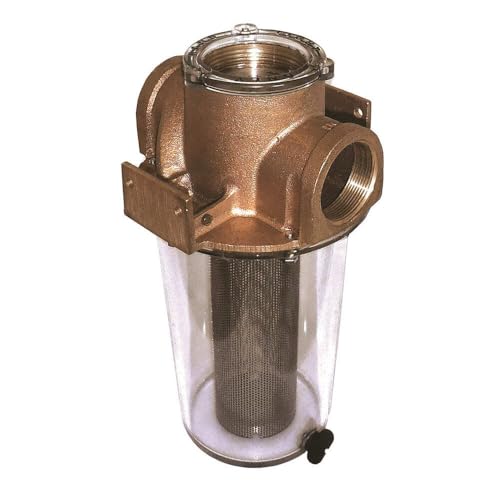
The Groco ARG-750 line offers 3/4″ raw water strainers with a stainless steel basket, delivering robust filtration for marine systems. This option is ideal for installations requiring a stainless element to resist corrosion and capture debris before it reaches critical components. It is best for boaters who prioritize durable filtration components inside an accessible mounting area.
Who this is for: users needing a stainless basket in a compact 3/4″ footprint. Better for applications where corrosion resistance from a stainless basket is valued. Limitation: ensure compatibility with your mounting and port sizing before purchase.
Sherwood Seawater Strainers and Brackets 1″ 20 Mesh

Sherwood’s 1″ strainers with a 20-mesh stainless basket are compact and suitable for tighter engine compartments. They provide dependable filtration with a straightforward install and bracket setup. Best for small to mid-sized marine systems where space is at a premium.
Who this is for: boaters needing a compact, easy-to-install strainer for a 1″ inlet. Caution: mesh size of 20 may require more frequent cleaning in debris-heavy environments.
Forespar Marelon Raw Water Strainer 1.5″
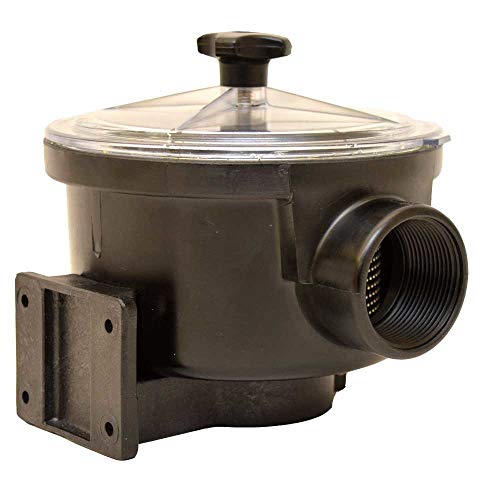
Best for non-conductive housing in corrosive saltwater settings, the Forespar Marelon strainer uses Marelon material to resist corrosion and maintain filtration integrity. The 1.5″ size is suitable for larger intake lines where higher flow is needed. This option is ideal for systems that prioritize non-metallic, corrosion-resistant components.
Who this is for: owners seeking a non-metallic, corrosion-resistant solution for larger inlets. Choose this if you want to minimize electrolytic concerns in aluminum or mixed-metal installations. Limitation: Marelon components may have different thermal expansion characteristics than metal parts, requiring proper fitment checks.
Buying Guide
- Pipe size compatibility: Match the strainer’s inlet/outlet to your existing hose or pipe sizes (commonly 1/2″, 3/4″, 1″, etc.).
- Material considerations: Bronze offers classic durability; stainless steel provides strong corrosion resistance; Marelon provides non-metallic, corrosion-resistant housing for sensitive installations.
- Mesh and filtration need: Finer mesh (like 100 mesh) captures smaller particles but may require more frequent cleaning; coarser meshes allow higher flow but may miss smaller debris.
- Maintenance accessibility: Choose units with easy-to-remove bowls or baskets to simplify cleaning in tight engine rooms.
- Installation space: Consider overall footprint and whether brackets or mounting flanges fit your space constraints.
- Environment durability: Saltwater compatibility is essential; look for corrosion-resistant materials and seals designed for marine use.
Frequently Asked Questions
- What is raw water strainers’ primary purpose? They filter debris before it enters pumps and engines to prevent damage and maintain system reliability.
- How often should a marine strainer be cleaned? Cleaning frequency depends on debris load and water conditions; inspect and clean during routine maintenance or when flow slows.
- Are bronze strainers better than stainless? Bronze is durable in saltwater but heavier; stainless offers strong corrosion resistance but can be less compatible with certain fittings. Choose based on mounting and compatibility needs.
- Can I use a non-metallic strainer in saltwater? Yes, Marelon or other plastic housings resist corrosion but ensure they suit your pressure and temperature requirements.
- What mesh size should I choose? Finer meshes protect more, but may clog faster; coarser meshes offer smoother flow with less frequent cleanings. Consider your water quality and pump sensitivity.