Best Marine Outboard Fuel Tank Options for Safe, Efficient Boating
Answering the core buyer question: which marine outboard fuel tank best fits your boat, fuel type, and storage needs? This guide compares five well-rounded options, from compact under-seat tanks to larger carry-all canisters. Perfect for anglers, cruisers, and deck boat owners who want reliable capacity, venting, and built-in gauges. Below, you’ll find who each tank is best for, plus quick pros and a buying summary to help you decide at a glance.
| Product | Capacity | Best For |
|---|---|---|
| Scepter 6 Gallon Portable Marine Gas Can (10511) | 6 gallons | Under-seat storage, space-conscious boats |
| VEVOR Boat Fuel Tank, 3.17-Gallon | 3.17 gallons | Compact, light-use trips |
| DEF Portable Boat Fuel Tank, 6gal | 6 gallons | Durable, multi-fit fuel needs |
| AloneGoer 3 Gallon Portable Gas Tank | 3 gallons | Yamaha-compatible, lightweight spares |
| Scepter 9 Gallon Portable Marine Gas Can (08667) | 9 gallons | Longer runs, larger boats |
Scepter 6 Gallon Portable Marine Gas Can

The Scepter 6 Gallon tank provides ample capacity without dominating deck space. It features molded-in feet to keep the tank off the floor, improving ventilation and stability for under-seat storage. A 2-way vented cap allows air flow during refueling and safely releases pressure above 5 PSI to minimize vapor buildup. The built-in fuel gauge and pickup simplify quick fuel checks, while compatibility with diesel and ethanol-blended fuels adds versatility. Best for: boaters needing a compact, EPA/CARB-approved tank that fits under seats and in tight storage areas. Limitation: volume is smaller than larger tanks, so longer trips require refueling planning.
VEVOR Boat Fuel Tank, 3.17-Gallon

VEVOR’s 3.17-gallon tank emphasizes portability with a molded top handle and a compact footprint that fits under seats. It includes a 9.8 ft/3 m hose, broad compatibility with Yamaha connectors, and a rugged HDPE build designed to resist aging, impact, and corrosion. Best for: anglers or small-boat operators who want a lighter, space-saving tank for quick trips or as a spare. Caution: avoid prolonged direct sun exposure to limit aging and expansion risk.
DEF Portable Boat Fuel Tank, 6gal

DEF’s 6-gallon tank uses high-density polyethylene with anti-aging and impact-resistant properties. It offers two sealing/venting modes via cap design and a vented metal nut, enhancing safe fuel flow and minimizing leakage. An integrated oil volume indicator helps track fuel levels, and a built-in filter in the air inlet keeps fuel cleaner. Best for: boaters who value robust construction and flexible sealing/venting options. Limitation: some users may prefer a more streamlined gauge integration.
AloneGoer 3 Gallon Portable Boat Fuel Gas Tank
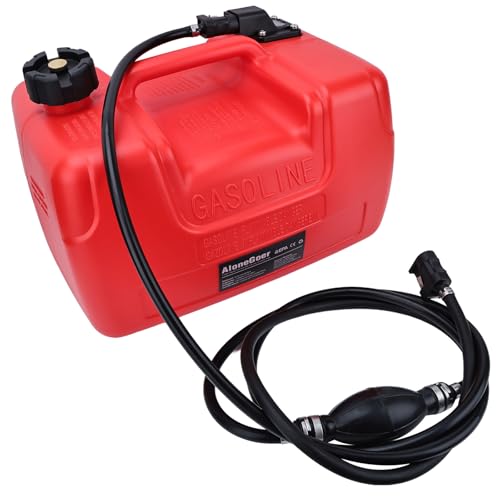
AloneGoer presents a 12 L (approximately 3 gallons) tank designed for Yamaha outboards and similar engines. It uses multi-layer co-extrusion to minimize fuel permeation and includes UV stabilization and corrosion-resistant formulation for salt spray environments. Best for: owners needing a compact, engine-compatible spare tank with durable construction. Caution: ensure compatibility with your exact Yamaha model before purchase to avoid connector mismatches.
Scepter 9 Gallon Portable Marine Gas Can

The 9-gallon Scepter tank balances capacity with a compact profile. It uses a 2-way vented cap to manage vapor buildup and accepts the same 1/4 NPT fittings as other canisters for compatibility with standard marine fuel systems. Best for: boaters who need extended running time between refuels on mid-sized vessels. Limitation: taller footprint may limit under-seat storage on smaller boats.
VEVOR Marine Tank, 6.34-Gallon

VEVOR’s larger 6.34-gallon tank adds more capacity while preserving portability. It features a clear gauge to monitor fuel and a long 9.8 ft hose for flexible routing. The tank’s design emphasizes durability and resistance to aging and corrosion. Best for: crews who need extra fuel on longer trips without upgrading to a full-size intermediate tank. Caution: avoid prolonged direct sun exposure to minimize aging and expansion risks.
Scepter 12 Gallon Portable Marine Gas Can

The 12-gallon Scepter can offers substantial running time for larger boats while maintaining a manageable size. It includes a built-in fuel gauge and pickup, with a tall profile that suits boats with more deck space. Best for: long trips or boats with higher fuel needs where frequent refueling is impractical. Limitation: the larger size may challenge storage on compact or trailerable vessels.
Buying Guide: Key Considerations for Marine Outboard Fuel Tanks
Capacity and runtime: Match tank size to typical trip length and engine fuel consumption. Larger boats may require 9–12 gallon tanks, while small fishing craft can work well with 3–6 gallons.
Ventilation and safety: Look for 2-way vented caps and pressure relief features to prevent vapor buildup during refueling and storage.
Material and durability: High-density polyethylene (HDPE) is common for resistance to corrosion, impact, and aging; UV stabilization helps with sun exposure at sea.
Gauge and fittings: Built-in gauges save time; ensure compatibility with standard 1/4 NPT fittings and your engine’s fuel line connections.
Portability and space: Consider the tank’s weight, built-in handles, and whether it fits under seats or on deck without hindering movement.
Fuel compatibility: Some tanks support diesel or ethanol-blended fuels. Check your outboard’s fuel type and local regulations when selecting a tank.
Frequently Asked Questions
- What capacity is best for a typical small boat? A 3–6 gallon tank is usually adequate for short trips or as a spare fuel source on small boats.
- Can I mix diesel with gasoline in these tanks? Some tanks advertise diesel compatibility; always follow the tank’s specification and your engine’s fuel requirements.
- Do these tanks come with hoses? Many include hoses of varying lengths; verify hose length and connector type for your engine before purchase.
- Are vented caps necessary? Vented caps reduce vapor buildup during refueling, improving safety and compliance with EPA/CARB standards.
- Which tank is best for long trips? Larger-capacity tanks (9–12 gallons) are better for longer runs between refueling, especially on bigger boats.
- Is under-seat storage possible with these tanks? Yes, several models are designed with slim profiles or molded feet to fit under seating or compact spaces.