Best Marine Hot Water Heaters for Boats and Yachts
Answer: For marine environments, compact 6–11 gallon electric water heaters with front or rear heat exchangers are ideal for providing reliable hot water on small to mid-size boats. This guide highlights five top marine-rated options, suitable for different vessel sizes and hot-water needs. Best uses include daily showers at sea, galley washing, and crew accommodations. Below, you’ll find clear comparisons, who each heater is best for, and practical buying considerations.
Overview of chosen products:
- Kuuma 6 Gallon Water Heater for Marines and Boats (6 gal, 120V, front mount)
- Camco 11841 Kuuma Water Heater (11 gal, 120V, front heat exchanger)
- Kuuma 11810 6-Gallon Water Heater (6 gal, 120V, marine aluminum tank)
- Whale F600 Water Heater (6 gal, 120V, front heat exchanger)
- Whale S600 Water Heater (6 gal, 120V, rear heat exchanger)
Kuuma 6-Gallon Water Heater For Boats

Best for small to mid-sized boats needing a quick hot-water boost. Features a 6-gallon capacity and 120V, 1500W input, with a front-mount heat exchanger design for compact installation. This unit is suitable for vessels that prioritize space efficiency and straightforward electrical hookup. Ideal for sailors who want reliable hot water without oversized equipment.
Who it’s best for: compact boats or sailboats with limited engine room space and a need for dependable daily hot water. Why selected: compact 6-gallon capacity paired with a standard 120V supply makes it easy to install on many hulls.
Caution: 6 gallons may run out faster on higher-demand days; plan water use accordingly or consider higher capacity options if showers are frequent.
Camco 11841 Kuuma Water Heater

Best for boat owners seeking an 11-gallon capacity with efficient hot-water delivery. This model combines a 120V front heat exchange with a rear mount option, offering flexible installation on varying layouts. The larger tank supports longer showers or multiple sinks before refilling.
Who it’s best for: larger boats or crews where extended hot-water runs are common. Why selected: higher capacity reduces the frequency of tank reheat during peak activity.
Caution: Heavier unit may require reinforced mounting and careful weight distribution on smaller boats.
Kuuma 11810 6-Gallon Marine Water Heater
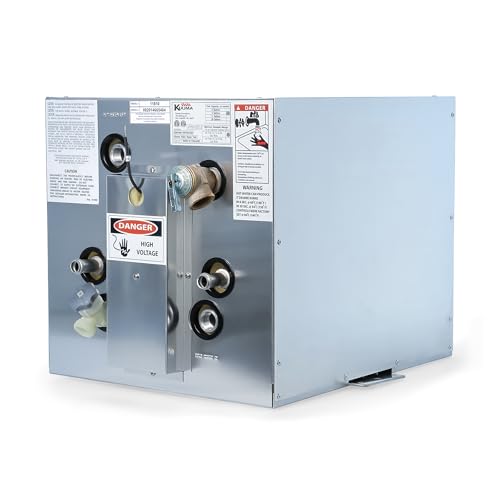
Best for boats that need a true marine aluminum tank with reliable heat exchange. The 6-gallon capacity and 120V, 1500W input provide steady hot water, with a gray finish that resists marine corrosion. The aluminum tank helps with weight and durability on saltwater vessels.
Who it’s best for: skippers prioritizing corrosion resistance and compact footprint on mid-sized boats. Why selected: aluminum tank offers durability in harsh marine environments while maintaining space efficiency.
Caution: Aluminum tanks can be sensitive to certain water chemistries; ensure compatible water chemistry to maximize longevity.
Whale F600 6-Gallon Water Heater

Best for dependable, rugged performance with a front heat exchanger. The Whale F600 offers a durable build and a 6-gallon capacity, suitable for boats that require steady hot-water supply without frequent maintenance. Front-exchanger design helps with installation in tighter engine rooms.
Who it’s best for: vessels that value robustness and straightforward maintenance. Why selected: durable construction supports long service life in marine conditions.
Caution: Front heat-exchanger layout may influence plumbing routing on some hull configurations; ensure compatibility with existing fittings.
Whale S600 6-Gallon Water Heater
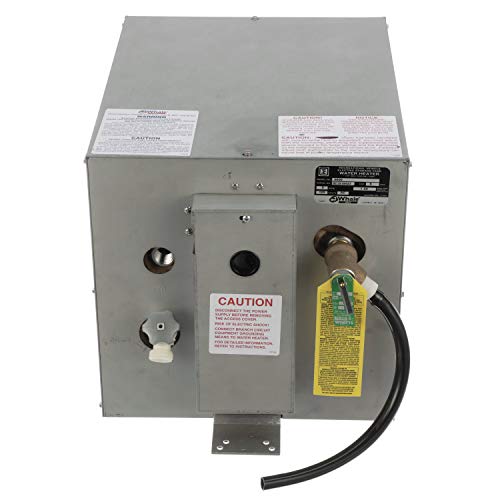
Best for rear-heat-exchanger installations where plumbing comes from the aft portion of the vessel. The 6-gallon capacity supports moderate hot-water demand, with durable construction designed for marine environments. Rear-exchanger design can be advantageous for space layouts that favor aft access.
Who it’s best for: boats with rear access to equipment and where space constraints require a rear-mounted heat exchanger. Why selected: provides a reliable alternative to front-exchanger models while maintaining similar capacity.
Caution: Ensure rear-access clearance for service and maintenance in tight engine rooms.
Buying Guide: Marine Hot Water Heaters
What capacity best fits your boat?
Smaller boats typically do well with 6-gallon tanks for daily showers and galley uses. Larger boats or crews may benefit from 11 to 20 gallons to minimize reheat runs. Consider your typical daily hot-water demand and shower frequency when choosing capacity.
Which heat-exchanger orientation is right?
Front heat exchangers are easier to install in tight spaces with forward access. Rear heat exchangers can simplify line routing on boats with aft equipment layouts. Check space, existing plumbing, and service access when selecting orientation.
What voltage and power are needed?
Most marine water heaters run on 120V AC, around 1500W. Verify your shore power or generator capacity and ensure your electrical panel can handle continuous heating loads without tripping circuits.
Material and corrosion considerations
Marine-grade tanks often use aluminum, stainless, or corrosion-resistant housings. Aluminum tanks are lightweight but may require compatible water chemistry. Stainless or reinforced housings offer long-term durability in saltwater environments.
Installation and maintenance considerations
Evaluate mounting options, weight distribution, and accessibility for maintenance. Regular inspection of connections, heat-exchanger cleanliness, and anode protection (where applicable) helps extend life in harsh marine conditions.
Which model provides the best balance of capacity and space?
For space-constrained boats, 6-gallon units with front heat exchangers offer compact installation and quick hot-water delivery. For boats with room for a larger unit, an 11-gallon model reduces reheat frequency and supports longer hot-water runs.
Compatibility and installation notes
Review your vessel’s plumbing layout, available electrical supply, and mounting space before selecting a heater. Some models require additional adapters or mounting hardware to fit specific hull designs.
FAQ
Do marine water heaters work on shore power only?
Most marine heaters operate on 120V AC shore power or a generator. Some models may be compatible with 12V systems, but 120V is standard for the listed units.
Is a larger tank always better on a boat?
Not always. A larger tank reduces reheat frequency but increases weight and space use. Choose based on typical daily hot-water needs and available space.
What maintenance is required for marine water heaters?
Regularly inspect connections and insulation, flush the tank as needed, and monitor heat-exchanger integrity. Use anode protection where applicable and follow manufacturer guidelines.
Can I install a marine water heater myself?
Basic installations are feasible for skilled DIYers with electrical and plumbing experience. Some installations may require professional mounting or electrical work to meet safety standards.
How do I know if I need a front or rear heat exchanger?
Choose based on your boat’s layout and plumbing routes. Front exchangers suit forward-facing space constraints; rear exchangers fit aft-engine-room arrangements with easier line routing.
Are these heaters suitable for high-demand showers?
Six-gallon models support standard daily use, while larger capacities (11 gallons) are better for longer or multiple simultaneous hot-water uses.