Best Marine Heat Exchangers for Boats: Top Manufacturers and Models
Looking for reliable marine heat exchangers and related heating solutions? This guide highlights five top products from reputable brands, with clear buying insights. It helps boat owners, captains, and marine technicians choose models that deliver steady hot water or engine compartment heating in marine environments. The selections favor compact 6–11 gallon water heaters and a compact bilge heater designed for boats and other marine applications. Use this overview to compare capacity, installation style, and durability before purchasing for your vessel.
Summary table of chosen products
- Whale F600: 6-gallon water heater with front heat exchanger, 120V
- Whale S600: 6-gallon water heater with rear heat exchanger, 120V
- Whale S1100: 11-gallon water heater with rear heat exchanger, 120V
- Whale S700: 6-gallon water heater with rear heat exchanger, 120V
- Xtreme Heaters Engine Compartment Heater: 150W, marine-certified bilge heater
Whale F600 Water Heater — Front Heat Exchanger

The Whale F600 is a compact 6-gallon, 120V water heater featuring a front heat exchanger. It is designed to reliably maintain a steady supply of hot water on smaller vessels or limited installs. Its rugged construction aims at long service life, making it suitable for boats that require dependable onboard hot water without large space footprints. Best for smaller cabins or galley setups where front-access heat exchange is preferred. Caution: Ensure electrical supply and mounting clearances fit the unit’s dimensions.
Whale S600 Water Heater — Rear Heat Exchanger
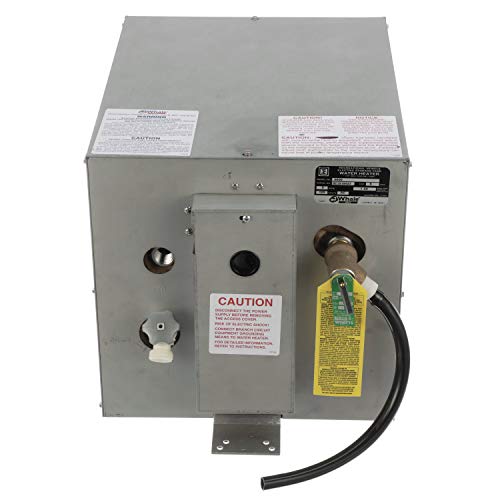
The Whale S600 offers a 6-gallon storage capacity with a rear heat exchanger and 120V operation. Durability and a long service life are emphasized in its design, making it a solid choice for boats that value rear-exchanger configurations for easier routing of hoses and fittings. Best for mid-sized boat cabins where rear-placed heat exchangers simplify installation. Limitation: 6 gallons may be modest for larger households aboard longer trips.
Whale S1100 Water Heater — 11 Gallons

The Whale S1100 provides a larger 11-gallon capacity with a rear heat exchanger and 120V operation. It is best for boat layouts where a bigger hot-water reserve is needed between daily uses or for crewed vessels. Durable construction supports longer service life on demanding marine journeys. A potential drawback is its larger footprint compared to 6-gallon models, requiring more space planning.
Whale S700 Water Heater — 6 Gallons

The S700 is another 6-gallon option with a rear heat exchanger, offering dependable hot water with 120V power. It shares many advantages with the S600 but may be preferred when installation logistics favor rear-exchanger routing. Best for dual-bunk or galley setups where a compact, rear-exchanger model fits the space. Limitation: Still a 6-gallon model; large hot water demands may require a larger unit.
Marine Engine End Cap For Heat Exchanger — Thorny Croft

This marine engine end cap component is a specialized item used in heat exchanger assemblies and engine bays. It is marketed for compatibility with Volvo Penta MD-series and similar engines. Best for technicians completing heat exchanger installations on mid-range to larger vessels. Caution: This is a component, not a complete heater unit; verify compatibility with your heat-exchanger model.
Water To Air Heat Exchanger 12×12 — 1″ Copper Ports

This 12×12 water-to-air heat exchanger supports outdoor and residential heating and cooling with 1″ copper ports. It is designed for various applications, including wood-fired and forced-air systems, offering flexible integration into marine or off-grid setups. Best for boaters seeking an adaptable heat-exchange unit that can work with different heat sources. Limitation: It is a larger, more complex exchanger than compact onboard water heaters.
Whale F1200 Water Heater — Front Heat Exchanger

The Whale F1200 is a larger 11-gallon capacity water heater with a front heat exchanger, designed for higher hot-water demand on boats. Its robust construction suggests durability for extended voyages. Best for crewed or larger vessels where a substantial hot-water reserve is required. Caution: Check that the installation space can accommodate its 16x22x16 inches footprint and electrical draw of 120V.
Buying Guide: Key Considerations For Marine Heat Exchangers
- Capacity and hot-water demand: Choose 6-gallon units for compact boats or 11-gallon units for crewed vessels with higher hot-water needs.
- Heat exchanger configuration: Front vs rear exchangers affect installation routing and space planning. Front exchangers are easier to access; rear exchangers may simplify hose routing in tight engine bays.
- Voltage and electrical load: Most marine water heaters run on 120V. Confirm power availability and wiring capacity on the vessel.
- Durability and materials: Rugged housing and corrosion-resistant components are essential for saltwater environments and vibration.
- Placement and clearance: Ensure adequate clearance for access, exhaust vents if applicable, and mounting hardware compatible with vessel walls or cabinets.
Frequently Asked Questions
- What capacity heater is best for a small boat? – A 6-gallon unit typically provides sufficient hot water for cabins and small galley use on most small to mid-sized boats.
- Do marine water heaters require special wiring? – Yes, most require standard 120V AC wiring, with attention to safety circuits and space for heat dissipation.
- Is a rear or front heat exchanger better? – Front exchangers offer easier access for servicing, while rear exchangers can simplify hose routing in compact engine bays.
- Can these heaters be used for engine cooling? – These products are designed to heat potable water; use separate engine cooling systems as specified by the vessel’s engineering plan.
- What should I consider when upgrading capacity? – Assess vessel space, electrical supply, and anticipated hot-water draw to avoid undersizing or oversizing for your needs.
- Are there safety concerns with marine heaters? – Follow mounting instructions, maintain ventilation for electrical components, and inspect connections to prevent leaks and corrosion.