Best Marine Heat Exchanger Cleaner Solutions for Efficient Maintenance
Answering the common question, these marine heat exchanger cleaners are designed to dissolve mineral buildup, barnacles, and rust while protecting sensitive materials. They’re suitable for boaters, fleet managers, and maintenance crews looking to improve cooling efficiency without risking aluminum, copper, or seals. The top picks below highlight biodegradable options, safe formulas for engines and coils, and concentrates that stretch to multiple applications. Use this guide to pick the right cleaner based on system type, material compatibility, and dilution needs.
Product Snapshot: Quick Reference
| Product | Best For | Concentration | Notes |
|---|---|---|---|
| RYDLYME Marine Biodegradable Descaler (1 Gallon) | General marine cooling systems and heat exchangers | Concentrated | Biodegradable, non-toxic, non-corrosive |
| STAR BRITE Marine Descaling Fluid Concentrate (1 Gallon) | Engines with seals & gaskets | Concentrated | Safe for seals and gaskets |
| QwikDescaler + Concentrated Descaler Solution (1 Quart) | Tankless water heaters and heat exchangers | Concentrated | Zero VOCs, color-change cue for usage |
| Descaler, Concentrated (1:3), Hammerhead (4 gal) | Aluminum/Copper equipment and HVAC | Very concentrated (4:1 equivalent) | No harsh acid; safe for metals |
| Trac Ecological 1206-MQ Barnacle Buster Concentrate (1 Quart) | Seawater cooling systems | Concentrated | Safe, non-toxic marine growth remover |
RYDLYME Marine Biodegradable Descaler (1 Gallon)
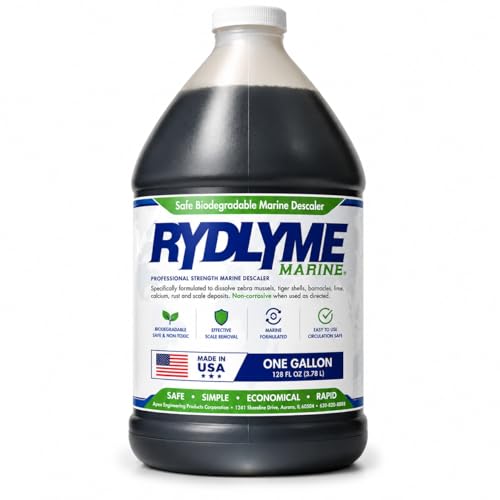
Best for: Boat owners with cooling systems, heat exchangers, or condensers seeking a biodegradable, non-toxic option. RYDLYME dissolves calcium, lime, rust, barnacles, and mussels quickly, while remaining non-corrosive. This descaler is concentrated for multiple uses and is suitable for marine-scale cleanup without harming aluminum or copper components.
Why selected: It offers a balanced combination of effectiveness and environmental safety. The product is specifically designed for cooling systems and heat exchangers, making it a versatile choice for routine maintenance. The biodegradable claim helps address environmental concerns on vessels and docks.
Caution: As with all descalers, ensure compatibility with any seals and rubber components in your system before use. Perform a small test on a non-critical area first.
STAR BRITE Marine Descaling Fluid Concentrate (1 Gallon)

Best for: Marine engines where seals, gaskets, and rubber impellers require protection. STAR BRITE’s descaling fluid is formulated to remove scale and deposits while being gentle on seals and gaskets, helping maintain engine longevity with regular use.
Why selected: Its design emphasizes engine longevity by avoiding damage to seals and gaskets, making it a preferred option for owners performing routine maintenance on engines with sensitive components. The concentrate format also provides value through flexible dilution.
Caution: Dilute according to your engine’s needs to avoid over-concentration in small passages or delicate systems.
QwikDescaler + Concentrated Descaler Solution (1 Quart)

Best for: Tankless water heaters and heat exchangers that require rapid descaling with clear usage indicators. QwikDescaler quickly flushes flow passages and eliminates mineral buildup.
Why selected: It combines strong descaling performance with safety features, including zero VOCs and a visual cue (color change from red to yellow) to indicate when more solution is needed. This makes ongoing maintenance more predictable.
Caution: Not all plastics or coatings react the same; verify material compatibility if your system has unusual components.
Descaler, Concentrated (1:3), Marine/RV, Bright Bay (4 gal.)

Best for: Larger marine systems or industrial-scale cooling setups requiring a strong, yet aluminum/copper-safe descaler. This 4:1 dilution capability provides substantial coverage for big jobs.
Why selected: The product emphasizes safety for aluminum and copper components while delivering a non-staining formula to protect interior finishes on board vessels. It’s suited for both marine and heavy-duty applications like HVAC and boilers.
Caution: Ensure proper ventilation when using in enclosed spaces; follow recommended dilution to avoid excessive concentration in sensitive passages.
RYDLYME Marine Descaler (4 Gallon)

Best for: Larger fleets or passengers vessels requiring a high-volume descaler solution that remains biodegradable and non-toxic. The 4-gallon format supports extended maintenance cycles across multiple systems.
Why selected: It mirrors the 1-gallon RYDLYME offering but at larger scale, making it a practical choice for frequent or commercial operators needing bulk cleaning power while preserving material safety.
Caution: Large quantities require appropriate handling and storage; avoid mixing with incompatible cleaners or acids in confined spaces.
Buying Guide: Key Considerations for Marine Descalers
What to look for when choosing a cleaner:
- Material compatibility: Ensure the product is safe for aluminum, copper, seals, and rubber components present in your system.
- Concentration and dilution: Determine how often you’ll descale and whether a concentrated formula provides better value for your setup.
- Application scope: Pick one that covers heat exchangers, condensers, engines, and A/C coils if you manage multiple systems.
- Safety and environmental impact: Prefer biodegradable and low-VOC options when possible, especially on vessels with sensitive ecosystems.
- Usage indicators: Some formulas show color changes or require specific test procedures to signal when more fluid is needed.
Practical tips:
- Test in a small area first to verify material compatibility and absence of adverse reactions.
- Follow dilution guidelines strictly to prevent over-concentration in tight passages.
- Rinse thoroughly after descaling to avoid residual residues that can affect heat transfer efficiency.
- Schedule maintenance to align with waterfront docking windows to minimize downtime.
Frequently Asked Questions
- What is the safest descaler for aluminum heat exchangers?
– Look for products explicitly labeled safe for aluminum and copper materials; avoid harsh acids that can corrode soft metals. - Can I use descalers for tankless water heaters?
– Yes, many descalers are formulated for tankless systems, with clear indicators for when to replenish the solution. - Do marine descalers impact seals and gaskets?
– Some are designed to be seal-safe; always check the manufacturer’s notes and perform a test on a non-critical seal. - Is a biodegradable descaler effective for barnacles and hard mineral deposits?
– Biodegradable formulas can be effective, but for stubborn barnacle and rust build-up, consider a targeted, stronger concentration and proper dwell time. - How should I dispose of used descaler solution?
– Follow local hazardous waste guidelines; many cleaners are designed to be non-toxic but still require proper disposal. - What’s the advantage of a color-changing descaler?
– A visual cue helps ensure you add more solution at the right time when deposits reappear or flow resumes.